

EN

june 2026
Associação de Moradores de Massarelos
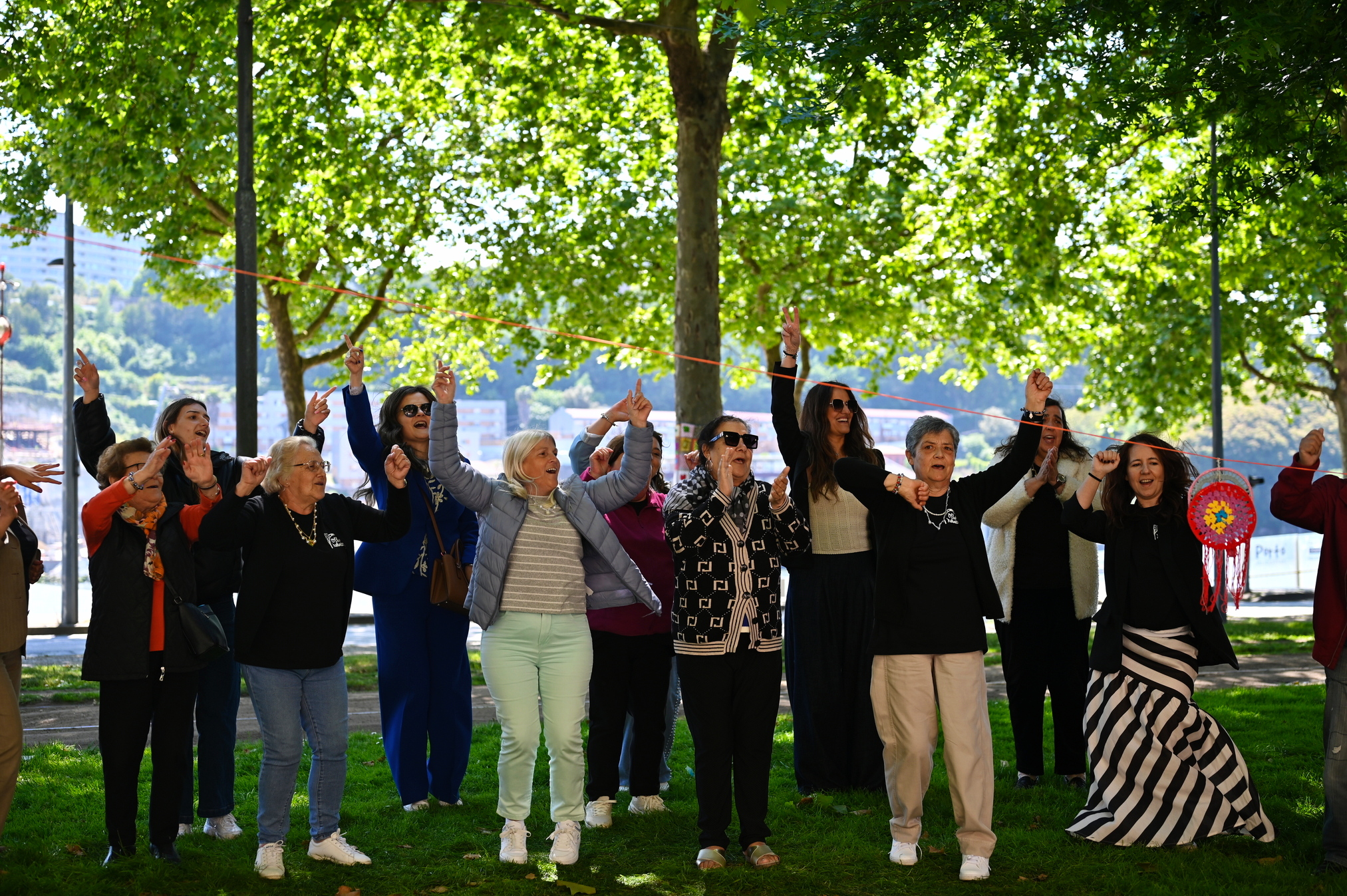
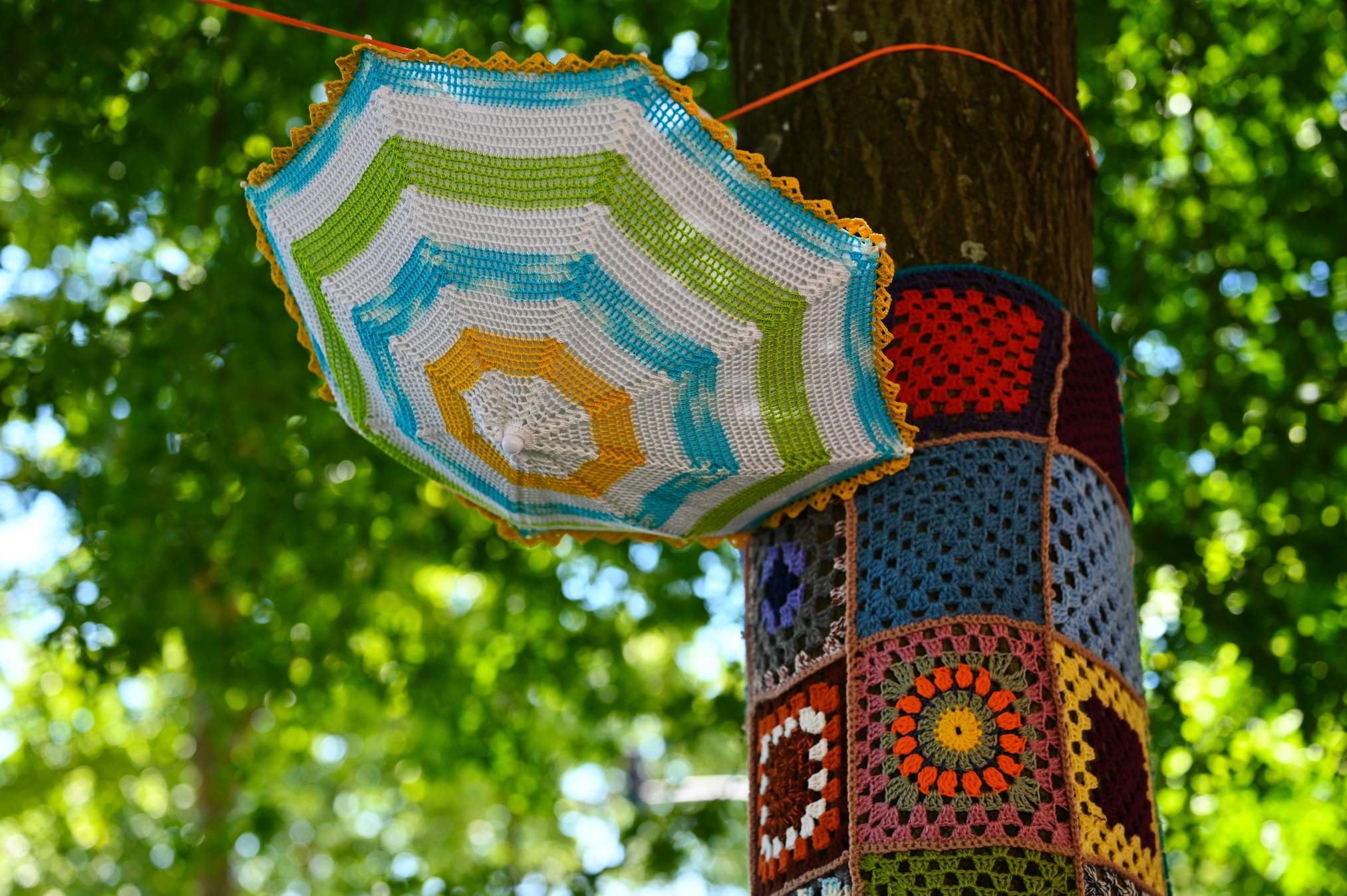
On a sunny May afternoon, Alameda Basílio Teles is transformed into an open-air crochet museum, with nearly 30 trees adorned in colourful outfits made from over 1,000 granny squares (traditional crochet squares) and a dozen other pieces, such as umbrellas and wind chimes, displayed around the area. The work is the creation of Olhó Nobelo, a project by the community centre of the Associação de Moradores de Massarelos (AMM), and was conceived during the pandemic.
“I knew that some of the ladies enjoyed crocheting, and as they’d been at home for months, I thought of something I could get them to do to keep them occupied,” recalls Marina Pinto, technical director of AMM and mentor of the initiative. “The goal was to decorate the trees as a way of drawing attention to the fact that there were many elderly people alone at home.” At the time, the project wasn’t given the go-ahead, but the seed had been planted.
As restrictions were lifted, people returned to the centre, but the fear of being in a room persisted. In those early days, Olhó Nobelo took place in public spaces. “We did crochet in the neighbourhood, in the garden, at the museum, and we started to reach people,” she notes. At the same time, the group began to decorate the neighbourhood’s railings, particularly on Calçada da Boa Viagem, where there is a flight of steps with a viewpoint overlooking the Arrábida Bridge. Social media took care of the rest.
Since then, the “Nobelitas” have exhibited their work in venues such as Bolhão Market and São Bento Station, collaborated with street artist Godmess on a mural, run workshops in schools, universities and other community centres, and appeared on television on several occasions. “If it weren’t for this, some people wouldn’t be here anymore, or would still be glued to the sofa.”
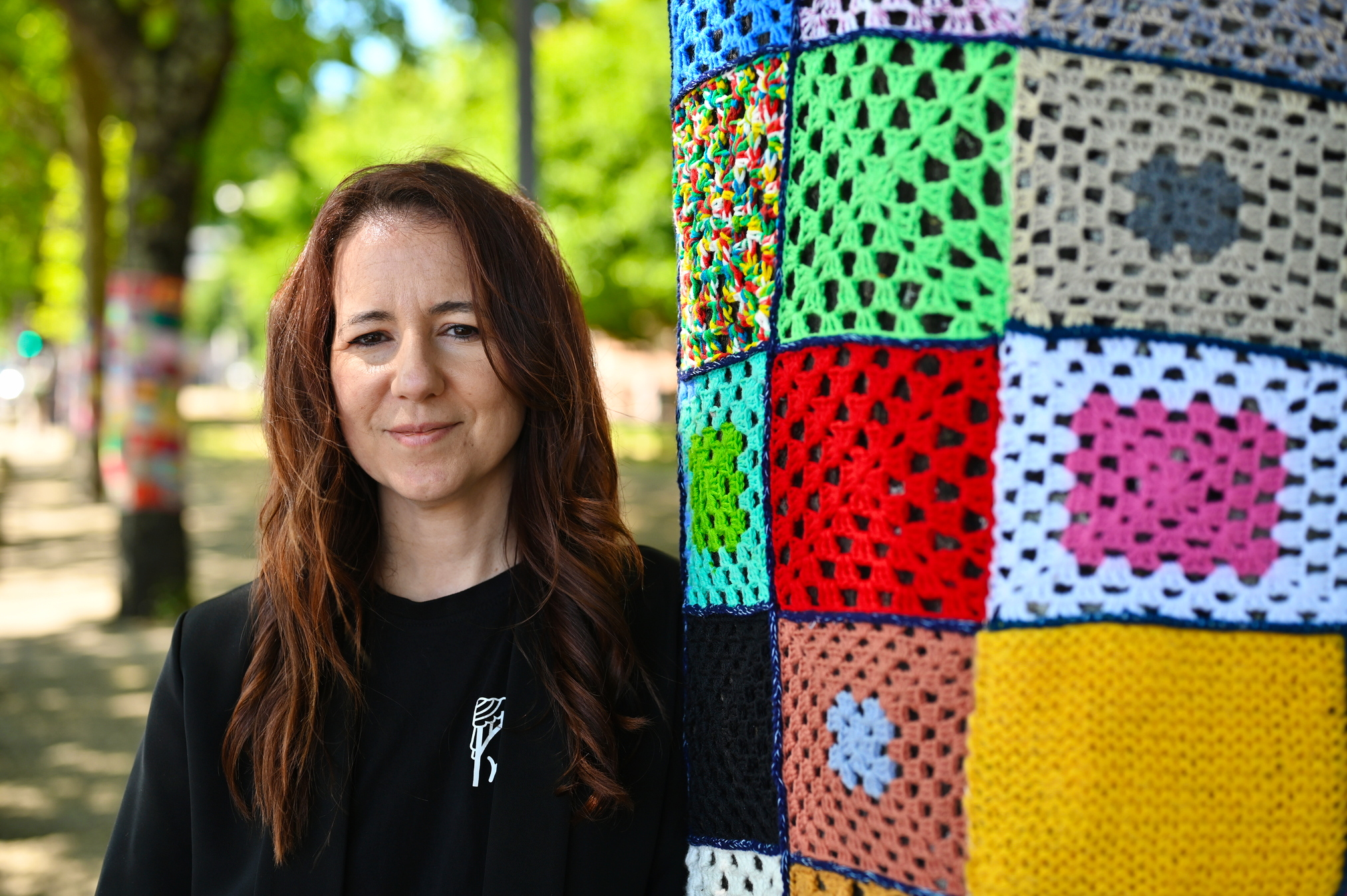
Marina Pinto, technical director of AMM © Rui Meireles
As with other initiatives in the town, the tree decorations were created with the help of the community, who were invited to create their own squares and hand them in to the centre. The União de Freguesias de Lordelo do Ouro e Massarelos also played a “key role” in bringing the project to fruition, by donating kits containing materials and promoting the initiative among other institutions.
Today, Olhó Nobelo is the most visible face of the Associação de Moradores de Massarelos, which was founded in the aftermath of the Carnation Revolution, when a group of residents occupied a cement warehouse on the waterfront to build the social, housing, educational and cultural facilities they needed. It remained there for 37 years, offering a solid range of cultural and sporting activities – football, canoeing, theatre and music – as well as social services such as a nursery, after-school activity centre, daycare centre and community centre.
Now based on Rua Casal de São Pedro, it continues to run the daycare centre and the community centre, a space that is “outside the box, both in its daily activities and in its outdoor projects,” says Marina Pinto. The social educator joined AMM in 2019 and, faced with a routine of stagnation and lethargy, began to devise plans for change through a series of activities. “There is still much to be done” is the motto she still repeats to her service users today.
© Rui Meireles
© Rui Meireles
The centre welcomes nearly 30 people every day and has a packed schedule: sewing on Mondays, painting on Tuesdays, dance on Wednesdays and crochet on Fridays, when people of all ages and from various neighbourhoods join the “Nobelitas”. The results of these workshops are showcased at public events, such as fashion shows, flash mobs or the aforementioned crochet projects.
Twice a year, AMM organises the Crocheters’ Meet-ups, usually on Saturday afternoons, to “give people who follow the project on social media the chance to take part”. But no one is excluded; those who live far away and wish to contribute can send their square by post.
On July 31st, the Associação de Moradores de Massarelos returns to the place where it all began. The hotel now occupying the former premises has made its terrace available for the occasion, and preparations are already underway to celebrate five decades of service to the local community.
Associação Branco e Negro Vitória e Campanhã
José Miguel Silva was never much of a footballer, but he grew up near Vitória Sport Clube de São Pedro de Campanhã, founded in 1960 and once a major force in the region’s amateur football scene. His grandparents and parents lived near the club’s headquarters, in Largo de São Pedro, and his brother and cousin played for the club, which later branched out into youth football. “This created an unusual bond between the club and the people of São Pedro de Campanhã,” he recalls.
The move was spearheaded by the “legendary president” Joaquim Castro, who in 1992 managed to acquire a sports hall 200 metres away. “The club became well known among the generations who are now in their 30s, 40s and 50s,” says José Miguel, who around the same time became assistant coach of a team of players aged 12 to 14. “They called me [not because I was a good footballer, but] because I had gone to university and they wanted the children to see me as a role model.”
The glory days lasted until 2013. By the start of that decade, those most closely connected to football and the club’s history had left, and “the younger team was unable to carry on the legacy”. For five years, the iconic headquarters remained closed. The hall no longer belonged to the community. In 2018, a group of former members with a revivalist spirit got together via social media. “They helped us so much when we were kids; it’s time to reclaim the club,” they declared.
The association’s new life began under a new name, in order to leave behind the difficulties of recent years: Associação Branco e Negro Vitória e Campanhã. Under the leadership of Joaquim Castro, the group renovated the dilapidated premises and restored the hall. They then began to “get people involved” again, organising parties, dances and outings. During the pandemic, Vitória put its events on hold and began providing social support to the elderly.
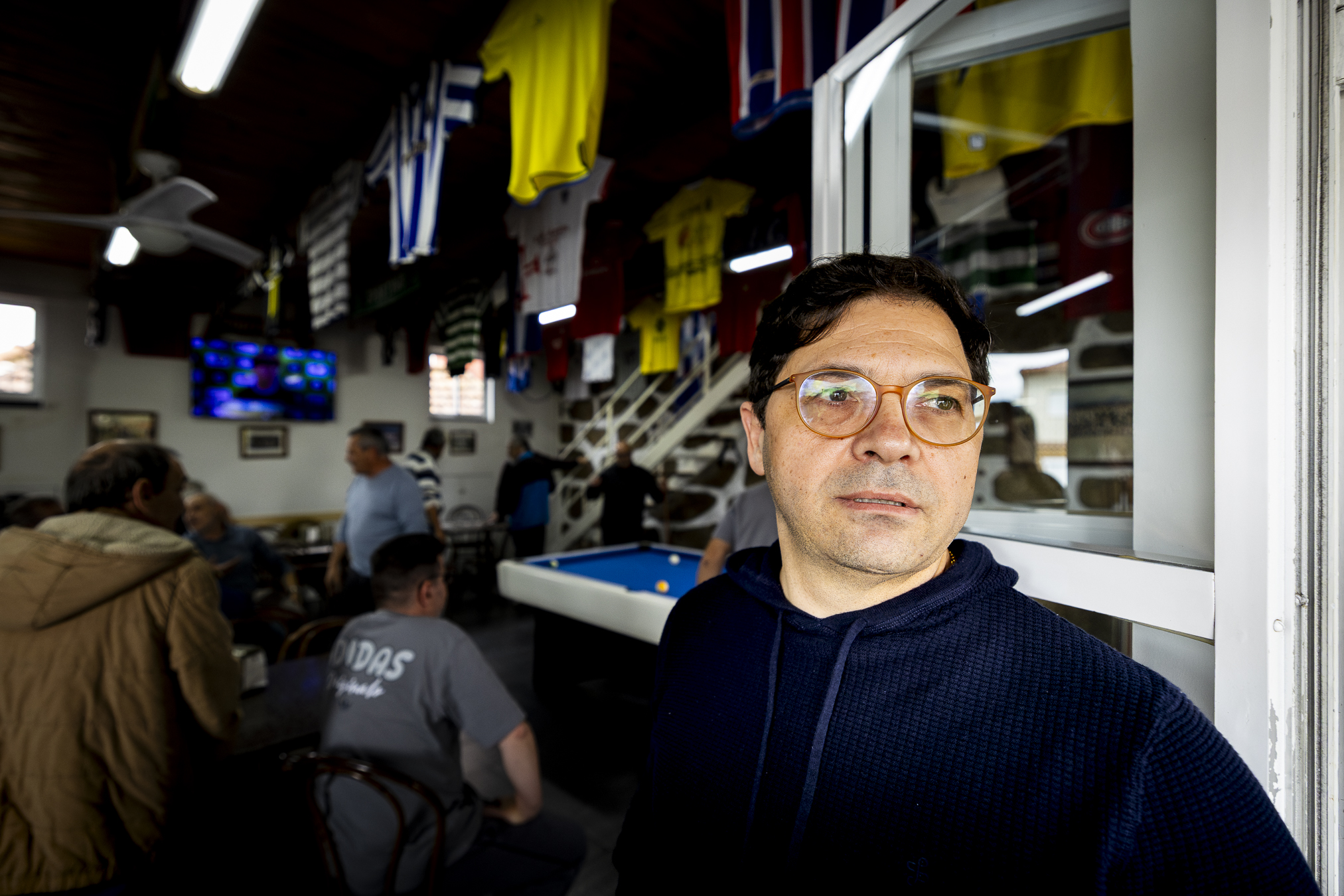
José Miguel Silva, head of Associação Branco e Negro Vitória e Campanhã © Sofia Hügens
“This focus on the community is much more my style,” admits José Miguel, who also serves as the sports councillor on the Campanhã Parish Council. It was in this capacity that he initially offered to help revive the community, but he ended up as chairman because his cousin didn’t want the role. Today, the role suits him perfectly, but he can only fulfil it with the support of a core group that includes Lina, a “long-standing” member of the neighbourhood and the club. “People are always asking us when football will start again,” notes the treasurer.
At the moment, the club operates on the basis of what the chairman calls “nostalgia tourism”. “Most of the people who come here played here in different decades and enjoy returning to the place where they grew up to see their friends,” he explains.
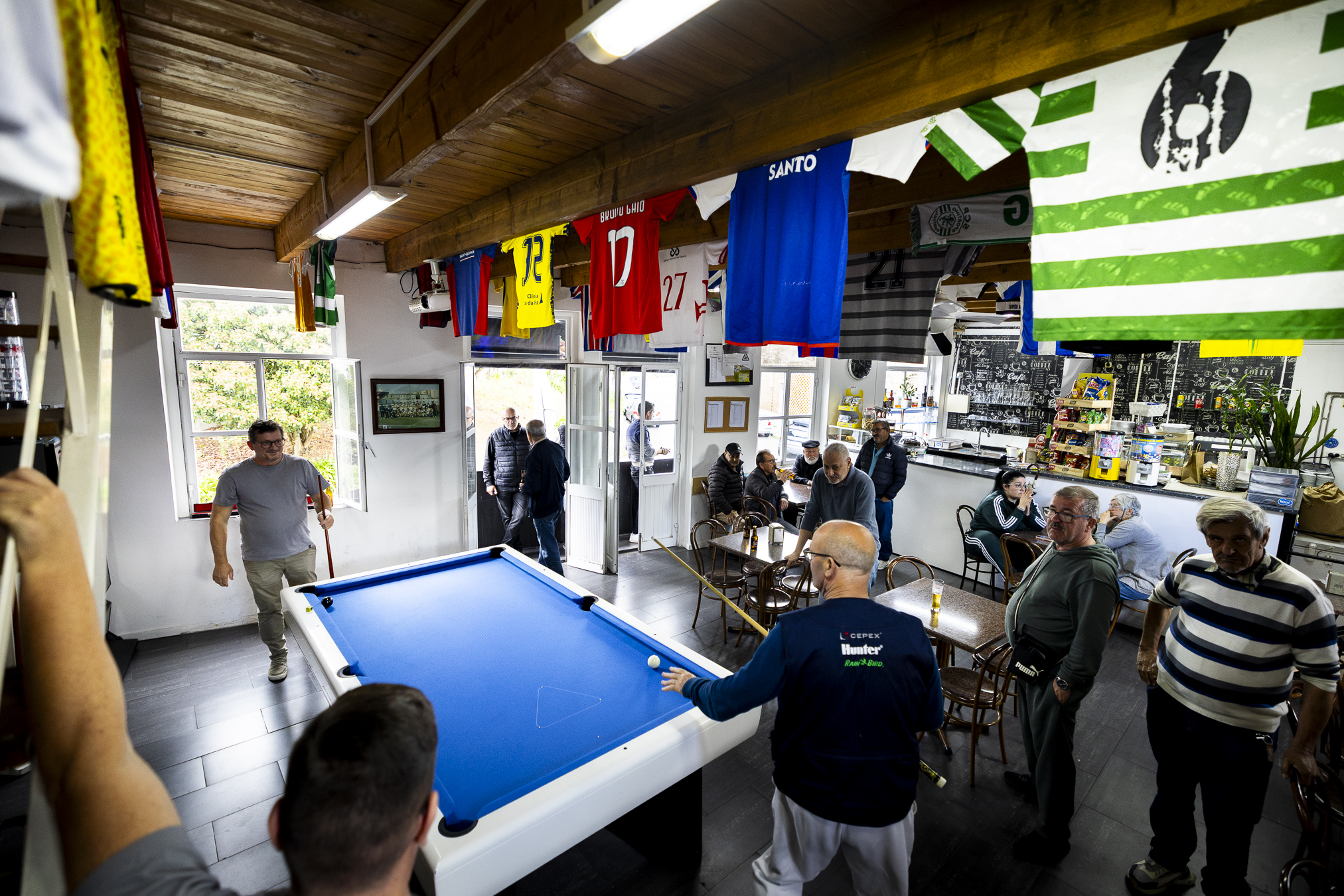
© Sofia Hügens
Former players gather at the headquarters, which is open every day except Monday afternoons, to play cards and snooker, socialise and enjoy a bite to eat. Although lunches are also served during the week, “Saturday is the busiest day”. At the same time, Vitória organises recreational and cultural activities in the hall, such as “parties, dances and fado evenings”. In August, they hold the “Emigrant Festival”, which brings together Sampedrenses who have emigrated, neighbours, friends and family.
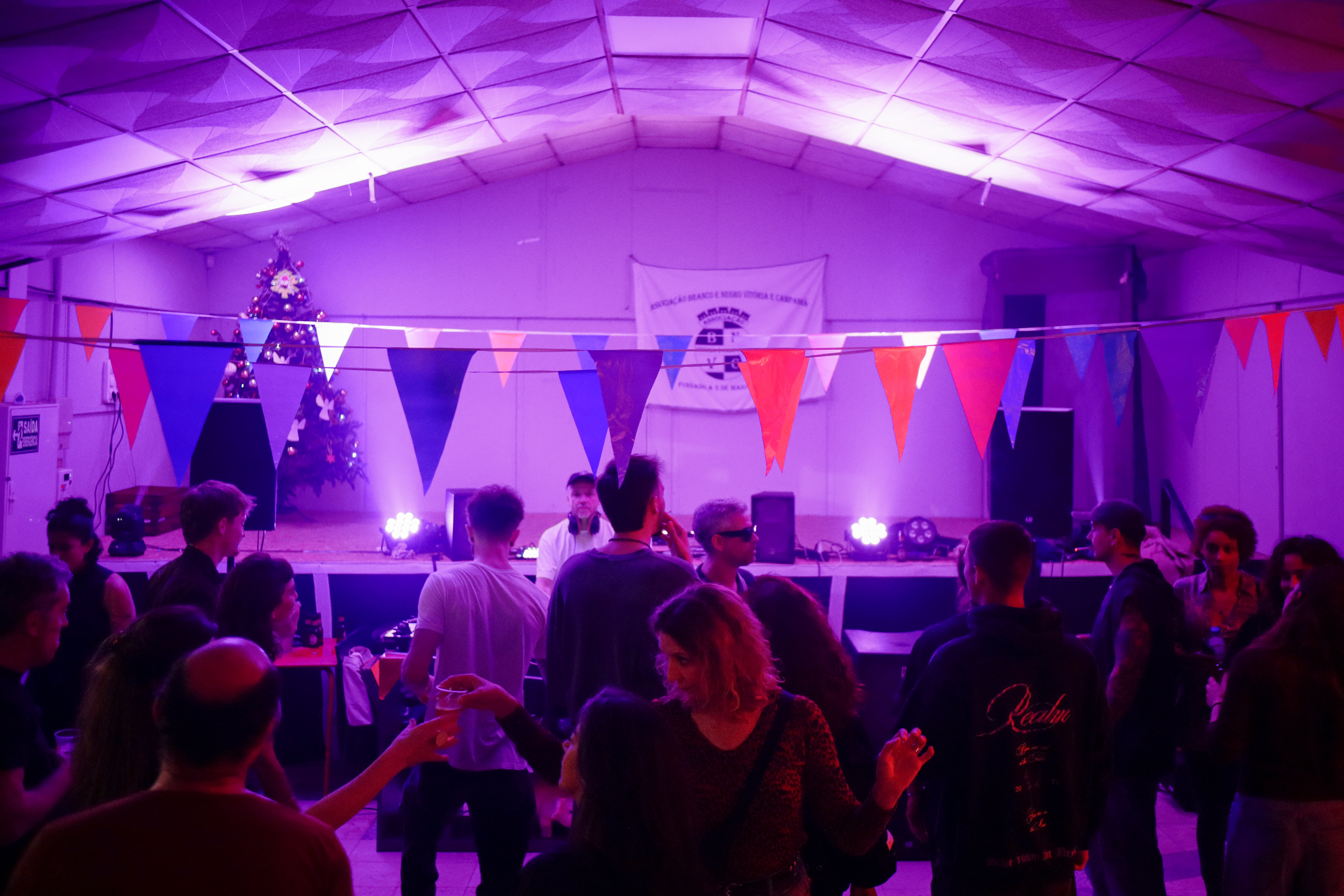
Pérola Negra Rádio's 10th birthday celebrations © Paulo Cunha Martins
In this second incarnation, the club has also hosted events organised by other projects or cultural venues in the parish and the city, such as the Campanhã Film Club, CRL – Central Elétrica, and Pérola Negra Rádio, which recently celebrated its 10th anniversary at the club’s hall. As well as organising more events, either independently or in collaboration with others, Vitória aims to resume its football activities.
“The plot of land next to the hall is the right size for a seven-a-side football pitch,” notes José Miguel. He adds that a few years ago, a plan was drawn up but never came to fruition. “We need help to build the pitch, or at least to lay the turf; then we’ll have everything we need to get back to playing football.”
Associação Recreativa e Desportiva de São Pedro de Miragaia
“Our essence lies in knowing how to welcome people,” proudly states Jorge Sequeira, former president and member of the Associação Recreativa e Desportiva de São Pedro de Miragaia (ARDSPM). Born and raised in Miragaia, he became a member even before reaching the required age by joining the association’s field hockey team, which was founded in 1923 by a group of friends who wanted to set up a football club in the neighbourhood.
For almost four decades, ARDSPM’s activities centred on football, as proven by the various trophies on the shelves at its headquarters. Later, the club incorporated other sports, such as hockey, athletics and fishing, and, in the mid-1960s, it developed a strong cultural component, with theatre, ballet, music, a folk dance troupe and even imitation contests that replicated what was done on television programmes of the time.
“Every weekend there was something going on,” says Paulo Ferreira, chairman of the financial board, fondly recalling the “mansion” where the original headquarters were located, a two-storey building that is now a hotel. “We had a nightclub that sustained the football club and the theatre,” he explains.
The move to the current, modestly-sized facilities in Largo de São Pedro, coupled with the depopulation of the parish—exacerbated by the tourism and economic boom of the 2010s—led to the ARDSPM losing its sporting and cultural programs and the human capital that had driven them.
“It really was on the verge of closing down,” admits Jorge Sequeira, who is also vice-president of the Associação de Coletividades do Concelho do Porto (ACCP). “We’re lucky that a few dedicated individuals still manage to come along and are determined to keep this place open.”
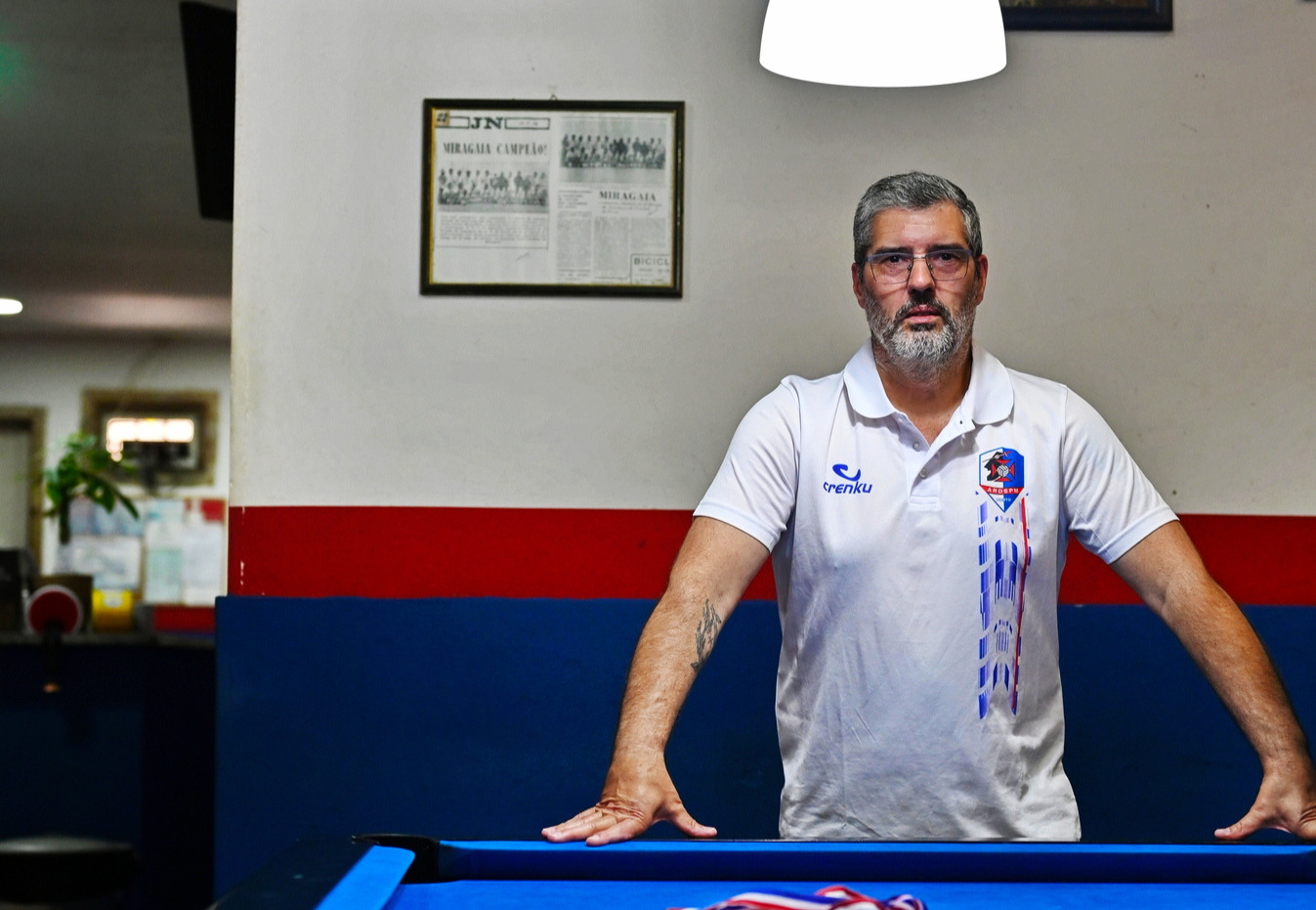
Jorge Sequeira, former head and member of ARDSPM © Rui Meireles
In 2019, the management decided to open its doors to the community, which breathed new life into the association. These days, the headquarters is visited by members who live in the neighbourhood, others who are not residents but who make time to spend with friends in the community at the weekend, and ‘non-members’, that is, people who, although not members, regularly visit the association.
This group consists of foreigners who have moved to Miragaia and tourists, both those staying there and those passing through the Alfândega area who are intrigued by the hustle and bustle beneath the arcades. “Sometimes they come for a glass of port or a beer, because it’s cheaper than anywhere else,” notes Paulo. The bar is open during the week, but it is mainly at the weekend that they serve steak and chips, hot dogs and pork sandwiches.
Associação de Moradores do Bairro de Aldoar
There are people who hold a position. And there are people who hold a place. In Aldoar, Esmeralda Mateus holds both. As head of the Associação de Moradores, she knows everyone and everyone knows her. “I’m the only Esmeralda here,” she says, with the ease of someone who has lived for almost six decades amongst the same streets and the same faces.
She was born in the old “shanty town” of Xangai, where Parque da Cidade now stands. “The people of Xangai lived in shacks,” she recalls. She moved to Aldoar at the age of 16.
“I know the neighbourhood inside out. I know where everyone lives.” She knows who lives alone and notices when “someone hasn’t come down the stairs for two days”. Perhaps that’s why she’s the keeper of the keys to several elderly residents’ homes. “I go upstairs when people don’t show up here, and bad things have happened to me before,” she says.
Every day, Esmeralda puts together food packages for 17 families in the neighbourhood, and there are also pre-made meals in the fridge for anyone who drops by at lunchtime. This assistance is made possible by the Re-food project, an organisation set up to repurpose surplus food and feed those most in need. “I deal with everyone’s difficulties; my role is to ask for [help] to give to this person or that person — and I often succeed.”
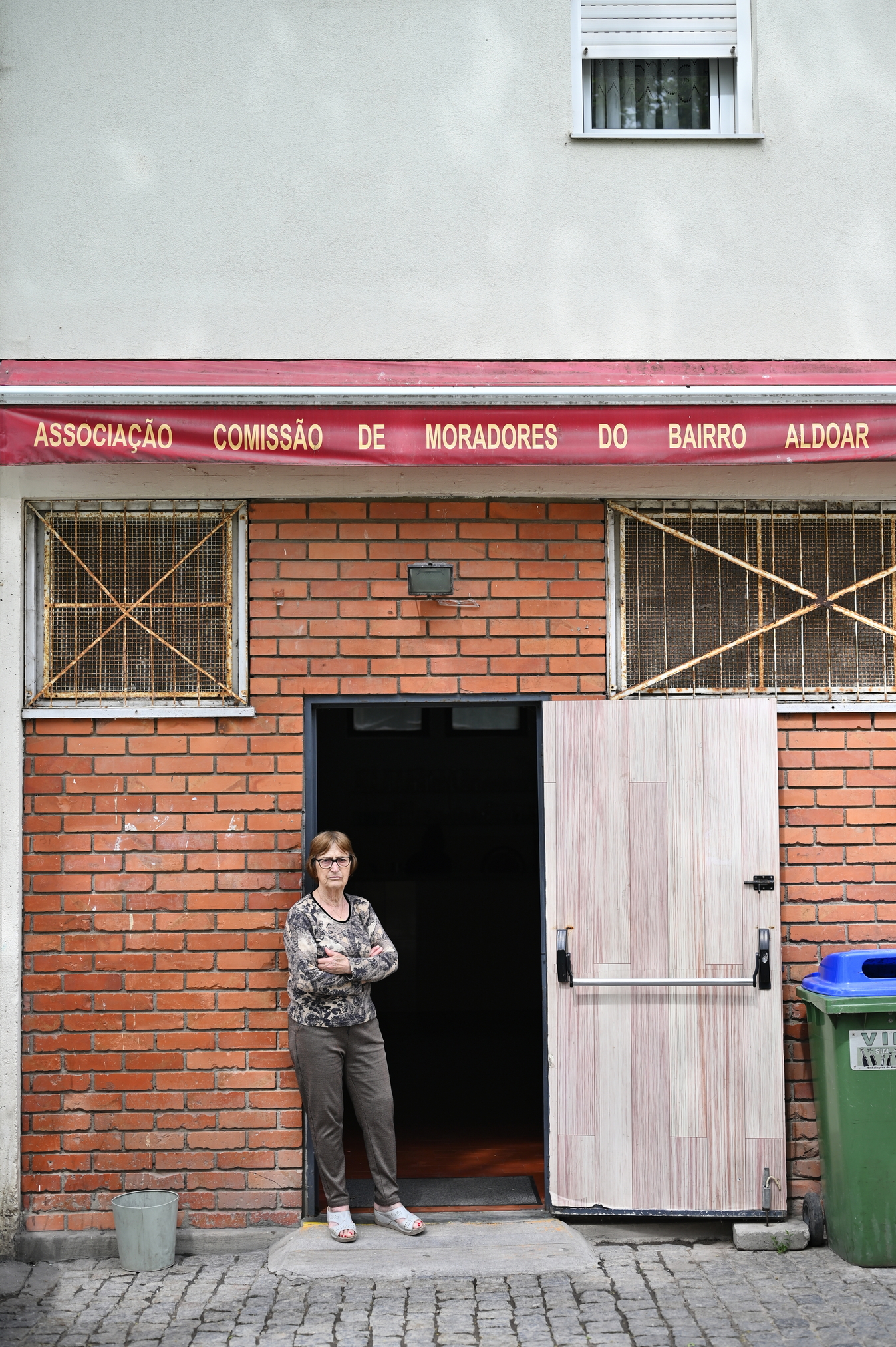
Esmeralda Mateus, head of Associação de Moradores de Massarelos © Rui Meireles
Esmeralda speaks of the neighbourhood as if it were an extended family — complicated, but close-knit. This sense of community continues to grow in small ways. There are “young boys” who, since March, have been organising football training sessions with local children aged between 8 and 16 to form teams. “Once they’re properly trained, we’ll play against teams from Fonte da Moura, Campinas, and so on,” she says, excitedly.
In Aldoar, celebrating continues to be a form of resistance. For years, the residents’ association, with the support of the parish council, organised St John’s Day festivities, “which were a real treat for the locals”, complete with live music. Covid put a stop to that “tradition” and now it is the residents themselves who organise the festivities.
© Rui Meireles
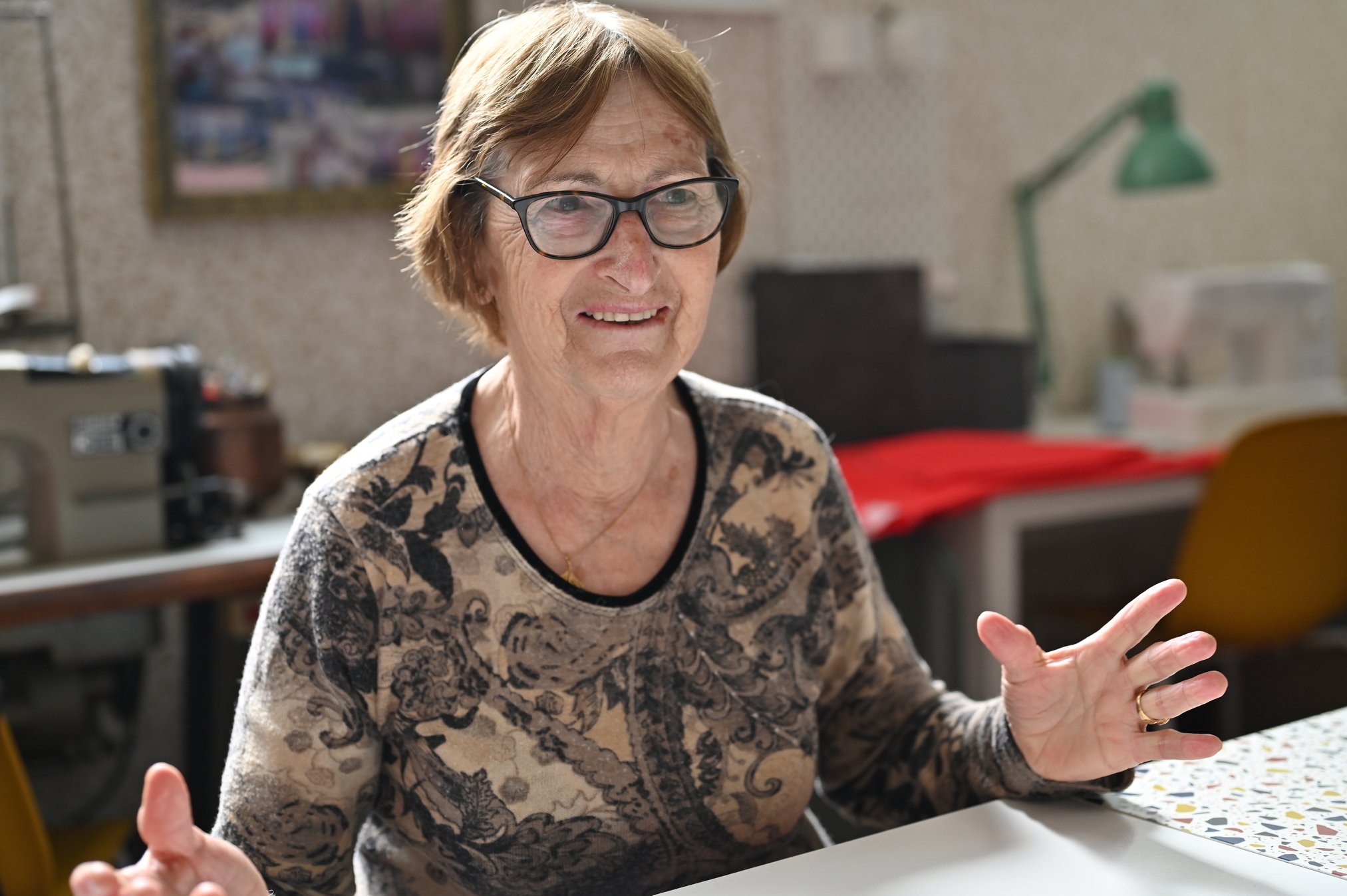
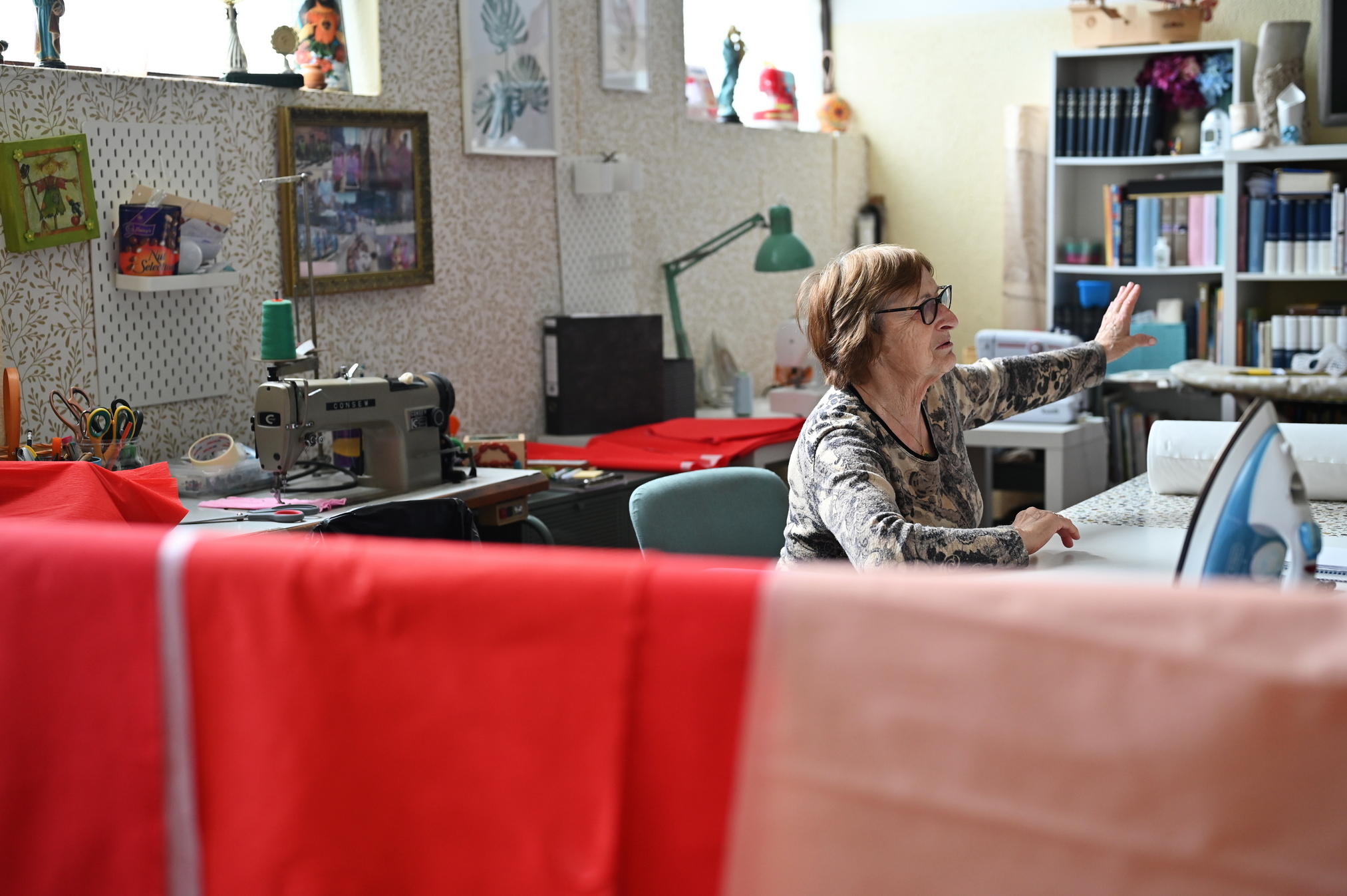
Amidst all her other duties, caring for the elderly and providing snacks for the football lads after training, Esmeralda has also been devoting her time to the Cortejo do Traje de Papel de São Bartolomeu which takes place at the end of August. The association has been taking part in the parade, which ends at the sea at Praia do Ourigo, for around seven years. It involves whole evenings spent amongst coloured paper, patterns, fabrics and irons. When Agenda Porto visited Aldoar, several dozen paper costumes were already being made for the neighbourhood’s 50 or so participants, aged between 7 and 70. “We’ve already taken everyone’s measurements!”.
In the small makeshift workshop at the association’s headquarters, there is talk of wolves and hoods. This year, the neighbourhood will be performing the story of Little Red Riding Hood. “To be honest, what’s giving me the most trouble is making the wolf’s head – it can’t be made of plastic,” says Esmeralda, adding enthusiastically that she will be using a balloon, newspaper and glue for this. Joining her in this task is another member of the association, Ana Maria Silva, an “artistic” seamstress, along with other helping hands who assist with cutting, ironing and putting the costumes together. The work often goes on late into the night. “We put our heart and soul into it,” says Esmeralda. And you can tell that, in that space, “we” is always more important than “I”.
© Rui Meireles
Share
Relacionados
