

EN

July 2026
Getting to know the music scene in a city isn’t rocket science. All you need to do is map out the record labels based there, identify small and medium-sized concert venues, and take note of the names featured in the regular programming. But getting to know the music people actually listen to in a city is a far more complex task, given the sheer number of bands, musicians and tracks scattered across the thousands of earphones, headphones and speakers of its inhabitants. With a nagging thought in the back of his mind, José Guilherme Marques set up Rádio Jardim in 2025, a mobile community radio station that “invites people to bring along what they want and enjoy listening to, so they can share it with others”.
Inspired by the independent online radio movement, such as London’s NTS, and Kiosk Radio in Brussels, the founder sought, on the one hand, to avoid the dominance of algorithms in music recommendations on streaming services — the feeling that “we’re all listening to the same thing” — and, on the other, to find alternative ways of activating public spaces and fostering a sense of community, notably through a travelling “musical or audio sharing” initiative.
Rádio Jardim broadcasts regularly – currently every two weeks – and aims to set up in venues that are, by design, spaces for leisure and enjoyment “where people are already willing [to take part in cultural, artistic, recreational or social activities]”, such as cafés, galleries or gardens, which do not have a regular music programme. On the day its founder spoke to Agenda Porto, the radio station was set up for the third time at the Galeria da Arquitectura in Bonfim, which had previously hosted one of its experimental broadcasts.
Although it presents itself as a music curation platform, Rádio Jardim is not exclusively open to musicians, DJs, producers or other professionals in the industry; quite the opposite, in fact. “We just need people to have a genuine connection with the music they listen to and to be able to bring a layer of presentation and interpretation to share with the audience,” explains José Guilherme.
Inevitably, the project ends up attracting people who, whilst not necessarily professional musicians, nurture a passion for this art form in their daily lives. “Lots of people are interested, but don’t have a platform,” he notes. Perhaps that is why most requests to share music already come with a file and/or a synopsis that illustrates the intended live experience. No musical genre is left out. “It could be metal, opera or pimba, as long as people have something to say about it.”
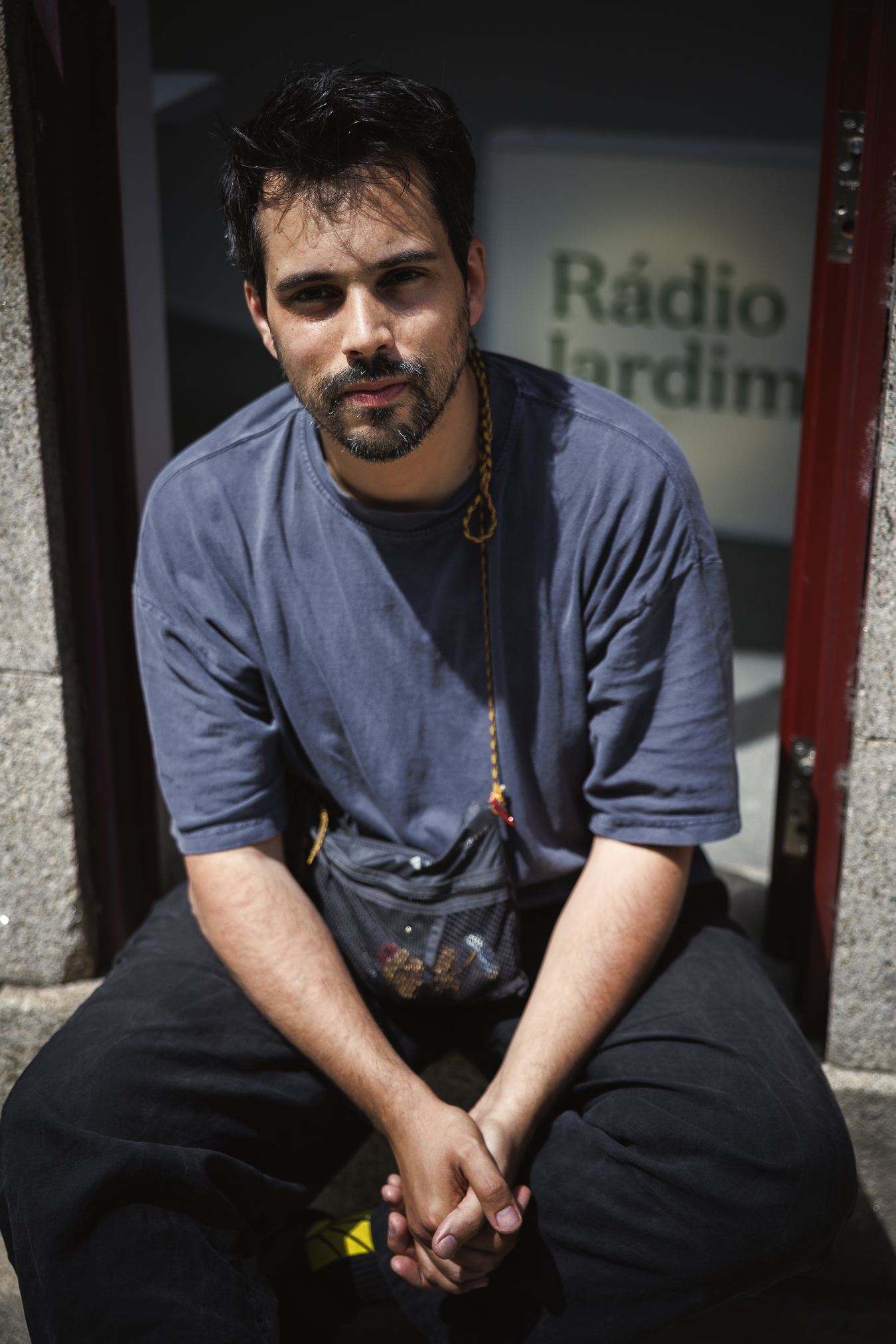
As well as providing a window into the sonic and musical world of each guest or curator, Rádio Jardim was designed to amplify the sounds that resonate in every corner of the city, such as birdsong, car horns or voices. In 2025, as part of a partnership with Ágora’s Vizinhanças Festival – which enabled several broadcasts to take place in different gardens across Porto – the radio station recorded the sounds of each of these spaces and played them at the start of each session. At the same time, it encouraged the public to record the soundscapes of their daily lives, though this initiative did not attract much interest. “There are far more people who want to share the music they listen to than those who want to capture these sounds,” admits the founder, who hopes to bring the idea to life through a project with its own funding and structure.
The archive is an equally important aspect of Rádio Jardim. All programmes are recorded and made available online, with a focus on ‘preserving for posterity’. ‘In 50 or 100 years’ time, if the internet still exists, people will be able to discover what music was being played at that time and what a particular street sounded like,’ he adds.
The dynamic of community radio broadcasting and public listening, together with a commitment to the decentralisation and democratisation of culture, fosters a sense of belonging amongst music lovers who follow and take part in the programmes, but has also promoted interdisciplinary exchanges and encounters with other artistic communities in the city and other parts of the country. “We had the opportunity to attend an architecture festival in Braga because of this relationship [forged through the Galeria da Arquitectura],” observes the curator.
Rádio Jardim recently conducted its first international broadcast at Concéntrico, a design and architecture festival held annually in Logroño, Spain. “This connection [to other disciplines] is part of the concept, but it also helps to make this model sustainable and viable, because these broadcasts are the result solely of people’s efforts and involve little financial compensation.
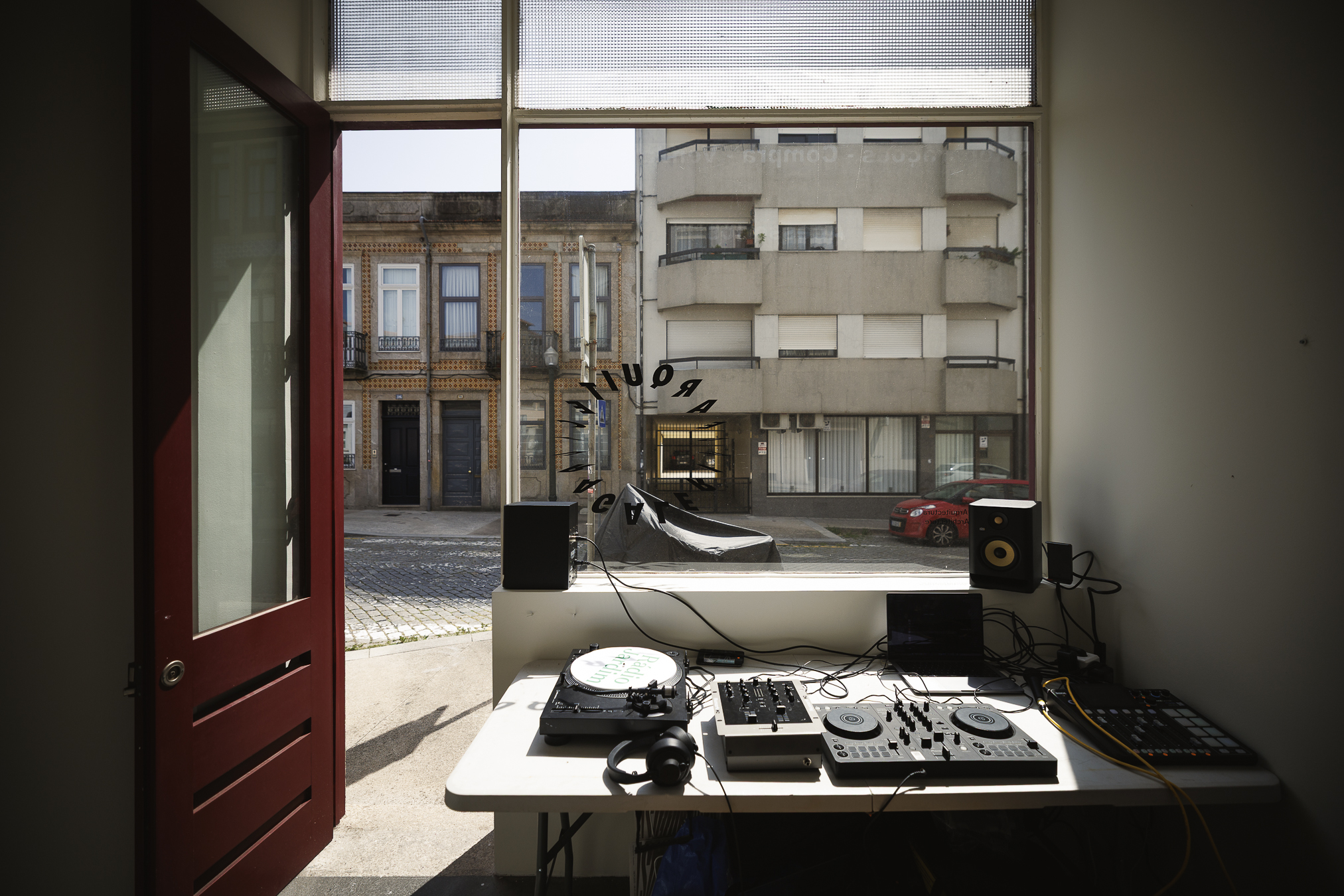
Despite its nomadic approach, the platform has already experimented with fixed formats, such as in ‘Vizinhanças’, which took place on Sundays, or a residency at Café Época, which was transformed into a studio once a month. “There's a very thin line between surprising people and establishing a pattern” reflects José Guilherme. “The mental crutch [of knowing the session is on a specific day] works well for projects like this, which are entirely dependent on social media to promote themselves.”
Rádio Jardim is currently in its second season, but is returning to its roots. Whilst at the beginning there was a deliberate focus on organising small events to attract an audience, the aim now is “to stay truer to the concept of online radio”. “How can we reach people who might be as close as 10 metres away or as far as 10,000 km away?” asks José Guilherme. Planning for the winter season will be equally challenging, as the weather brings with it logistical constraints that brought broadcasts to a standstill this year. “The ideal would be to set up a studio and use it from time to time.” For now, whilst summer is still in full swing, the next broadcasts are scheduled for 9 and 23 July and 6 August at Época.
Photography © Guilherme Costa Oliveira
Share
Relacionados
