

EN
Rubrica

março 2026
© Guilherme Costa Oliveira
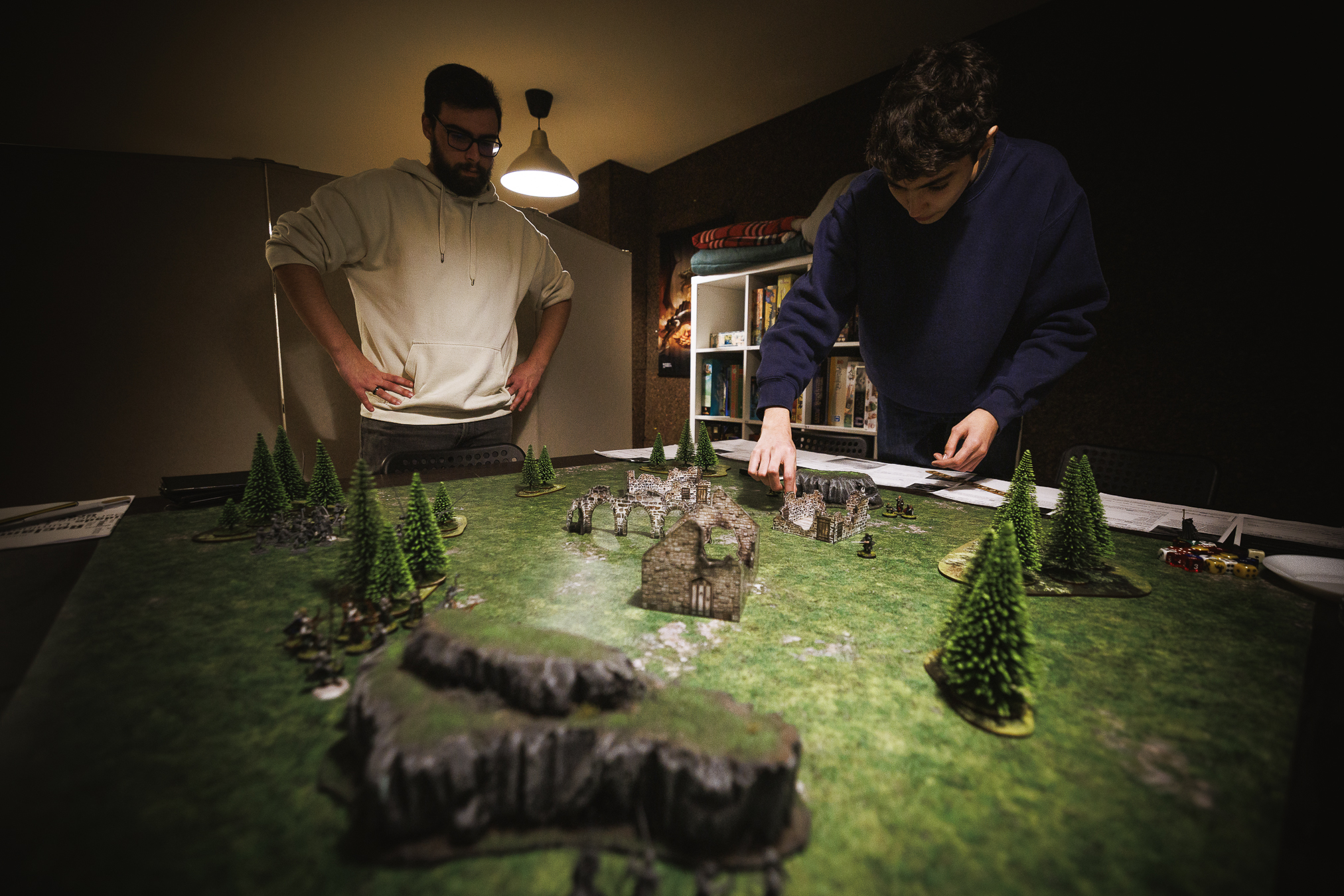
In the mid-2000s, the board game scene in Porto was limited to the now exctinct XXL game store on Avenida dos Combatentes. ‘It was very difficult to buy non-mainstream games and find people to play with,’ recalls Pedro Silva, from the Porto Boardgamers Group, which was formed organically in 2006, following the opening of that space. Still unnamed, the group began to promote weekly, free meetings at the shop, which was also the first venue to host Invictacon, the annual board game convention in Greater Porto. Later, with the closing of XXL, the meetings migrated to the terrace of Tropical Burger, in Cristal Park.
This was a period of great expansion for the hobby, only halted by the pandemic, which also led to the closing of Tropical. Since then, the group has led a semi-nomadic existence, with weekly meetings in different venues and monthly meetings at Casa do Alto in Maia, but it is one of several groups promoting board game events in the city.
The boom in recent years, fuelled by the desire for social interaction during the pandemic, discussion on websites and online forums, and the industry's growth in Portugal, has led to board games popping up all over the city. Today, there are many more spaces dedicated to this hobby in Porto, as well as cafés with shelves full of games and/or open to players, and groups that organise these events in the city. Agenda Porto visited three of these spaces.
© Mariana Rollo
Portal
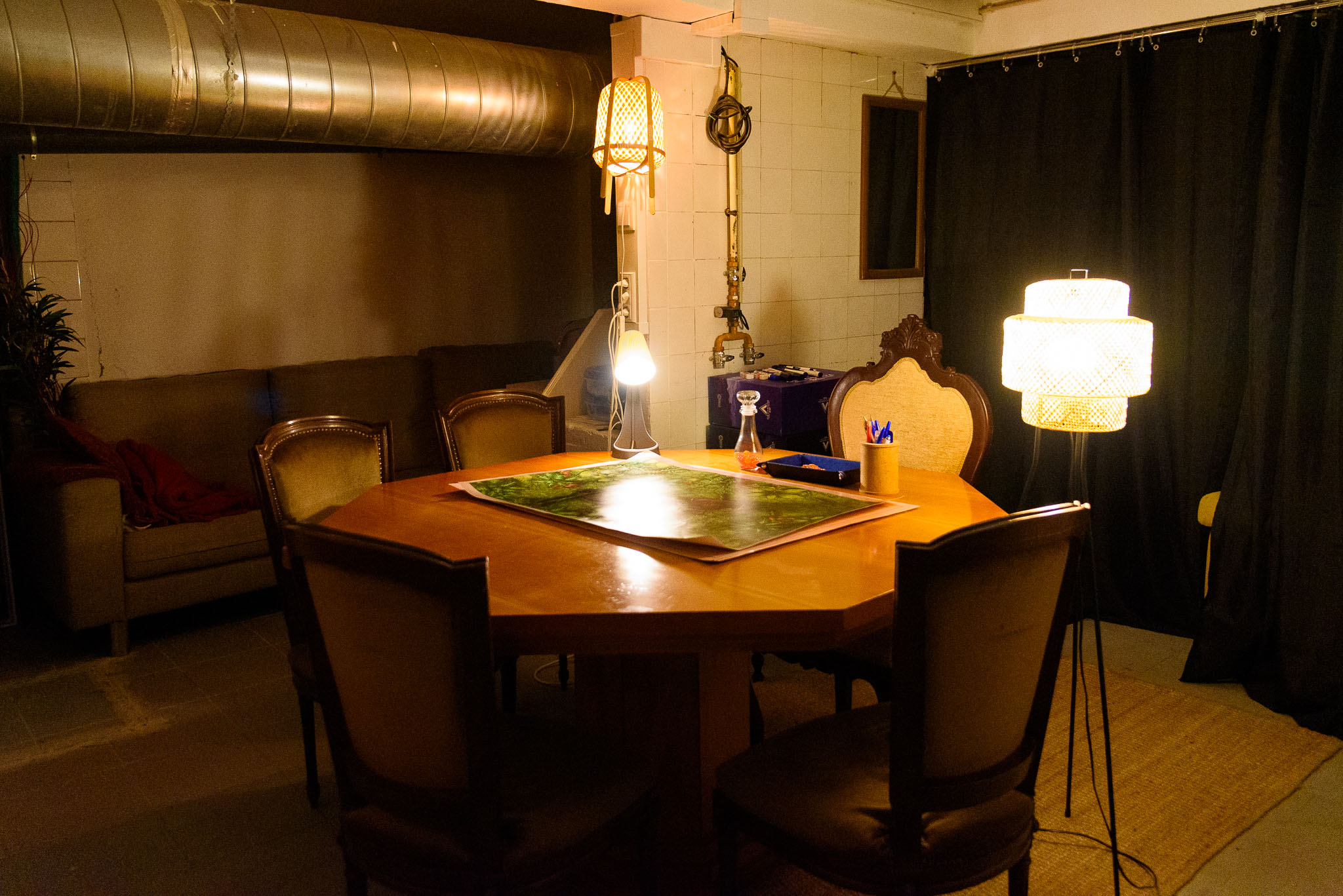
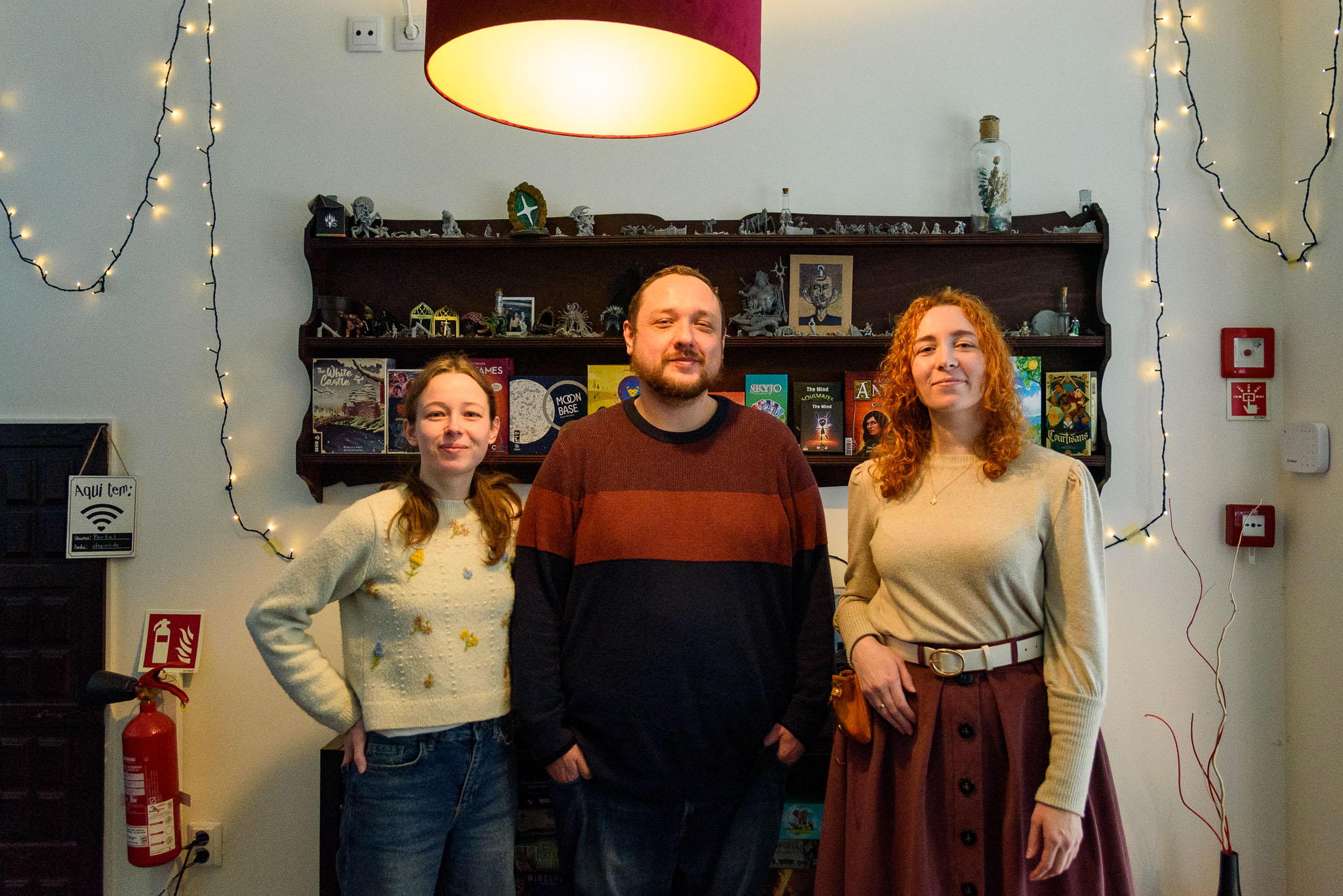
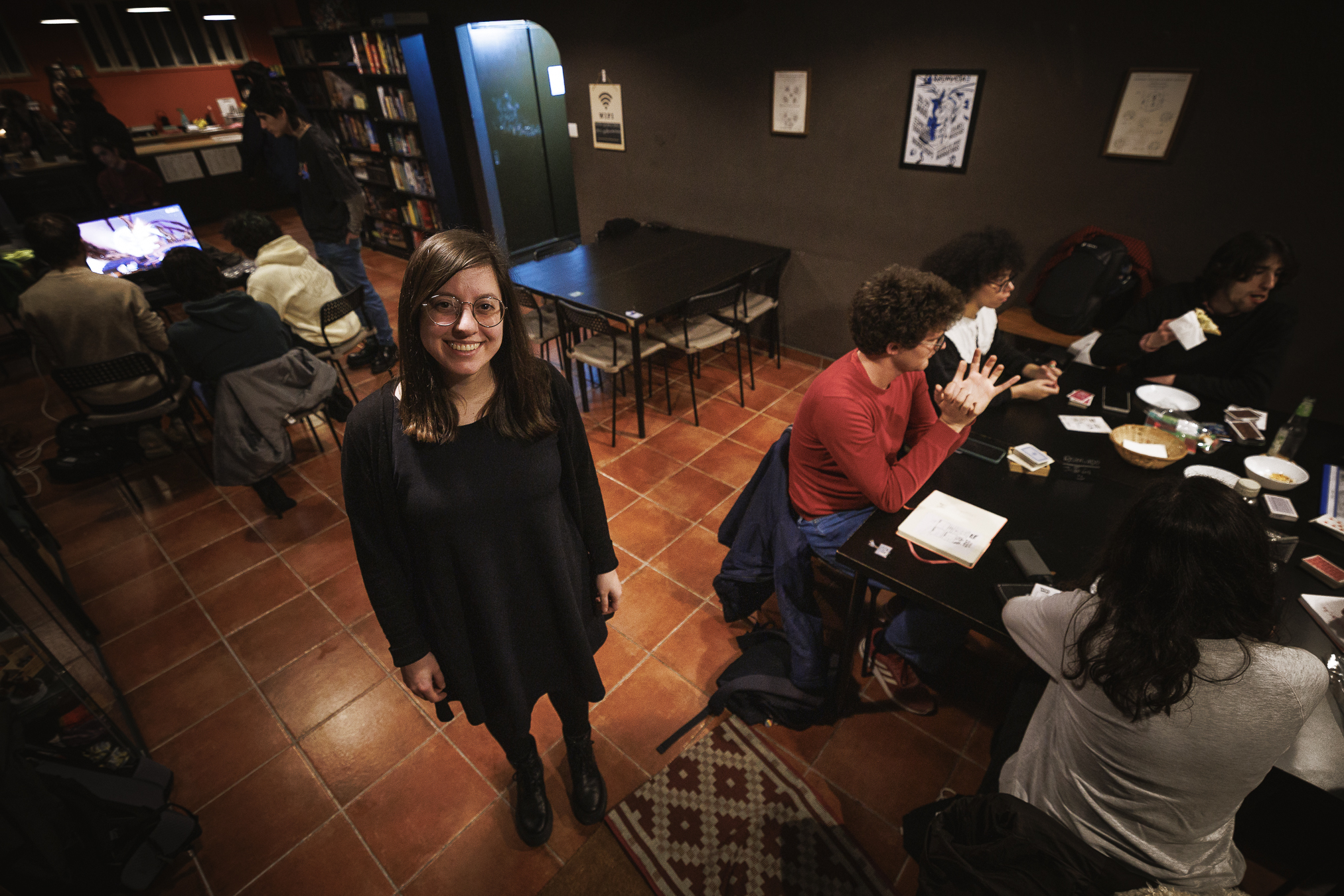
Anna Lisnévskaia, Antón Startsev and Tatiana Krasnorútskaia lived in the same neighbourhood in Moscow, but only met when they moved to Porto in 2023 and 2024, respectively. Long-time board game enthusiasts, they started looking for spaces in the city with the right conditions and dimensions for each type of game, but always ended up limited or on the move. So, they decided to design a space tailored to their needs: Portal – Board Game Cafe & Bar, located at 420 Rua de Álvares Cabral, which opened in July 2025.
“It started as a small board game club for the Russian-speaking community, because people didn’t have a place where they could meet to play,” explains Tatiana. In addition to welcoming the city’s various gaming communities, from locals to Russian speakers to other immigrants and expats, the trio wanted to further integrate into Porto’s city life. “Since we organise events in several languages, we meet people from different backgrounds who come here to play, but then become our friends,” explains Antón.
Multiculturalism is very much present in Portal's collection, which includes board games in Portuguese, English, French, Spanish, and Russian. Besides the classics played with family at the Christmas table or among friends, such as Monopoly or Catan, there are essential titles from geek culture such as Dungeons & Dragons and other RPGs (Role Playing Games, games in which participants play characters), social deduction games such as Mafia (also known as "Werewolf"), popular card games such as Magic: The Gathering and other TCGs (Trading Card Games), and so-called wargames (strategy games that simulate historical or fictional war scenarios, usually with miniatures), like Warhammer.
LARP (Live Action Role Playing Games) also play a significant role on Portal's lineup. "It's like a party where players take on assigned roles and fulfil the needs of their characters". explains Antón, who's a master and has been creating scenarios and guiding players for 15 years. ‘We want to introduce this format to the Portuguese.’
The first session is scheduled for this month, alongside the usual events dedicated to board games in general, or events dedicated to a specific game or type of game (Dungeons & Dragons or Magic: The Gathering, for example). The schedule changes weekly and is usually posted on social media the weekend before the week it concerns or at the beginning of that week. Aside from the main events, there are other activities such as miniature painting or linocut workshops.
© Mariana Rollo
With its doors open to both novice and experienced players, Portal is driven by a principle of warmth in welcoming people who visit. "We welcome them at the door, talk about what's happening at that moment and the formats we have, and ask them about their level of experience or involvement with the hobby", he explains.
There is also a conscious effort to tailor the approach to the number and profile of the players. ‘We try to understand how much time they have, whether they are willing to learn new rules or if they just want to relax and need something easy’, adds Tatiana. Based on the collected data, the team offers a reasonable range of options.
The possibilities are (almost) endless. Even those who come alone have plenty to entertain themselves with. "We have several games for one person and they're not boring!" Anna assures us, laughing. There are also various games for two people, which makes Portal an unexpectedly romantic place. "A few days ago, a young man asked me to recommend a game because he was going to have a first date here, and the girl loved board games,’ recalls Antón.
The social aspect is one of the main motivators behind the hobby, Tatiana observes. "When we're playing, it's very easy to make friends, because the game gives us something to talk about and helps break the ice."
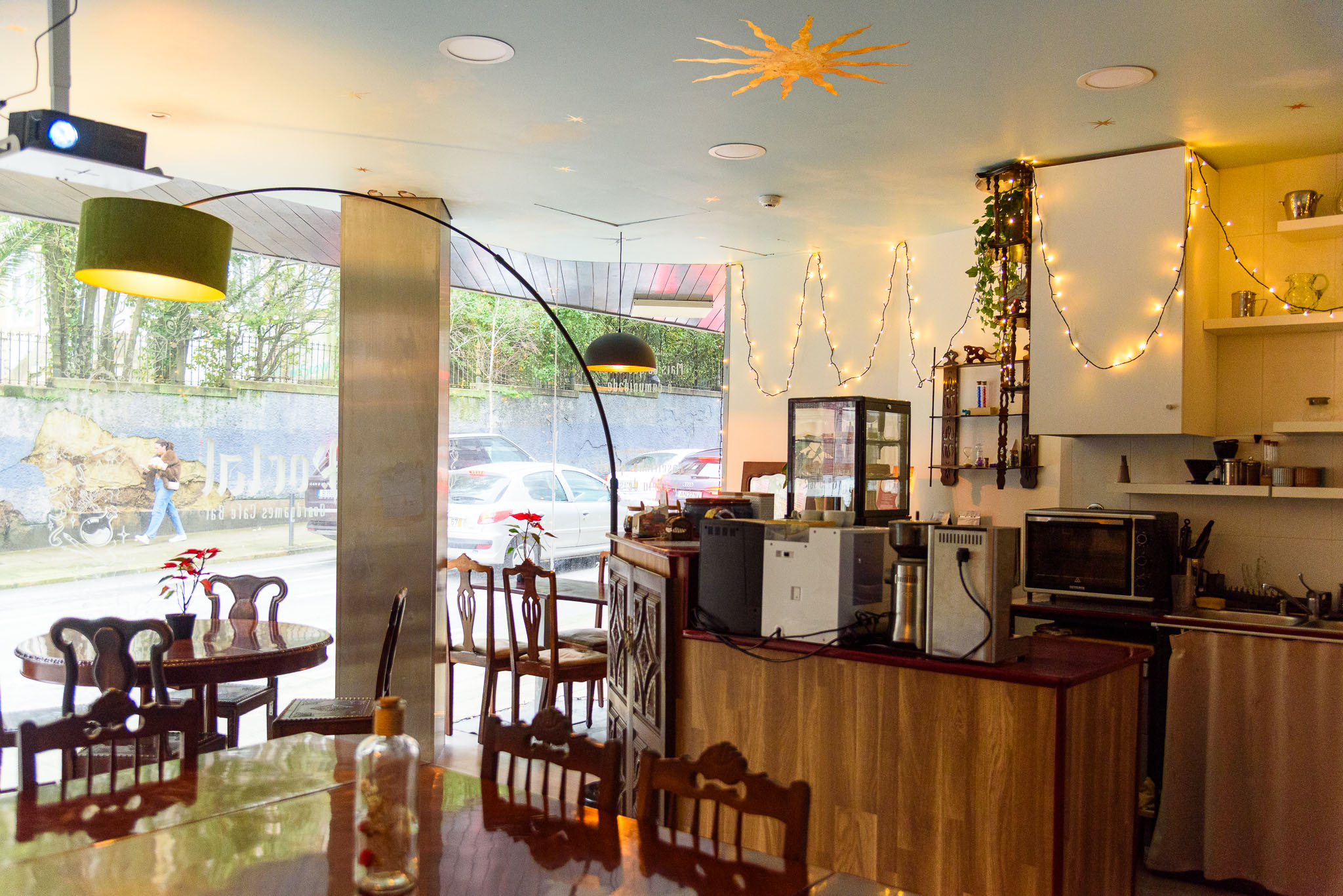
Although it focuses primarily on board games, Portal also doubles as a bar and café. The flexibility of the concept was designed to attract new audiences, but mainly to ensure that no one leaves on an empty stomach. "People come after work, they're expending energy and doing mental work, we want them to have everything they need to unwind."
Initially, a minimum consumption model was tested in the café and bar, but another model is currently being tried out: a €3 fee is charged, which will allow the collection to be further expanded and the space to be improved.
© Mariana Rollo
© Guilherme Costa Oliveira
Quebra-Dados
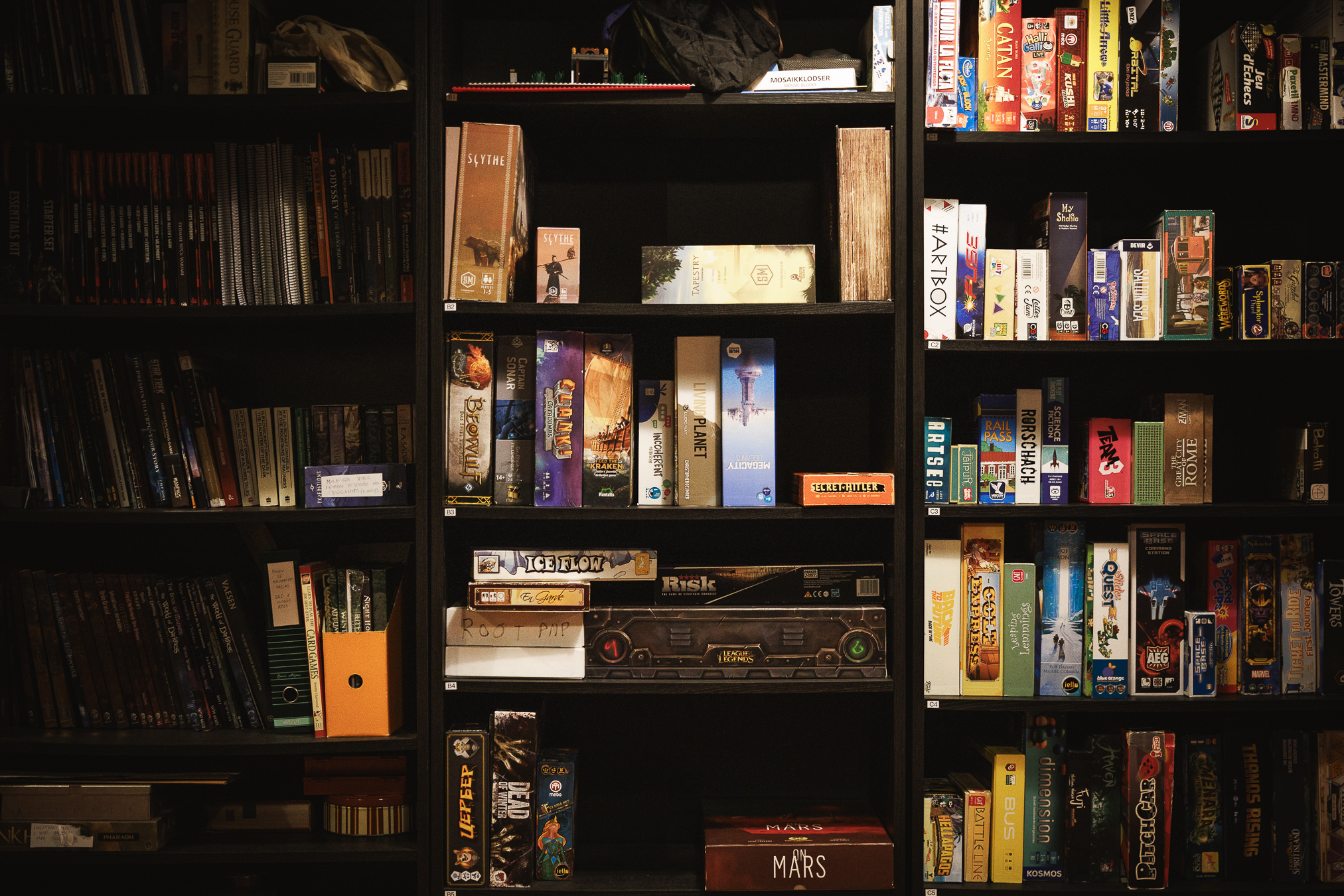
Carolina Dias delved into the world of board games in 2016, after stumbling upon a Dungeons & Dragons session recommended by the algorithm. She used to play the classics with her family, but it wasn't until then that she started playing weekly at shops that organised events at the time. There she found a group with whom she could try out narrative games such as D&D and other board games. During a trip to Copenhagen, Carolina and her best friend, Sara, visited a multi-storey board game café and were mesmerised. It was Sara who challenged her to start the Associação Quebra-Dados.
"There was no space in Porto that brought the community together and where people could come and play any game after work", acknowledges the founder. Formalised in 2019 and based on a model that would allow the use of games to promote social projects, Quebra-Dados opened its doors at Rua de Brito de Capelo, 82 in February 2020, with a crowd of over a hundred people. Shortly after, the pandemic forced it to close.
With no prospect of a return on the investment made by the management team, both financially and in terms of voluntary work, to launch the project, Quebra-Dados went through a difficult period, which it was able to overcome, initially, with the support of Porto City Council and an "understanding landlord" and, later, with the help of a fundraising campaign. When it was possible to reopen, players showed up in big numbers. ‘We were so tired of being on screen and there was a real urge to be with people, to talk to others face to face."
© Guilherme Costa Oliveira
Since then, demand has grown steadily, making it possible not only to cover the association's fixed costs but also to pay the people who serve at the bar. Members pay an annual fee of €12, and other players pay 1,50€ to play any game, with no time limit.
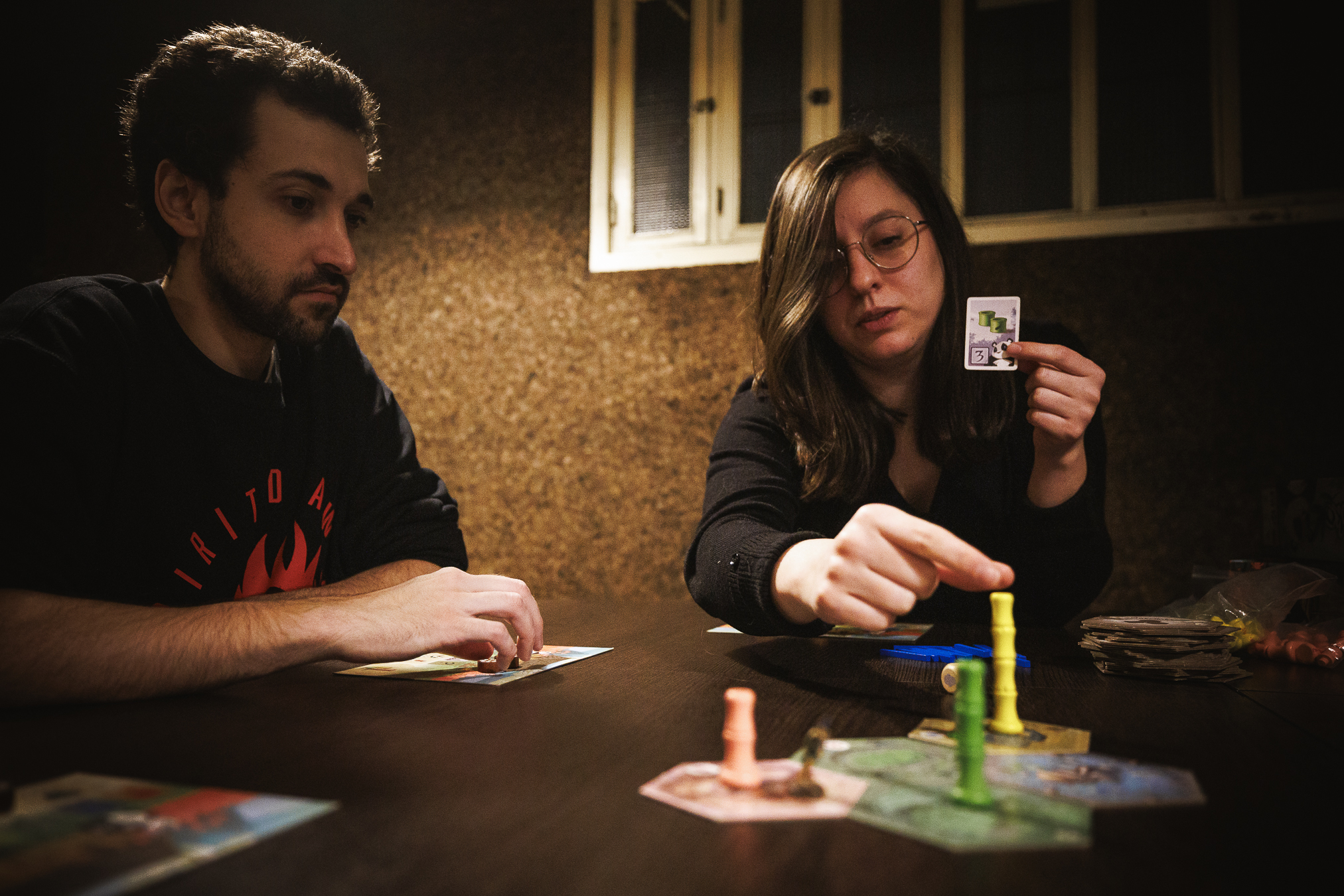
Quebra-Dados' schedule includes days dedicated to specific games, such as Warhammer tournaments, Dungeons & Dragons sessions for beginners, meetings focused on the game Blood on the Clocktower, held weekly on an alternating basis for beginners or experts, or Beyblade demonstrations. Some groups prefer computer games and meet weekly to play Smash Bros. or Street Fighter, for example. There are also miniature painting workshops.
There are also monthly events such as Family Sunday, where families are invited to come along to play games and socialise with each other; the Porto Monthly Roleplayers Meeting, dedicated to narrative games and RPGs; and Meeple Meet-Up, an event for people who want to meet new people to play games with, organised in English.
‘From day one, we’ve had regular groups that come every week or every month’, says Carolina. ‘At the weekend, especially, lots of new people started turning up, because analogue games in general are becoming really popular.’ For the Quebra-Dados president, this trend stems from a shift in society’s understanding of the importance of leisure. “People are beginning to understand that the home-work-home routine is not that healthy and that so-called third spaces are necessary.”
Pop culture phenomena such as the television series Stranger Things and the web series Critical Role, which incorporated D&D into their storylines, also helped to promote RPGs and bring more people into this universe.
The social aspect of Quebra-Dados, which has already involved partnerships with Porto City Council and the Union of Parishes of the Historic Centre to promote board game sessions with children in social housing neighbourhoods and schools, or with women victims of domestic violence, remains a priority.
Currently, there is a large ongoing project, Grow.Dice.Study, which offers different activities based on games, such as learning support, teaching Portuguese language and culture to foreign children and teaching English to all ages, and various board game sessions that develop skills such as reasoning, socialisation and strategic planning.
In addition to resuming its work with schools and expanding its social activities, the association intends to reach new audiences in the future, particularly older people. This goal is already being tested through a partnership with Alquimia, a project run by Coliseu Porto, which has already organised visits to the venue. "Some participants who came to try it out have become members."
© Guilherme Costa Oliveira
© Rui Meireles
Ponto 2
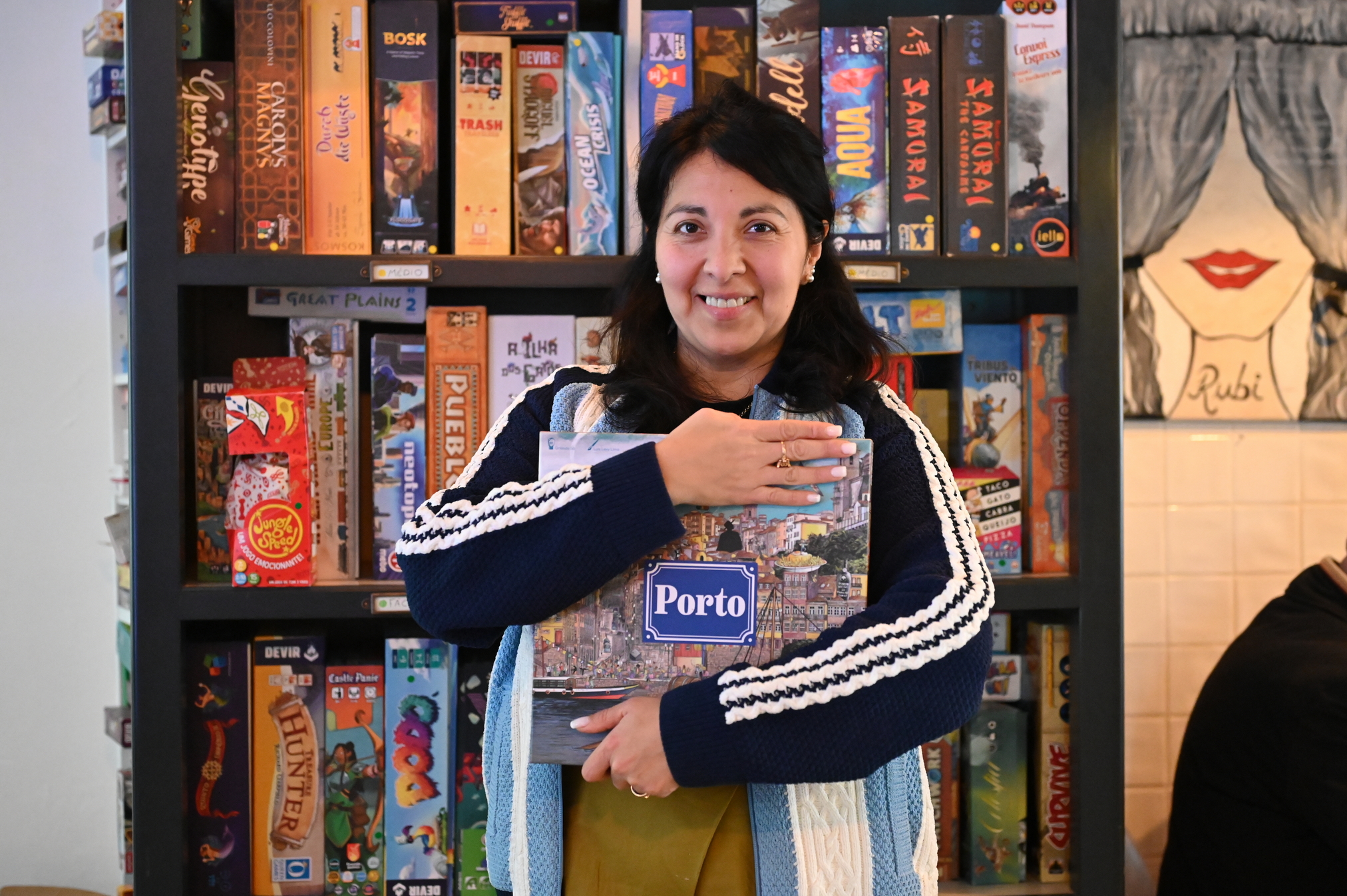
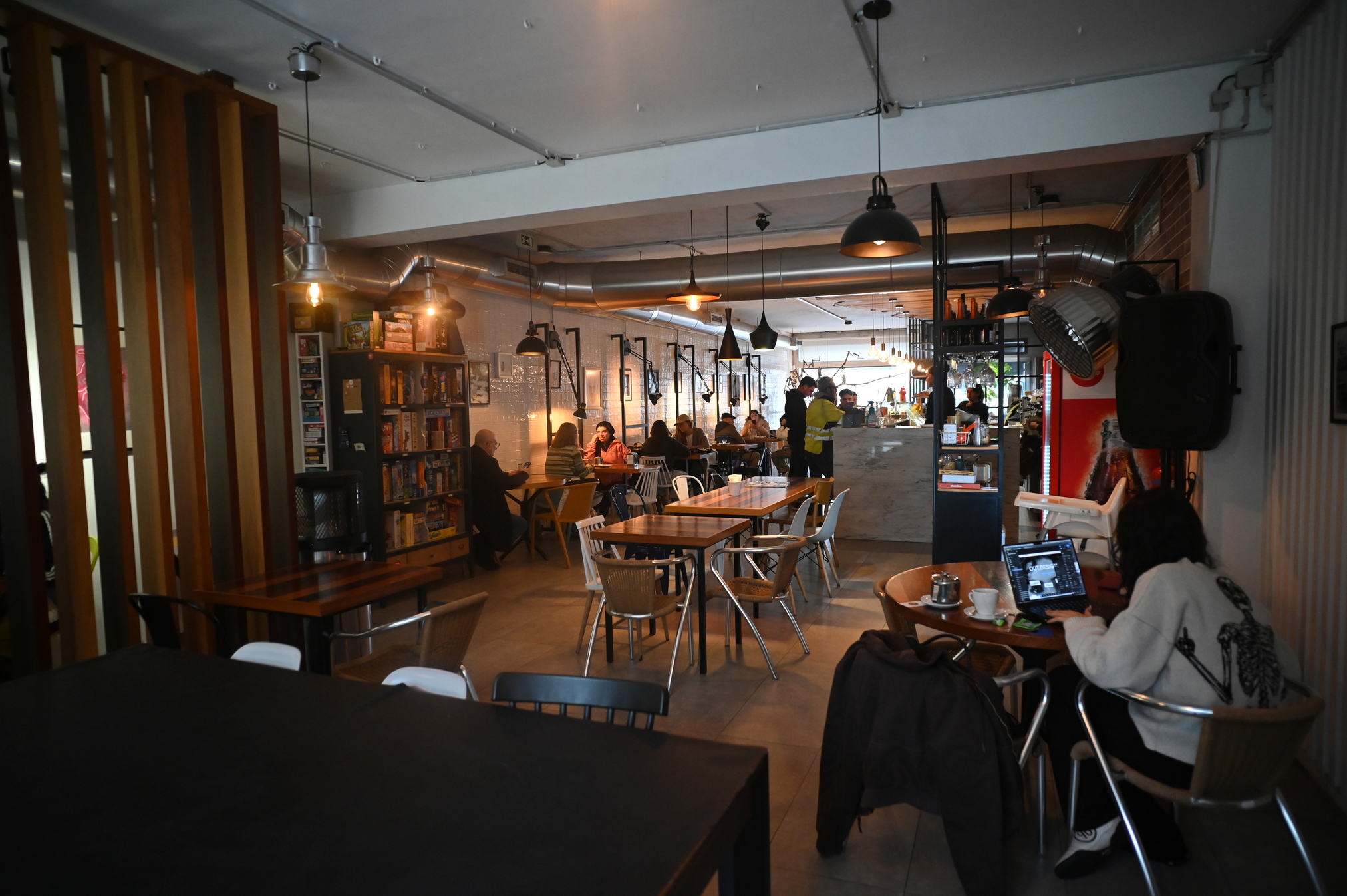
Sónia Lerma came to Porto on holiday to visit a Portuguese friend she had met in Peru, but she fell in love with the city and never left. A doctor, she had already been helping out in her husband's restaurant business in Argentina, but five years ago she decided to make a double change in her life. In the early days, she worked in the kitchens and pantries of local cafés and restaurants to ‘get to know people's habits and tastes and learn words’. Last July, she bought Ponto 2, right outside the Casa da Música metro station, and soon after, she unveiled a spot dedicated to board games.
"A regular customer, Mr. Augusto, who is very into games and is part of the group Camera With No Name, came up with the idea for the first event,” recalls Sónia, who until then knew only about family-friendly games such as Monopoly and Pictionary. She didn’t hesitate to accept, as she is a firm believer in the importance of socialising around a table.
"The goal is to encourage people to spend time with family and friends, whether during the week after work or at the weekend, and to foster better communication away from screens", she says.
© Rui Meireles
As she had done with the restaurants, Sónia sought to immerse herself in the world of board games, researched what already existed and attended dedicated events such as Vianacon. She then joined forces with four groups that organise events focused on this hobby – Camera With No Name, CuboCuboCubo, Engrenagem Lúdica and Porto Torto – to design a regular calendar of events. "They are already part of the house." Generally, the groups prepare the dynamics and take care of guests, when there are any, and pass the details on to Sónia, who sets up the venue, especially the bar. "As the game comes to an end, they start to get hungry", she says.
Typically, the usual menu is available, but other snacks can be prepared upon request. In the summer, a grill is available for barbecues. Food is an integral part of the line-up, whether in a more obvious way, such as at Meeples & Mozzarella, relaxed game nights accompanied by pizzas, or more subtly, in the other sessions.
The menu is extensive and includes items such as Game Afternoon, aimed mainly at families at the weekend, Game Night, for the general public during the week, Heavy Day, dedicated to mind-bending games, Boardgame & Quiz, an event that combines the two categories, and Team Up, an event focused on collaborative games. In the side programme, Bring Your Game challenges players to dust off the games they have at home, and Prototype Night allows them to see and try out games in development, with the designers involved in the process in attendance. There are also presentations and releases of games and second-hand game markets.
The calendar is published monthly on social media, and access to most events is based on a donation, which helps support the groups in organising events and maintaining the 120 games in the game library. Some sessions require prior registration and have an associated cost, usually between 2€ and 5€.
Sónia has also been cultivating a passion for this hobby during her breaks. ‘There are days when things are quieter, and I spend my time reading and learning’, she says. When she observes, she notices that there are several games that are constantly being taken off the shelf, especially by casual players, such as Camel Up, Trash Travellers, Smart 10, Flip 7, and Porto.
Currently, children with their parents and grandparents, groups of teenagers, university students, and other players of various levels and nationalities play at Ponto 2. For the manager, the next step is to incorporate Portuguese Sign Language into the sessions so that everyone can play. "But first we have to take some classes", she concludes.
Share
FB
X
WA
LINK
Relacionados
