

EN

December 2025
More and more people are seeking out art workshops to test their manual skills, stimulate their creativity, produce personalised pieces, clear their heads or even combat loneliness. In Porto, there is a growing number of studios that provide a stage for this desire to experiment. Agenda Porto visited four of these spaces where you can try your hand at and learn ceramics, drawing, illustration, engraving, or tufting. In addition to workshops designed for adults, there are also workshops for families and babies.
ACASO Atelier Criativo
Adalgisa de Castro Lopes and Elizabete Sousa are architects and long-time friends. They attended different universities, but have worked together in several studios and have been promoting art workshops for different audiences.
It was their shared dream to have a joint studio that was ‘like a street shop’. They found this space ‘by chance’ at number 622 on the longest street in Porto – Rua de Costa Cabral – and, from one day to the next, they had to make a decision. They opened the space in September this year.
‘The word “chance” has a lot to do with the workshops we develop: we are interested in the exploration component and not in the “correct” or “proper”,’ says Adalgisa. The motto is ‘embrace chance, embrace error’.
‘We charge whatever people want to pay, so that the cost is not a barrier to participation,’ says Elizabete.
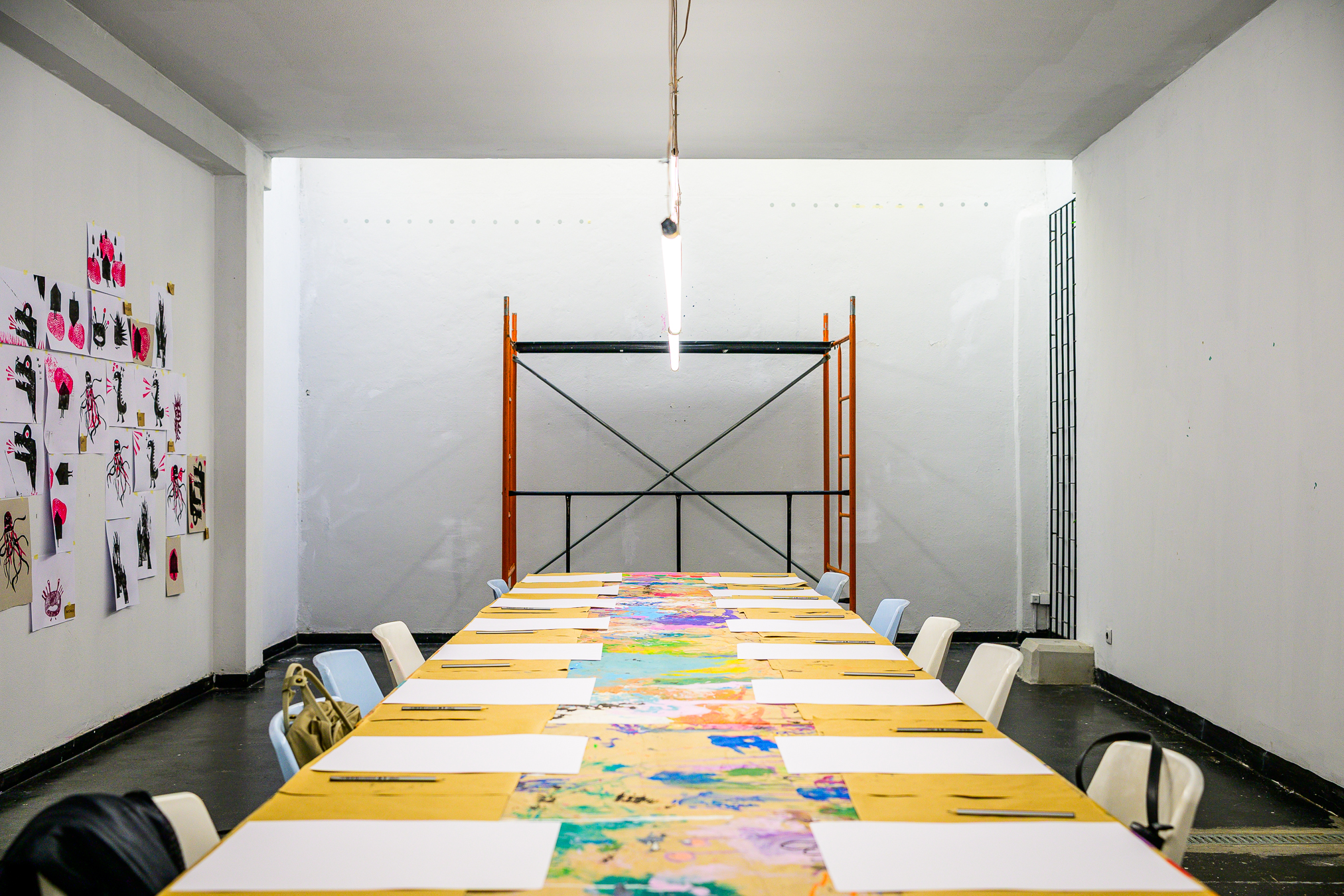
“We would like to have live music, but we’re still working towards that,” adds Adalgisa. These drawing jams also aim to provide a moment of socialising. “Workshops are often a way to combat loneliness, to bond with new people, and to meet people who share the same interests.”
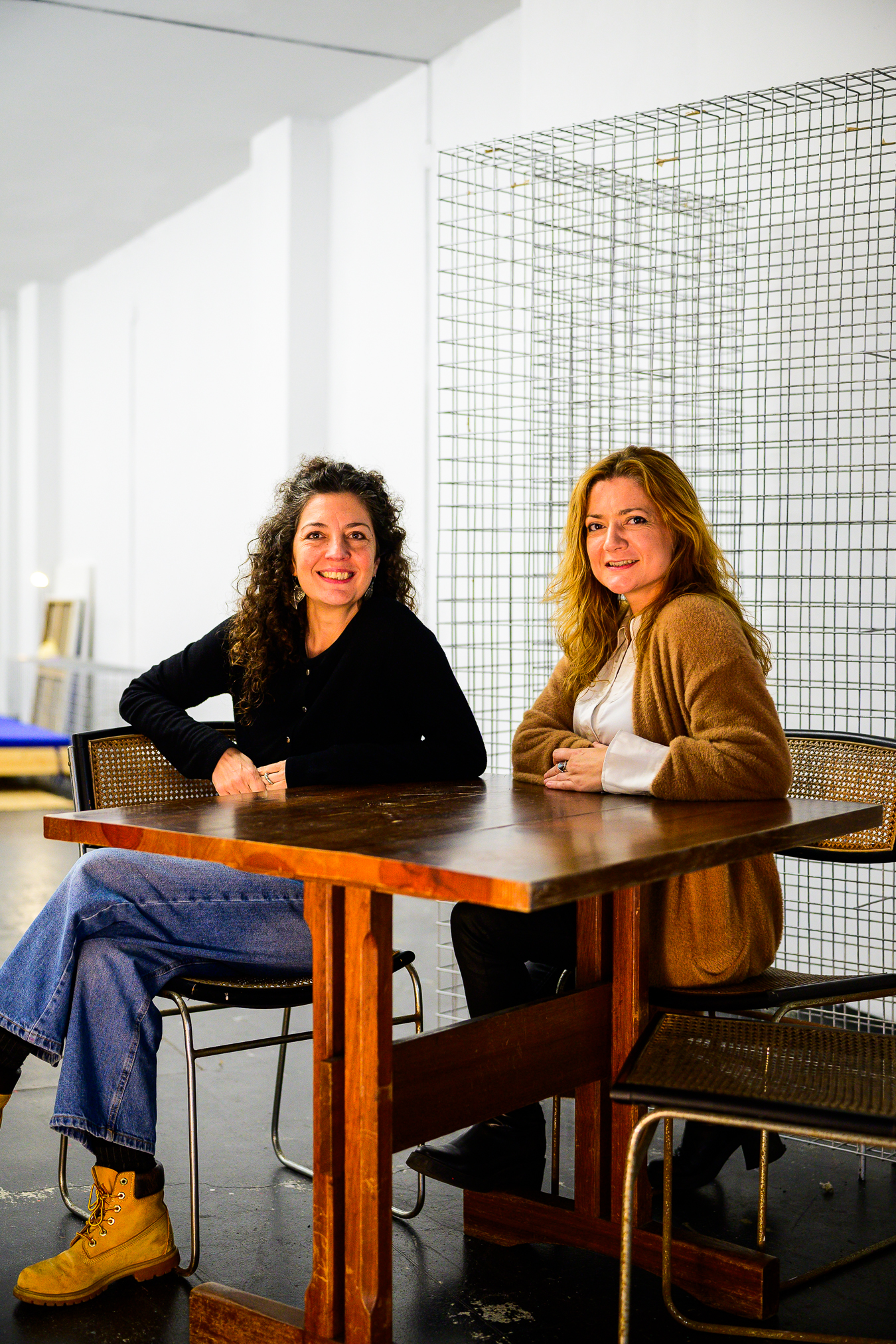
Adalgisa de Castro Lopes e Elizabete Sousa © Nuno Miguel Coelho
As they are new to the neighbourhood, they say there is a ‘funny relationship’ with their neighbours. ‘Almost every day, people knock on our door to ask what we are doing here; we sense curiosity from passers-by, they like the shop window, and they tell us that something like this was needed in this area.’
The founders of ACASO say that in their workshops ‘the process is what matters’ and add that ‘the sensory component is very important’, namely the relationship with the material, but also the body in motion. In this regard, Adalgisa mentions that she trained with Segni Mossi, an Italian group that explores the relationship between drawing, dance and body expression, in order to apply the knowledge she acquired in the workshops they promote. “I often say that I don’t teach anyone to draw; here, the motto is exploration,” she says. ‘It's a living laboratory where you can access materials and experiment with them, and where people can feel the freedom of [the process] not having to result in a work of art. It's about experimenting,’ emphasises Elizabete.
© Nuno Miguel Coelho
Among the various monthly workshops, Adalgisa highlights Para Lá do Desenho (Beyond Drawing), which takes place once a month and is held in collaboration with psychologist Margarida Sanchez, where drawing (using different techniques and materials) is used as a tool for sensory exploration and personal expression.
It is a proposal ‘for those who wish to explore drawing as a practice of self-knowledge, in a welcoming and sharing environment.’
ACASO. Atelier also hosts other projects, such as Wôdu Studio, which promotes embroidery and sewing workshops for people of all ages and different levels of knowledge. ‘We want to revitalise this space and create synergies with other projects open to the community.’
Regarding the December programme, Adalgisa and Elizabete highlight a workshop for families on the 6th: Clube do Conto e da Linha (Story and Line Club), ‘where children and adults explore together the power of stories, imagination and artistic creation.’ Each session begins with Lucie Oliveira sharing a story, a moment of listening and curiosity, and then, based on the story, we open up space for expression through art. There are also two workshops dedicated to the Christmas season: on the 7th, a workshop for creating Christmas cards using engraving, and on the 13th, an engraving workshop, ‘where we offer time, dedication and creative expression, gifts that carry with them the value of gesture and intention.’
Base. Atelier cowork
Born in Porto, Filipa Viana is a visual artist known for her ‘fat women’, voluptuous female bodies (often wearing swimsuits) that she draws and paints on ceramic plates and lamps or moulds in stoneware. ‘I like to bring a more humorous side to my pieces, to explore an ironic side and create pieces that make people smile,’ she tells Agenda Porto. In addition to wanting her own studio where she could create and develop her own work, Filipa was looking for a space where she could teach and share her knowledge – she found it on Rua de Anselmo Braamcamp, where, in February last year, she opened Base. Atelier Cowork.
‘When I left college, I needed to share studios with friends, it was the only way we could keep doing something; but at a certain point, I needed a bigger space – to be able to welcome people and give classes because I had already taught painting and drawing, and I realised I had a knack for interacting with the public,’ she tells us.
When we arrived at Base, Filipa was teaching a free ceramics class in which each participant develops a personal project under the artist's guidance. ‘I admire your patience!’ we heard her say to one of the students who had embarked on the meticulous task of creating ceramic Christmas decorations.
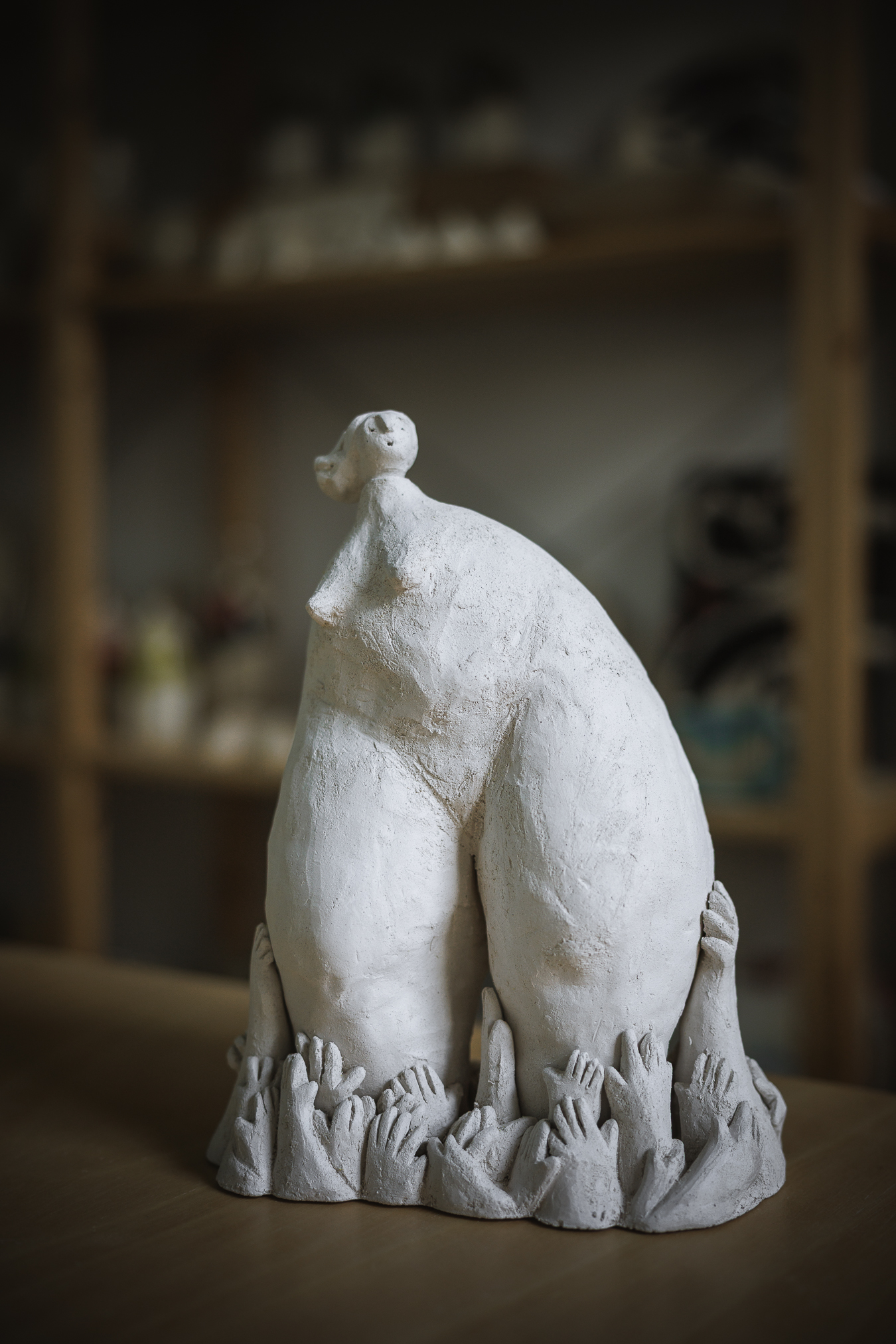
Escultura de Filipa Viana © Guilherme Costa Oliveira
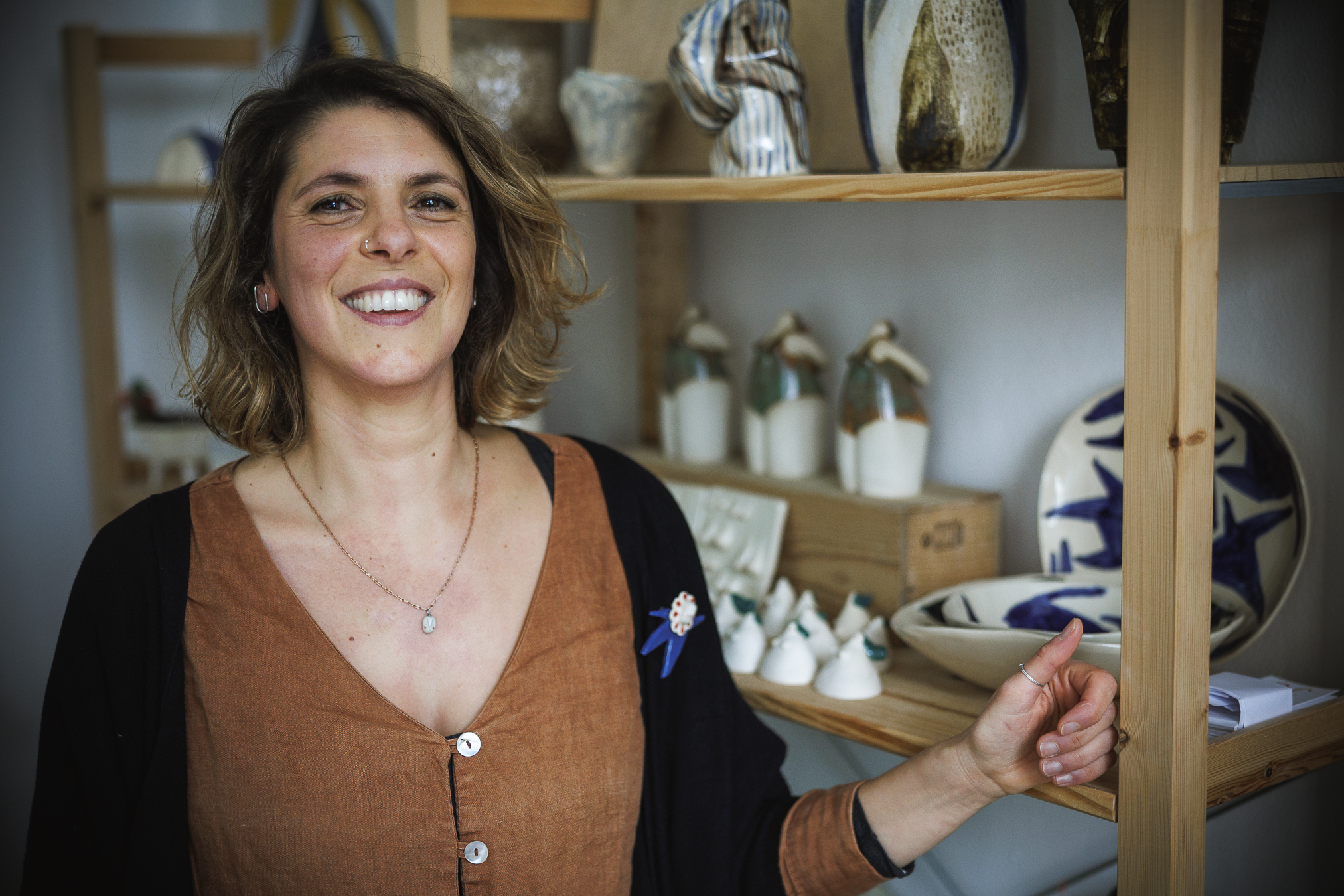
Filipa Viana © Guilherme Costa Oliveira
‘Many of the people who participate in classes and workshops have always enjoyed working with their hands and have a certain sensitivity that they wanted to develop, but ended up pursuing other areas. I also feel that many people come looking for input for their lives. I think there is also a therapeutic side to it; the phrase I hear most often is “this is very good for my mind”,’ she says. In addition to the classes, which she ‘tries to limit to four groups so she has time to develop her work,’ Filipa promotes various themed group or individual workshops on Saturdays, based on basic clay modelling techniques, which are increasingly sought after by companies that want to provide team-building activities.
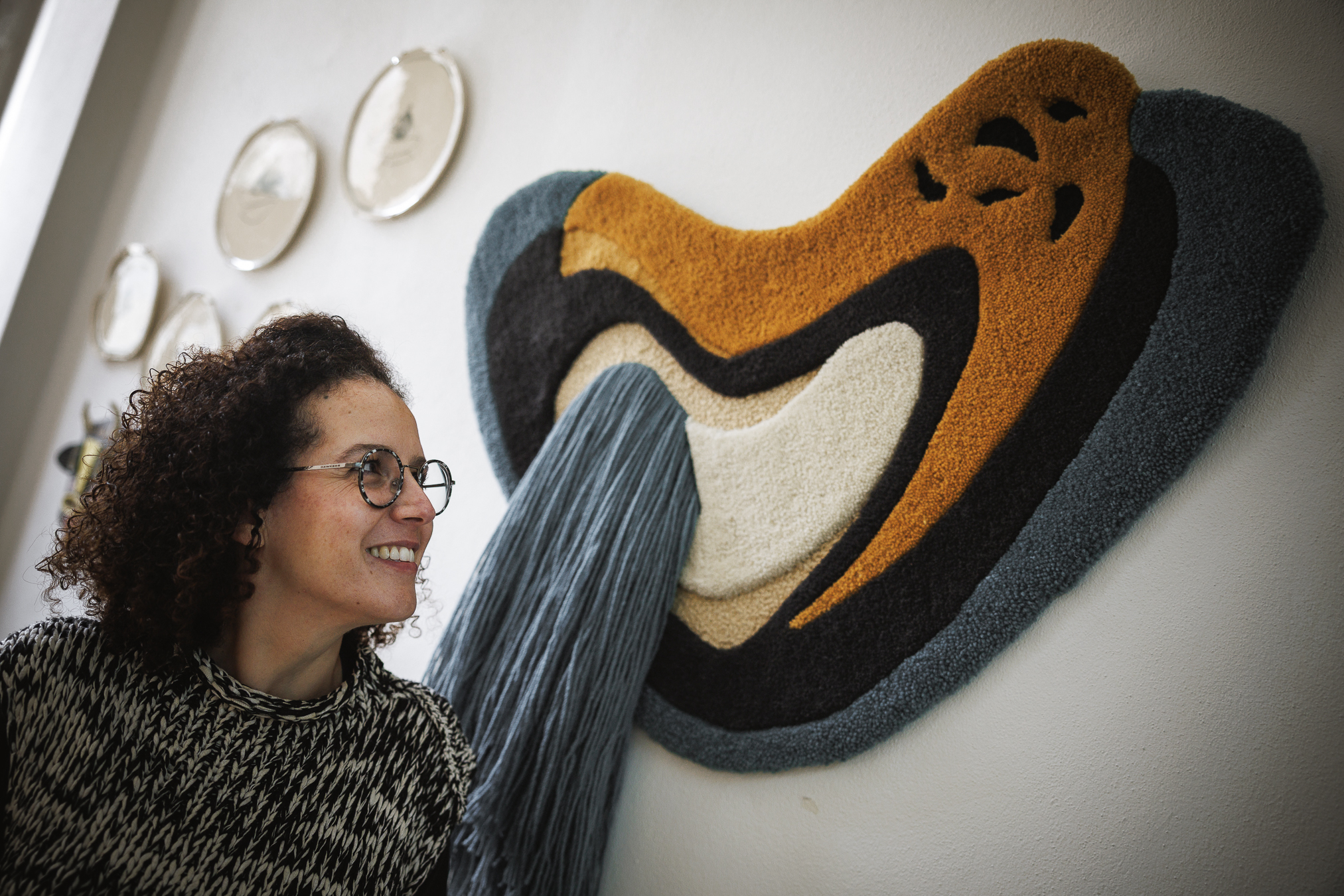
Geni e uma peça da sua autoria em tufting © Guilherme Costa Oliveira
In addition to Filipa, Base has four other resident artists. ‘Sharing with other artists can contribute to creative breakthroughs. I've always been in shared studios, and I like this dynamic and the exchange of ideas,’ she says. One of the artists is Geni Gomes, who launched herself into the art of tufting and also began promoting workshops.
Geni studied Graphic Design at the Faculty of Fine Arts in Porto, where she met Filipa. After working for a few years as a designer, in 2008, “with the crisis”, she moved into the restaurant business, after taking a sushi course, but never stopped exploring her artistic side.
“I have always loved crafts because this type of work has always calmed me down; I suffer from anxiety, and the situation worsened with COVID.” It was then that Geni decided to change her life and “get back to herself.” She took a course through the IEFP in contemporary crafts and, “in the meantime, Instagram’s algorithm showed her tufting,” which “fascinated” her. She wanted to try the technique and took a course at an artistic cooperative in Covilhã. “I felt that this was what I wanted; and when I was looking for a place to work, Filipa found this one. The universe brought us together," she laughs.
But what is tufting, anyway? It is an artistic textile technique that can be applied to rugs and wall hangings, for example. ‘It can be applied to whatever we want, there are no rules,’ says Geni.
"We “fill” a canvas with a tufting gun that injects and cuts the yarn; the biggest challenge is designing [on the canvas] and choosing the colours we are going to use,‘ she explains, adding that ’in large carpet industries, tufting is done by robots, but through social media, especially TikTok, it has become a worldwide trend, and there is a huge focus on this technique because it is exciting to watch and do."
In addition to producing her artistic pieces, Geni ‘took a chance’ on teaching classes, and ‘they are going very well.’ In December, two tufting workshops are planned, one of them Christmas-themed, on 8 December, with a total duration of six hours (two hours for finishing touches). Participants will be able to take home a piece of art on a 40 cm x 35 cm canvas. At Base, on 13 December, a Christmas decoration ceramics workshop is also scheduled.
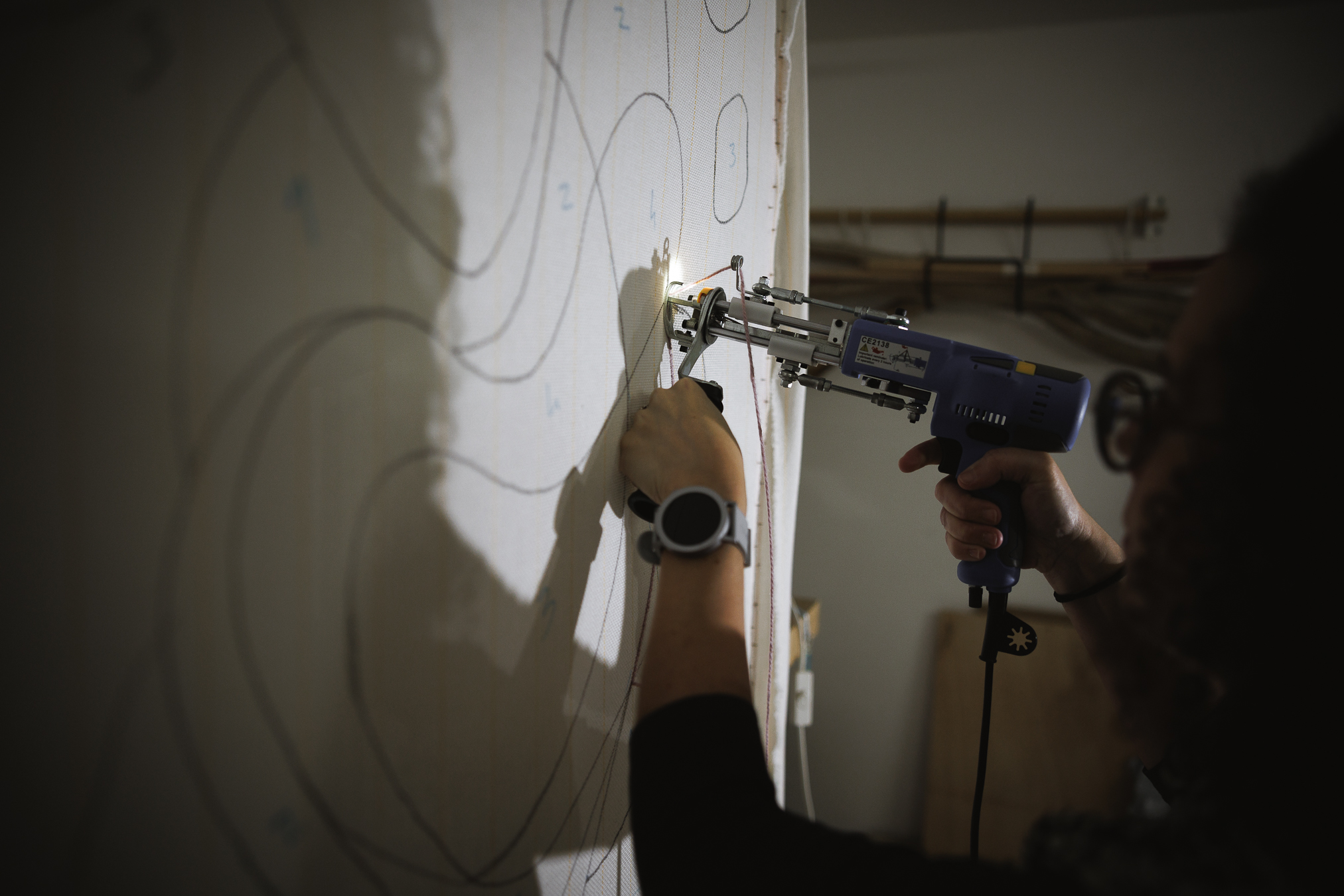
Demonstração de tufting © Guilherme Costa Oliveira
DoBarro
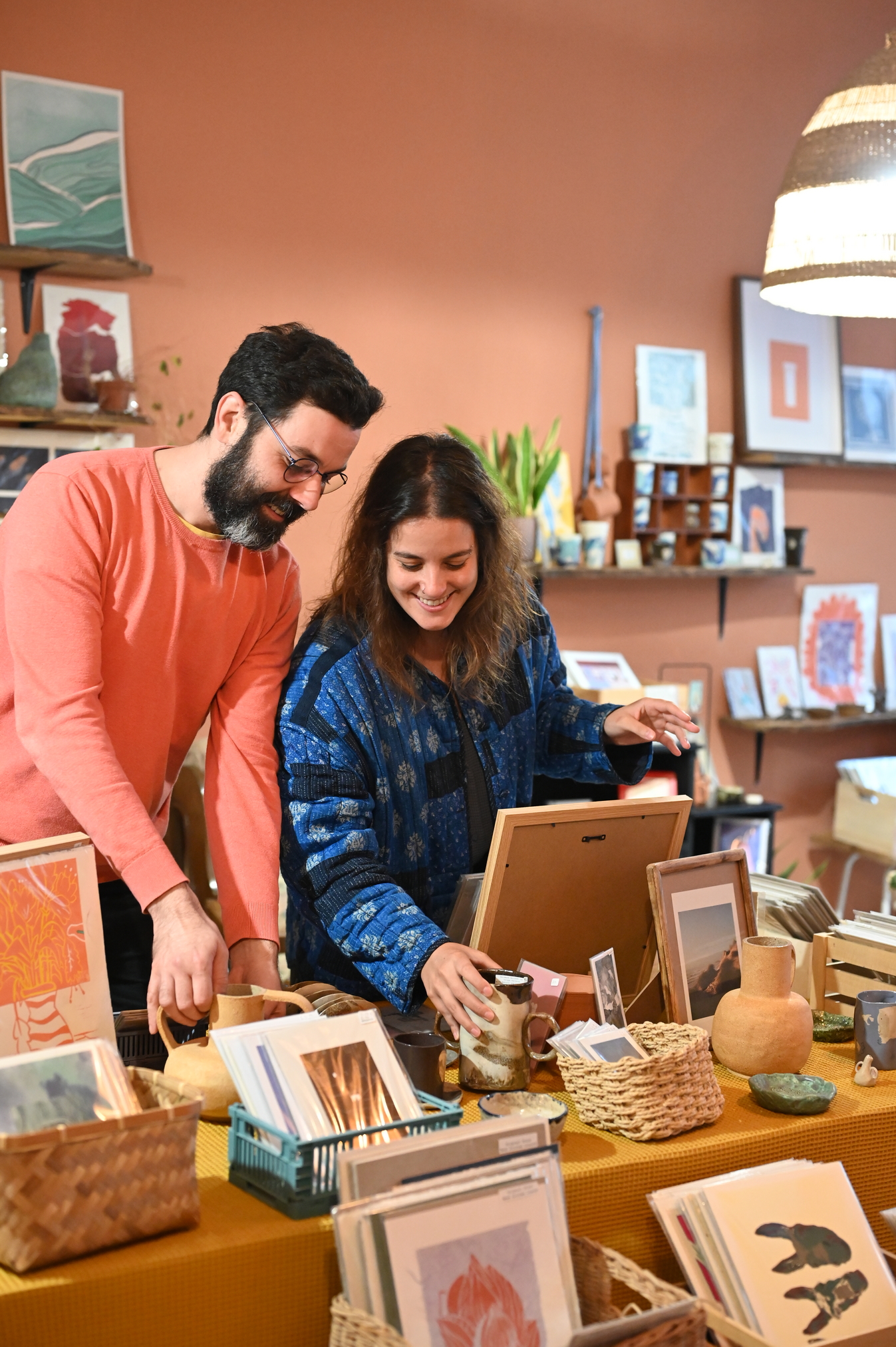
Felipe e Marisa no DoBarro © Rui Meireles
The stories we hear about the emergence of shared studios in the city have some common points: in addition to more practical issues, such as reducing the cost of rent, there is the friendship between their founders, their shared passion for the arts, and their desire to pass on their knowledge to more people. The story of DoBarro is no different. Marisa Grilo, Felipe Rocio, and Samuel Sanção are three friends who, in early April, opened this studio and shop on Rua da Alegria, where they produce and sell ceramics, illustrations, and engravings, and promote various artistic workshops.
Marisa and Felipe met in 2018 while studying for a Master's degree in Sculpture at the Faculty of Fine Arts of the University of Porto. They ‘discovered that they shared a passion for ceramics’ and began working together. Previously, the studio was in Felipe's living room. The house had a backyard where it was possible to have the kiln, built by him, where they fired the ceramic pieces, and which is now in the backyard of DoBarro. "It's a modular kiln, and as it can be dismantled, we brought it here, block by block, and reassembled it here.”
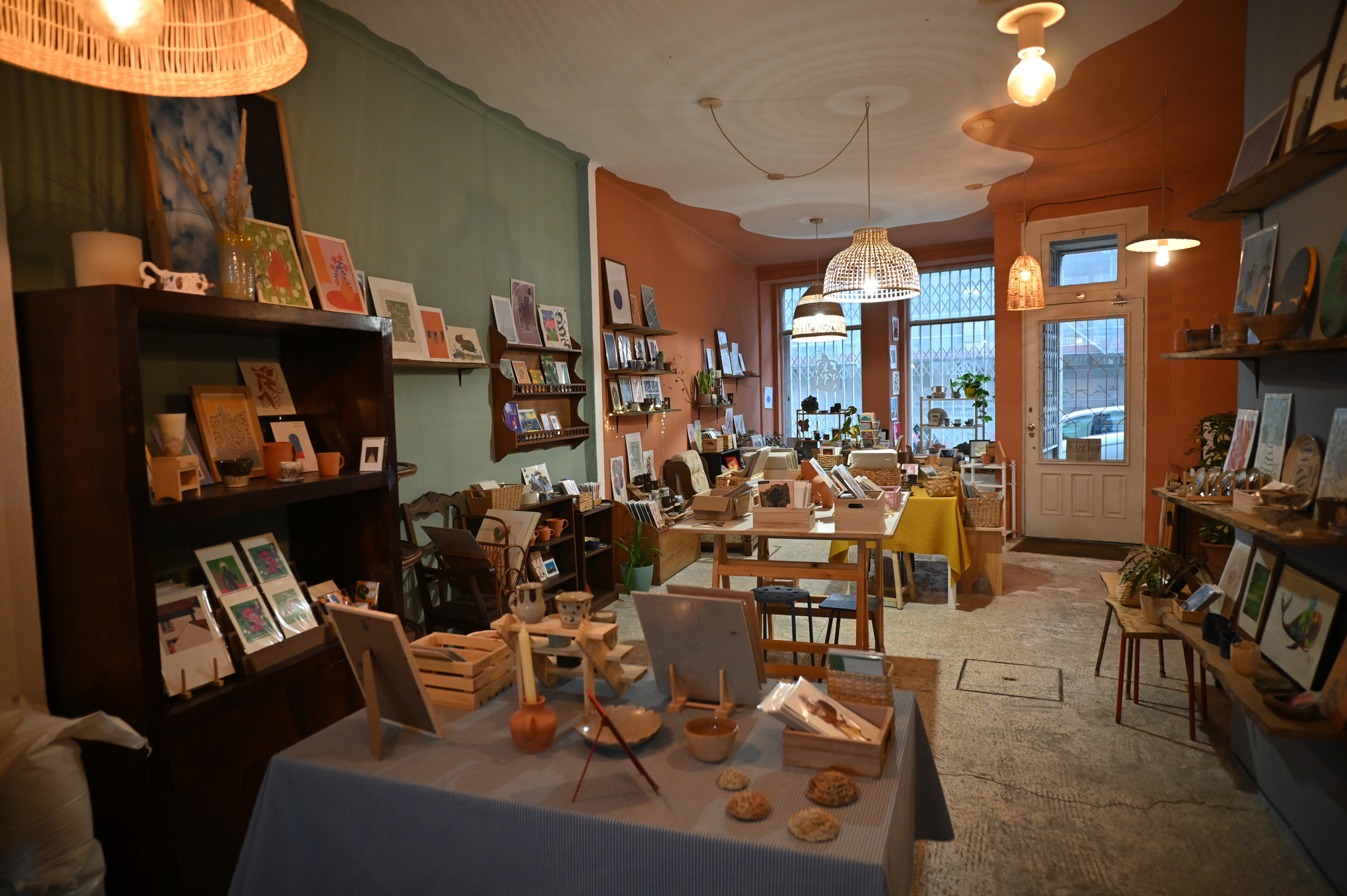
DoBarro © Rui Meireles
The idea of promoting workshops began at Squid Ink Works, a space managed by a collective of eight people of various nationalities, of which they are a part. At the time, ‘99% of workshop participants were tourists,’ but today locals and foreigners are equally represented. ‘Having the studio here on Rua da Alegria, more and more locals are participating—and we're very happy about that,’ says Marisa. ‘The publicity in Agenda Porto also contributed to this,’ she adds. Most participants ‘have never had any contact with ceramics and want to try it for the first time.’ ‘At first, they start by saying that “nothing good will come of it,” but in the end, they leave here surprised and proud of the result.’
Although the name of the studio points to work in ceramics, the three artists also do illustration and engraving. ‘Marisa and I are more into ceramics, but we are very interested in exploring other artistic expressions and techniques,’ emphasises Felipe. In this regard, he highlights the work of Samuel Sanção, the third member of DoBarro (who was unable to be present on the day we visited the space). ‘His background is different from ours, he is a designer, but he has also explored the field of illustration; he is very fond of comics and is very good at creating more dreamlike, surreal things.’ It was he who came up with the idea of creating workshops such as Zine or Desenhar depois de Crescer (Drawing after Growing Up). ‘The focus is really on freeing the hand, freeing the gesture and not being ashamed to express yourself,’ he says. He adds: ‘When we are children, we have no inhibitions and draw more freely, but I think that from a certain age onwards we start to have certain mental blocks and stop drawing. Samuel came up with several exercises to try to break down these barriers.’
Two hands are not enough to count all the workshops that take place monthly at DoBarro, but in December there are two more related to Christmas: on the 6th, there is a workshop on Christmas decorations in Nerikomi, an ancient Japanese technique, ‘which creates a marbled effect and uses different clays’, and on the 13th, there is a workshop on creating ceramic candle holders. For more information, see the Art and Exhibitions section.
Oficina Josefina
It is on Avenida de Camilo, in Bonfim, that we find Oficina Josefina, founded by Rita Faustino, an artist and art educator. Born in Ribatejo, she moved to Porto to study at the Faculty of Fine Arts of the University of Porto, where she graduated in Fine Arts – Painting. After working for eight years in various museums, where she ran workshops and guided tours, Rita began to feel the urge to ‘get back to working with materials’. So, when she found this space, she ‘decided to do what she had already imagined: to have a studio where she could work with materials and welcome people to do workshops in ceramics, embroidery and macramé’.
Oficina Josefina opened its doors in May 2019, and the story behind this rhyming name began in 2017, when she was pregnant with her daughter. ‘At that time, I was giving guided tours at various museums, and every time I did a guided tour, they would ask me what I was going to name the baby; I hadn't decided yet, and to get rid of the question, I would answer “Josefina”.’ The name, she says, ‘stuck,’ and when she went ahead with the studio, she brought back ‘Josefina.’
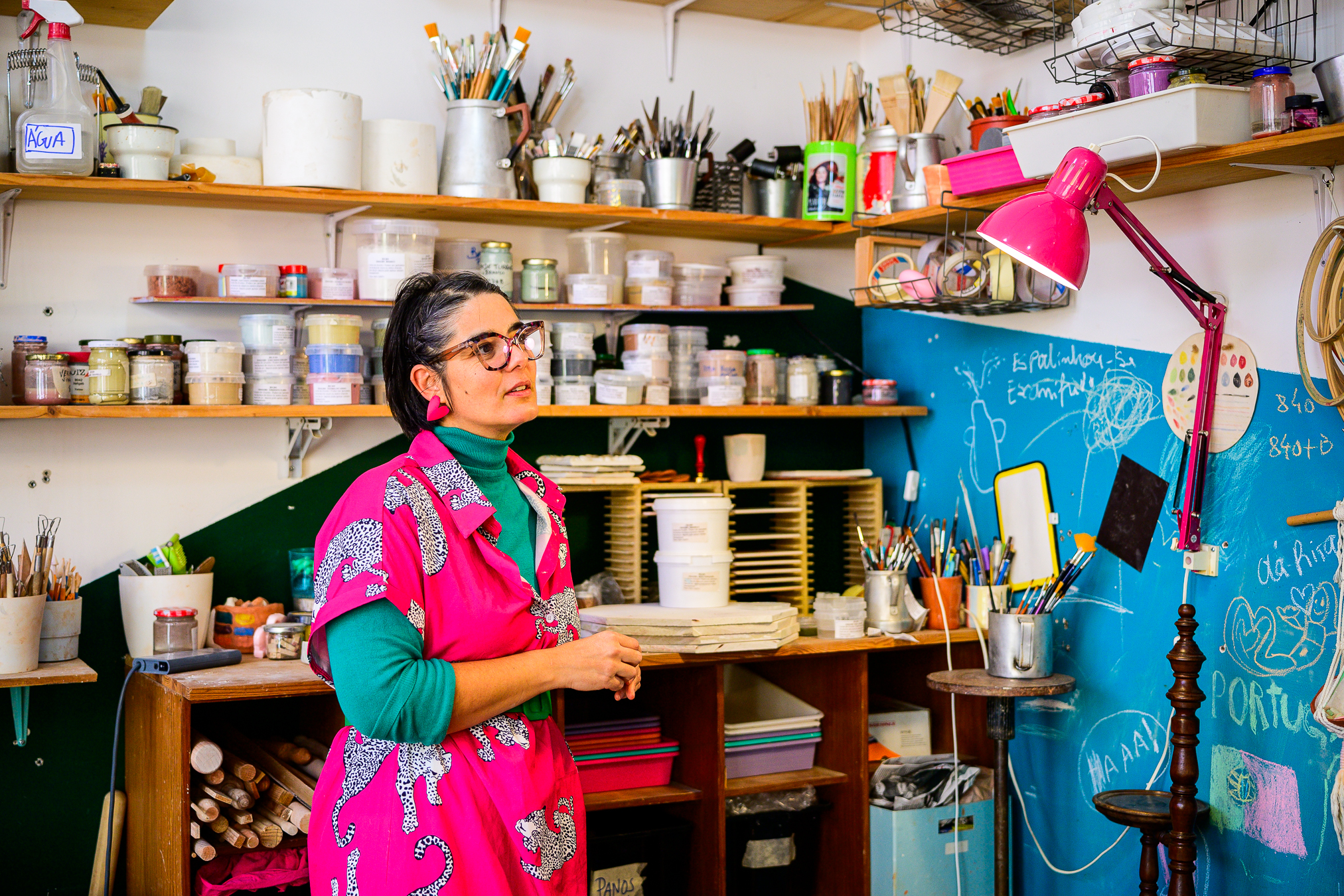
Rita Faustino © Nuno Miguel Coelho
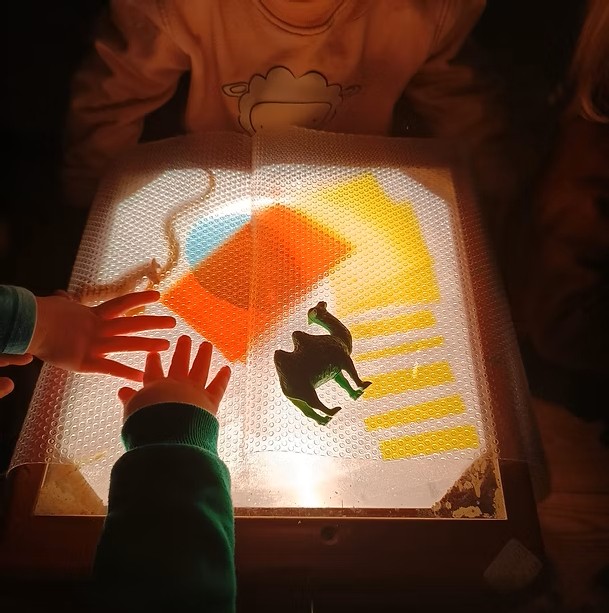
Experimentar Luzes, Oficina Josefina © DR
Rita has designed many workshops and classes to share the knowledge and artistic techniques she has acquired throughout her life. ‘This is my identity – the “mess” you see: paintings, drawings... When I look at the work I exhibit, I see my entire journey, even before Fine Arts – embroidery has been with me since I was five, when I did my first piece. I like to share my knowledge with people,’ she says, smiling.
In addition to ceramics, embroidery and macramé workshops for adults, every week on Wednesdays and Thursdays, from 2pm to 4pm, there are ceramics classes, which are particularly popular with those who want to clear their minds. On Sunday mornings, there are workshops for babies aged eight months and older, and workshops for families in the afternoon. In December, there are two workshops scheduled for babies – Trying Out Pottery and Trying Out Lights, on the 7th and 21st – and two workshops for families – Pottery Lab and Snow Globes, also on the 7th and 21st (see the Families section). During this month, Oficina Josefina will also be out and about: on 8 and 23 December, Rita Faustino will be at Tenda Cristal, at the Christmas Market, in Cordoaria, leading two Christmas workshops (free of charge), as part of Ágora's festive programme.
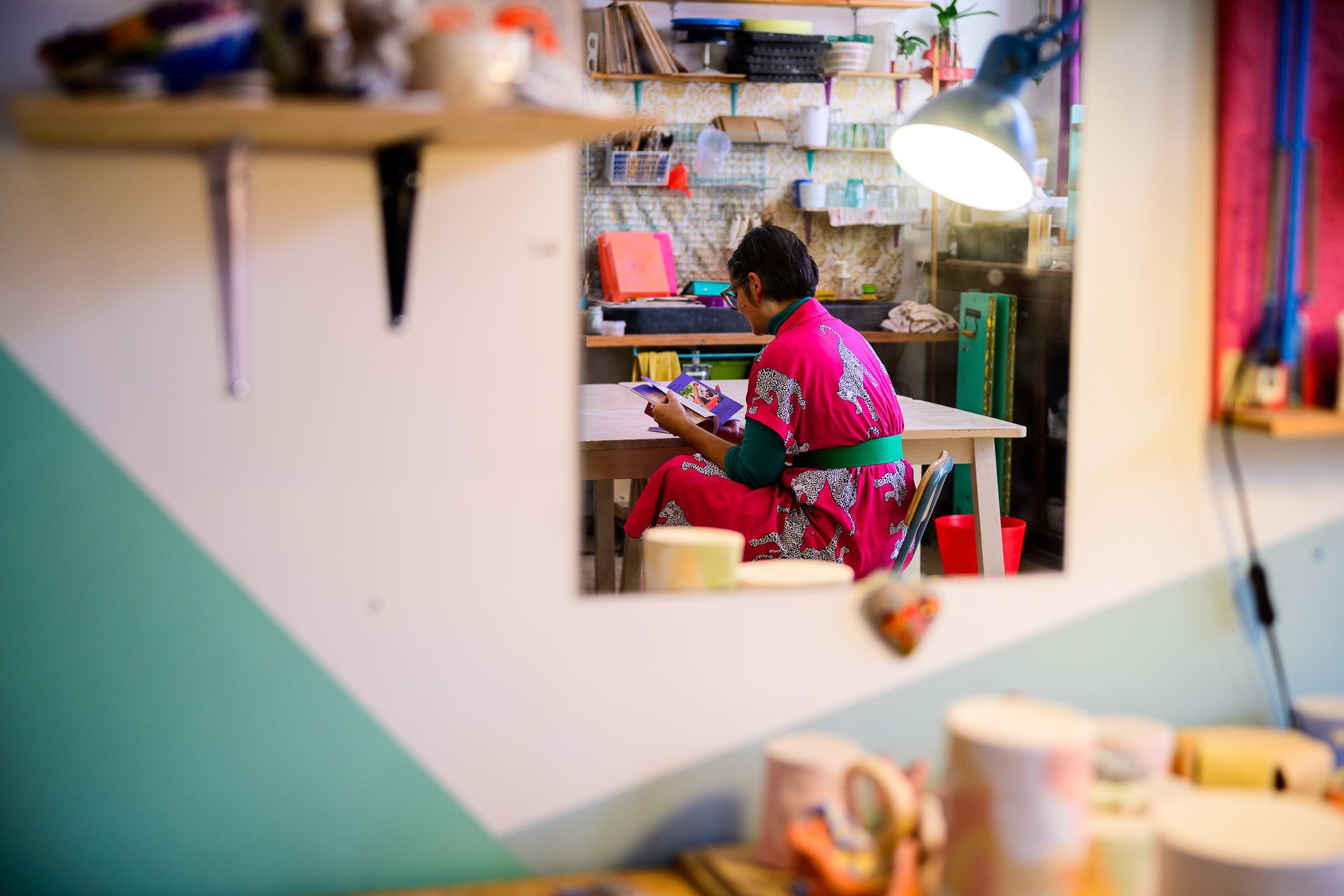
© Nuno Miguel Coelho
Share
FB
X
WA
LINK
Relacionados
