

EN

Clube de Leitura do Batalha © Renato Cruz Santos
April 2026
They encourage reading, provide a place to discover new works and authors, and offer a space for sharing and exchanging ideas. Whether in person or online, book clubs have been springing up in increasing numbers in recent years, both in the city and across the country. In the month that marks World Book Day (23 April), Agenda Porto highlights six of these projects — The Book Club; Heróides; A Poesia Adora Andar Descalça; Clube de Leitura do Batalha; Picnic Book Club; Literacidades — where literature serves as a pretext for something rarer: the creation of genuine communities centred around books. Perhaps this is what explains the vitality of reading clubs.
The Book Club - Fisga Warehouse
At Fisga Warehouse, there is a book club (in English) that started out as nothing more than a winter retreat but quickly grew into a small community. When Liyana Balkanska arrived at Fisga in September 2024, the venue’s cultural programme consisted mainly of concerts and performances, but the team realised that, “during the colder months, people were looking for cosier events”.
The idea for the club came about by chance: “one of our colleagues mentioned that she loved taking part in book clubs, because it was a way to meet new people; as I love reading and am an expat, I thought it would be a community I’d like to create and run, whilst bringing a more intimate and welcoming element to Fisga’s cultural programme,” Liyana tells Agenda Porto.
The project was initially called Plot Season and was conceived as “a series of meetings”. “However, as the community grew, it became clear that people wanted to continue throughout the year, and the team eventually named it The Book Club,” she explains.
The growth was so impressive that, at the start, there were “four or five people at the sessions; after six months, there were already around 50, and today there are over 140 members”.
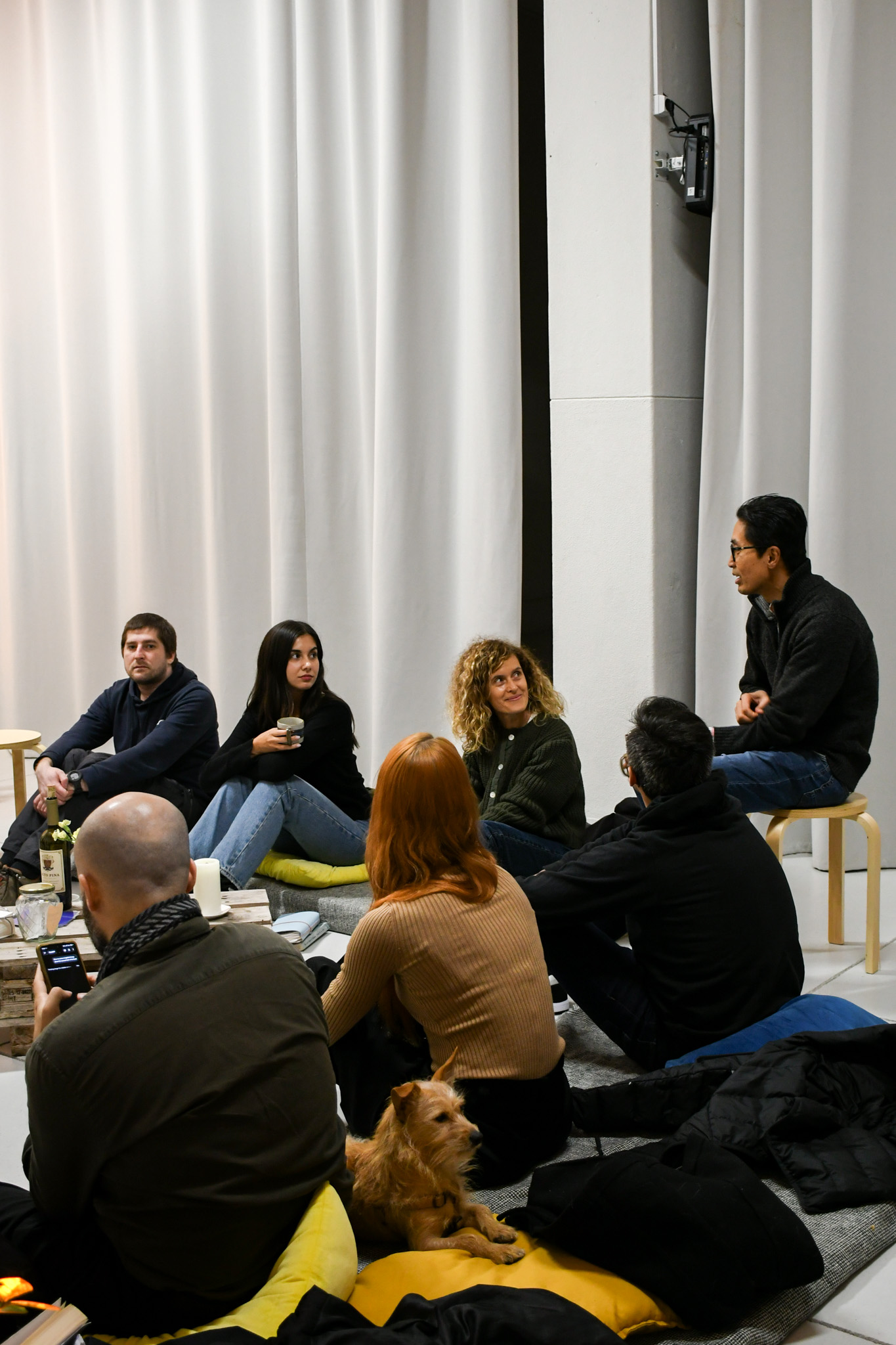
The Book Club © Fisga Warehouse
“Reading has become an act of rebellion”
For the 23-year-old reader, reading has “become almost an act of rebellion”, rather than just a habit. “It’s a way of slowing down and reconnecting with deeper forms of attention,” she emphasises. And she points out, in this regard, that as Fisga is a co-working space, “many of us spend the whole day staring at screens and interacting with other people who are also staring at screens”. “This small act of rebellion becomes even more necessary,” she argues, adding that this “inspires her to grow this community and to experiment with new ways of engaging with books”.
It is therefore no surprise that the club is not limited to literary discussion: there is tea, homemade desserts, games, and experiences. There was even a “Book Tasting”, where books and wines came together in a sort of sensory tasting, in partnership with Rosebud Bookshop and the GWines Wine Club. “We paired books and wines and invited participants to ‘taste’ different genres and stories they probably wouldn’t normally choose.”
But what sets this club apart is not just its format — deliberately informal — nor the fact that the sessions take place fortnightly in English. It is, above all, the way it is built together: here, everyone can suggest books, vote on the next reads and lead the conversation.
This openness is reflected in the community itself. Among the participants are “regular readers and occasional readers; people who work as literature or language teachers and have read hundreds of books, but also curious students who simply want to explore new ideas”.
As the sessions are held in English, a significant proportion of the community consists of expats, but it also already has many Portuguese members. Ages range from 20 to 60, and, as Liyana assures us, “what makes the conversations interesting is precisely the fact that all perspectives are valued”.
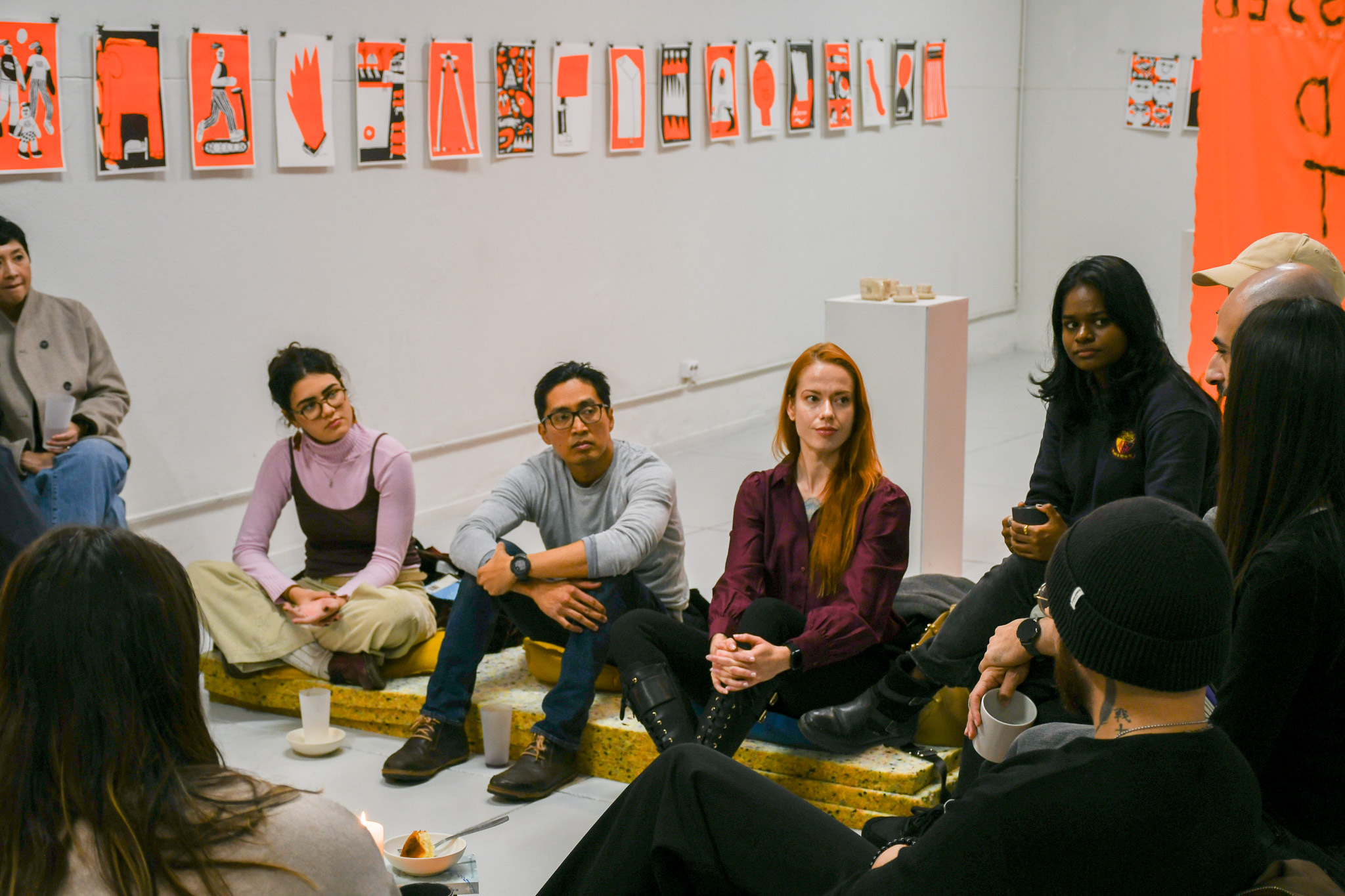
The Book Club © Fisga Warehouse

Book Cards © DR
The selection of titles follows this diverse approach. “So far, we’ve explored both classics and contemporary literature.” Recently, they read Crooked Plow by Itamar Vieira Junior, and in recent months they’ve discussed books such as Blindness, Pachinko and Little Women. In March, for the first time, they read a graphic novel, Watchmen, “in a special session”, she notes.
To facilitate conversation among participants, the Fisga team created Book Cards, a card game in which each card poses general questions that can apply to almost any book — “Did the book change your mind about anything?” or “Which character do you identify with most?” — and which serve as entry points into a broader dialogue. “They’re especially useful when the group is large, because they allow participants to be split into smaller groups and give everyone space to share their ideas,” explains Liyana.
The young woman notes that the Book Club attracts people who “are looking for spaces that focus more on human relationships”. “Here, people find an environment where they feel comfortable, welcome and, we hope, looked after. The focus is less on formal literary analysis and more on meaningful conversation and the shared experience that comes from a love of reading,” she explains.
Heróides - clube do livro feminista
As Heróides – the feminist book club is a project centred on reading, discussion and conversation about books, with monthly meetings that bring together hundreds of people online, as well as featuring some in-person sessions. The challenge is “to read one book a month, and on the last Saturday of each month, a book club meeting is held via Zoom”.
Created in 2021 within Cassandra, this club emerged “after almost a year of successive lockdowns”. “Whilst, on the one hand, for some people this was a time when they were able to resume their reading habits, on the other, most of them had no one to talk to about what they were reading. So, the Heroides arose from a desire to meet other people to talk about books, and, through them, to discover new ways of looking at the world,” says Sara Barros Leitão, artistic director of Cassandra.
It was only in January this year, six years after its creation, that the book that gave the club its name, Ovid’s Heroides, was read for the first time; it consists of “a collection of letters signed solely by women (most of them fictional and mythological characters)”. “Although we recognise in Ovid a gesture that was disruptive in his time — that of giving women a voice — he is still a man writing. That is why we have appropriated the name of his book to take and claim that voice for ourselves and to read, fundamentally, women writers who write their own stories,” Sara explains to Agenda Porto.
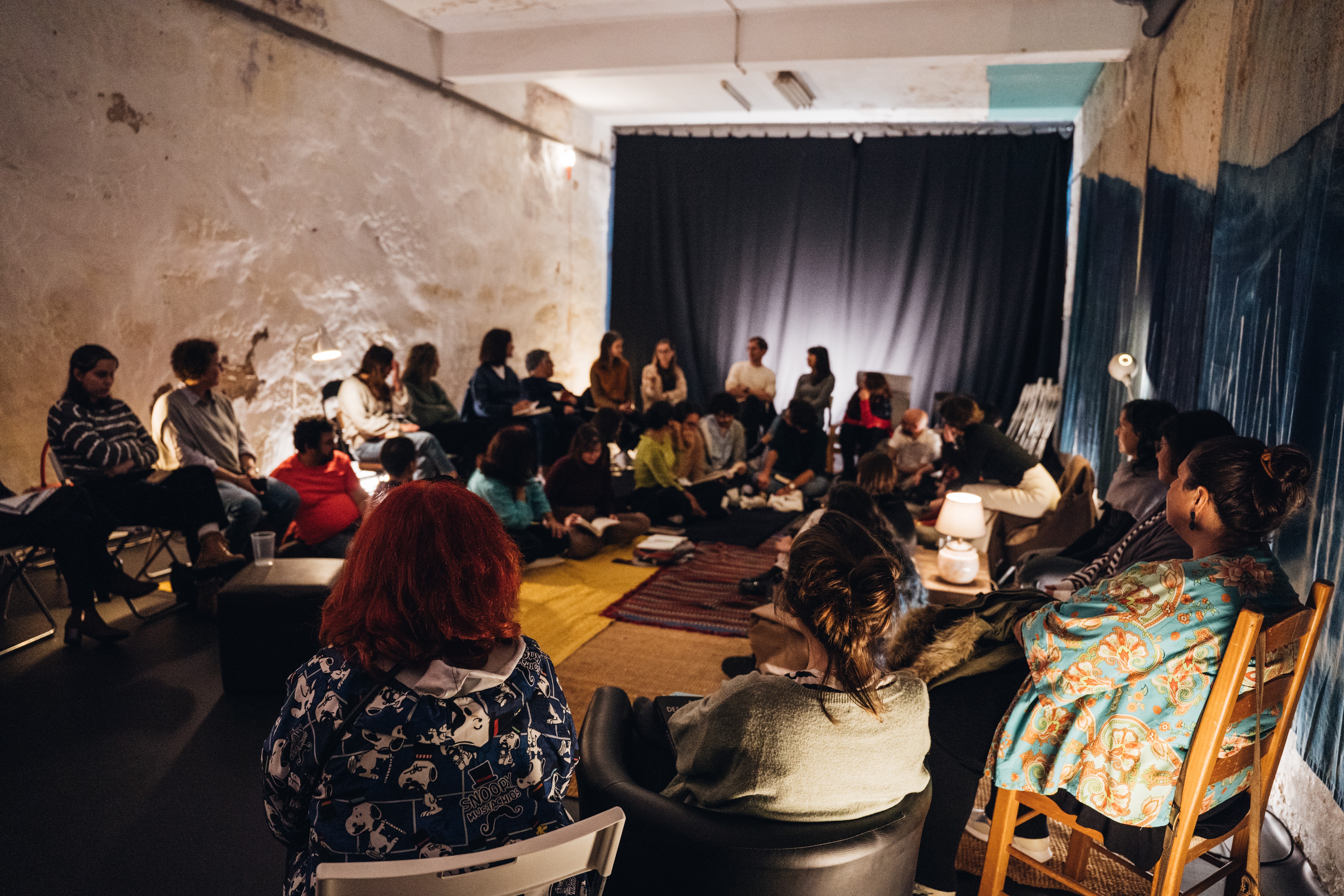
Heróides - clube do livro feminista © Cassandra
“What we choose to read is a political act”
At Heróides, the focus is primarily on “women writers”, and they strive for diversity in terms of the regions from which they hail, “so that we are not limited to European or North American writers”. “What we choose to read is, without a doubt, a political act,” she emphasises.
However, for Sara, “the greatest political gesture” of Heróides is the monthly meetings “which bring together between 60 and 80 people to talk about books, and, above all, to create in this meeting place a space for intellectual stimulation, respect for others’ opinions, camaraderie, empathy and friendship”.
The next session takes place on 18 April and will focus on the work Destemidas - Mulheres que só fazem o que querem (Fearless: Women Who Only Do What They Want) by Pénélope Bagieu, with Cláudia Varejão as the guest speaker. Participation in the sessions is free, but registration is required on the Cassandra website. Registration opens on the 1st of each month at 10.00 am. Each session is estimated to last two hours.
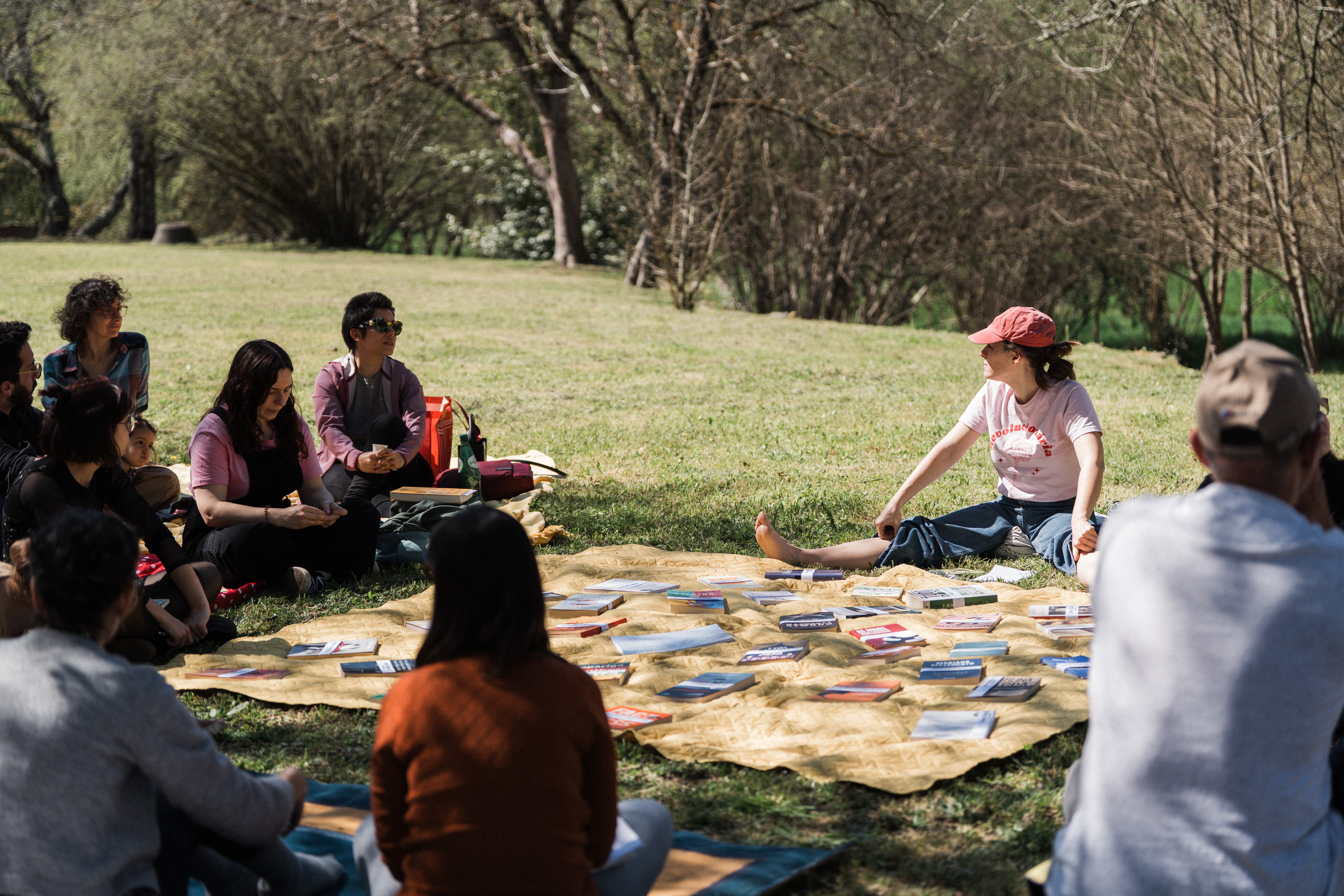
Heróides - clube do livro feminista © Cassandra
Reading recommendations from Heróides
‘The best suggestion we can make for books we haven’t yet read is to revisit the titles that have consistently featured on the list of most-suggested books for the months in which the book is chosen by the community, as this ensures they are truly collective suggestions,’ says Sara Barros Leitão. They are:
Educated, by Tara Westover
Happening, by Annie Ernaux
The Vegetarian, by Han Kang
Forbidden Notebook, by Alba de Céspedes
Clube de Leitura do Batalha
A dialogue between cinema and literature
The Batalha Reading Club, now in its fourth year, is based on the premise that “films have the power to transform our relationship with the written word, and vice versa”. “The reading club is an integral part of Batalha’s mission, since it opened, to establish itself as a community cultural centre, where film screenings engage in dialogue with other forms of social interaction centred on cultural expressions without which cinema could not exist: writing is undoubtedly one of them,” the institution’s artistic director, Guilherme Blanc, tells Agenda Porto.
Through films featured in this cinema centre’s programme, the aim is the joint reading and analysis of novels, short stories, plays, poems or essays; for this edition, Gabriela do Amaral, poet, writer and designer, and Rui Manuel Amaral, writer and editor, have been invited as coordinators.
According to Rui Manuel Amaral, an experienced organiser of book-related events at venues such as Gato Vadio and Térmita, the aim of these sessions is “to read and discuss texts that serve as reading guides for some of the films in the Batalha programme, though not exclusively; texts of all genres, including those that do not belong to any genre”.

Clube de Leitura do Batalha © Renato Cruz Santos
“Gabriela and I felt it was necessary to build that bridge between the texts and the films. Often, you watch a film and want to talk to someone about what you’ve just seen; your way of imagining things works better if you’re chatting to someone. If you’re left alone with your thoughts, it works, but it’s not quite the same. And literature can help build that bridge. You watch a film, or a series, and you can try to look for texts that might shed light on them, offer clues about these films,” she argues.
In this regard, Gabriela do Amaral maintains that “it can expand the conversations that the films initiate”. “Rui and I are always thinking about hybrid formats, such as interviews, essays, poems, short stories and letters, which give the audience the tools to reflect on the themes we propose,” she says, adding that “even if people come and go without saying a word, the important thing is that we’re doing this in a cinema, together, and in the flesh.”
Unlike other book clubs, “there isn’t a specific book chosen for everyone to read”. “We’re very used to a book being suggested, people reading it over the course of the month, and then getting together to discuss it. Here it’s exactly the opposite; we suggest short pieces that you can read without much effort – they might be short stories, poetry, essays, or even excerpts from interviews – which allow people to discover other authors,” explains Rui.
And in this club, he emphasises, “nobody is obliged to read anything”. “Participants receive a dossier two weeks in advance, but they can come without having read it; they have a drink and listen to the others talking. There is total freedom,” he says. The important thing, he stresses, is for people to “feel comfortable saying what they think”: “if I feel like saying something, even if it’s a bit silly, I can say it, and I’m a case in point; as the coordinator, I try to be as daft as possible to put the rest of the readers at ease. And none of that overly solemn, all-too-serious stuff,” he laughs.
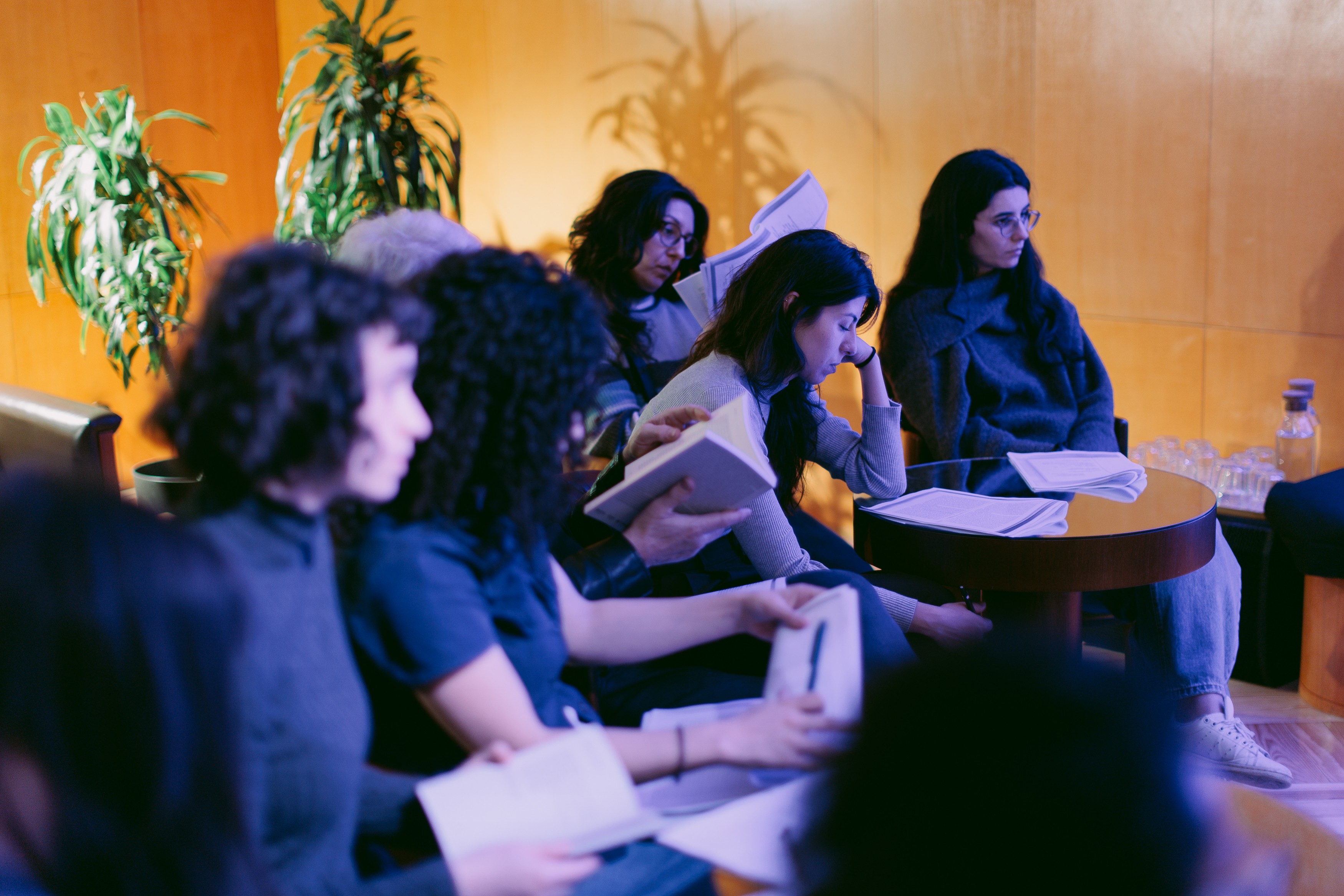
Clube de Leitura do Batalha © Renato Cruz Santos
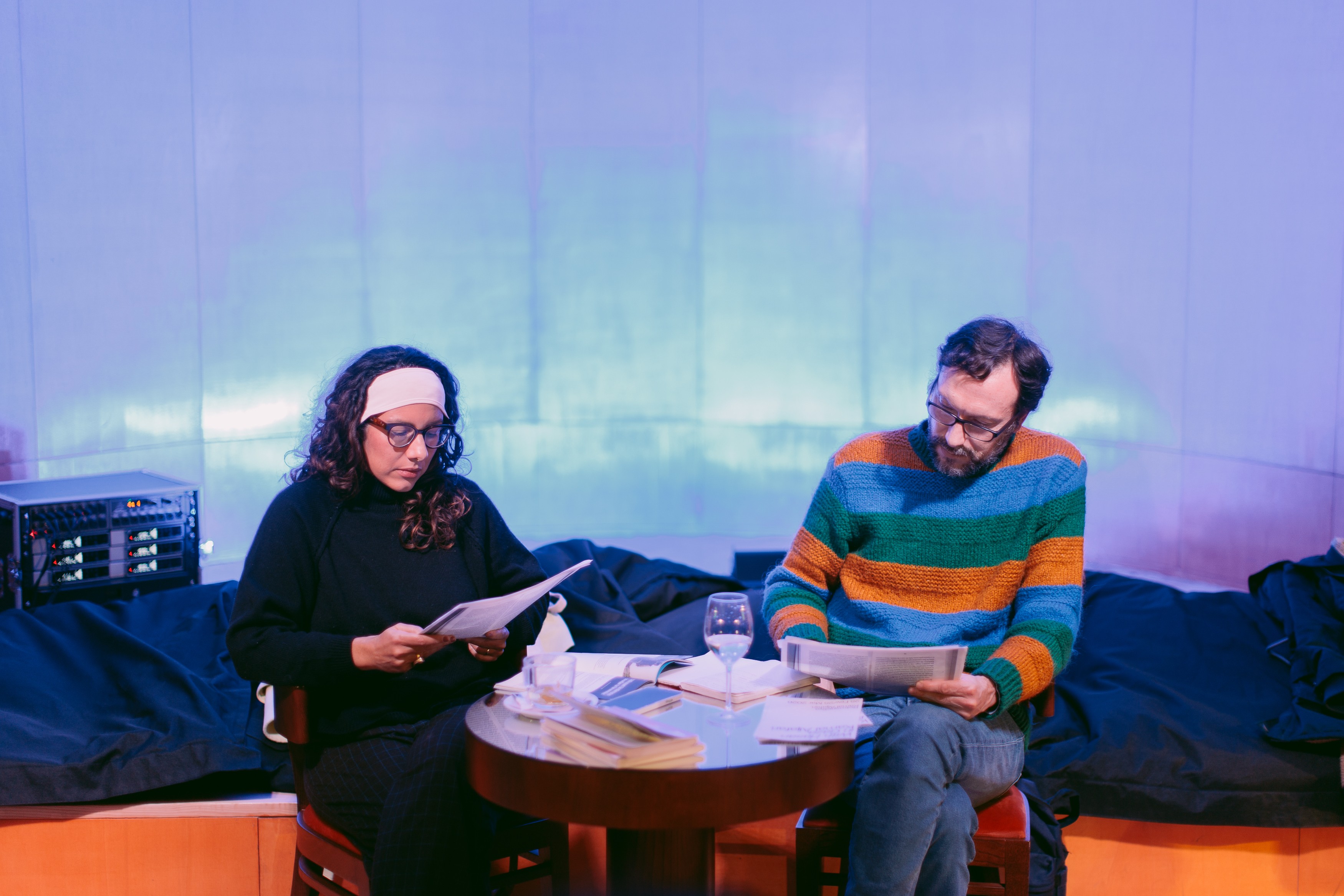
Gabriela do Amaral e Rui Manuel Amaral no Clube de Leitura do Batalha © Renato Cruz Santos
For the April session, Rui and Gabriela will draw inspiration from the ethnographic documentary Máscaras (1976) by Portuguese filmmaker Noémia Delgado, which will be screened at Batalha on 10 and 15 April. “But the theme is merely a starting point to open up the discussion,” he emphasises.
Season after season, the Batalha Reading Club has grown and created, as Guilherme Blanc puts it, “a close-knit and growing community”. This year, due to demand, two groups have been formed, between which the 70 registered participants are divided.
Rui explains that, at the first session, he asked the participants why they had signed up, and “a good number said they were coming because they worked from home, and this was a chance to get out and be with other people”. “I thought it was extraordinary that the excuse was literature,” he exclaims. “It strikes me as a great revolution that people today leave their homes to meet up and read together. Honestly, I think that’s what it is—a revolution,” adds Gabriela.
“Literature is meant to be enjoyed, and if we can achieve that, even just a little bit – just as much as listening to music or watching a film – that’s wonderful!” concludes Rui.
Picnic Book Club
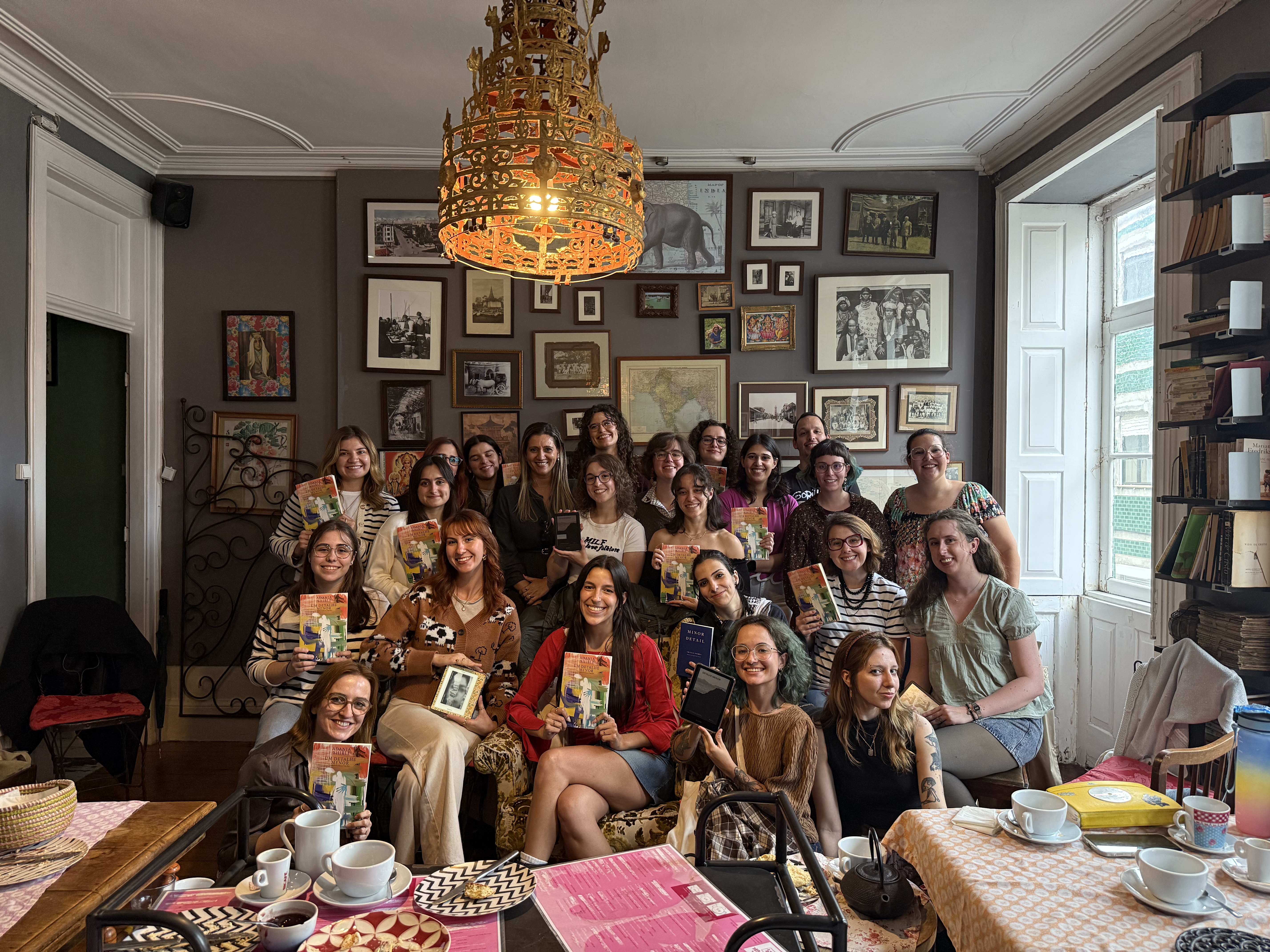
It was precisely at the Batalha Book Club that, in 2024, Cristiana Rodrigues’ passion for group reading took on a whole new dimension. “I was looking for a club that would inspire me to become the avid reader I had been in my childhood and teenage years again. I tried a few clubs that I didn’t connect with and found others that were online. I wanted the chance to discuss things face to face, to share and hear different opinions, and that’s exactly what I found at the Batalha Reading Club,” the founder of the Picnic Book Club tells Agenda Porto. As this club operates on a seasonal basis, when it ended, Cristiana felt “a certain emptiness” and therefore decided to set up her own literary club.
Thus was born the Picnic Book Club, which combines literature, socialising and critical thinking in an informal setting — often in picnic style — and with an avowedly feminist identity. What sets this book club apart, she emphasises, is “the focus on feminist themes and social issues”. The meetings start with the books, but rarely stop there: “usually, we always take the book’s theme and apply it to our own reality”, in a process that opens the door to more in-depth and nuanced discussions.
For Cristiana Rodrigues, reading is anything but neutral. “I believe that reading is inherently political and that the choice of books we read should be a conscious one,” she says, whilst rejecting any rigid hierarchy between literary genres. At the club, they read everything — from novels to plays — provided the texts raise social issues. It is this aspect that, in her view, underpins the richness of the conversations: “because we feel represented or empathise with the problems portrayed, because it makes us question our perspective on the world”.
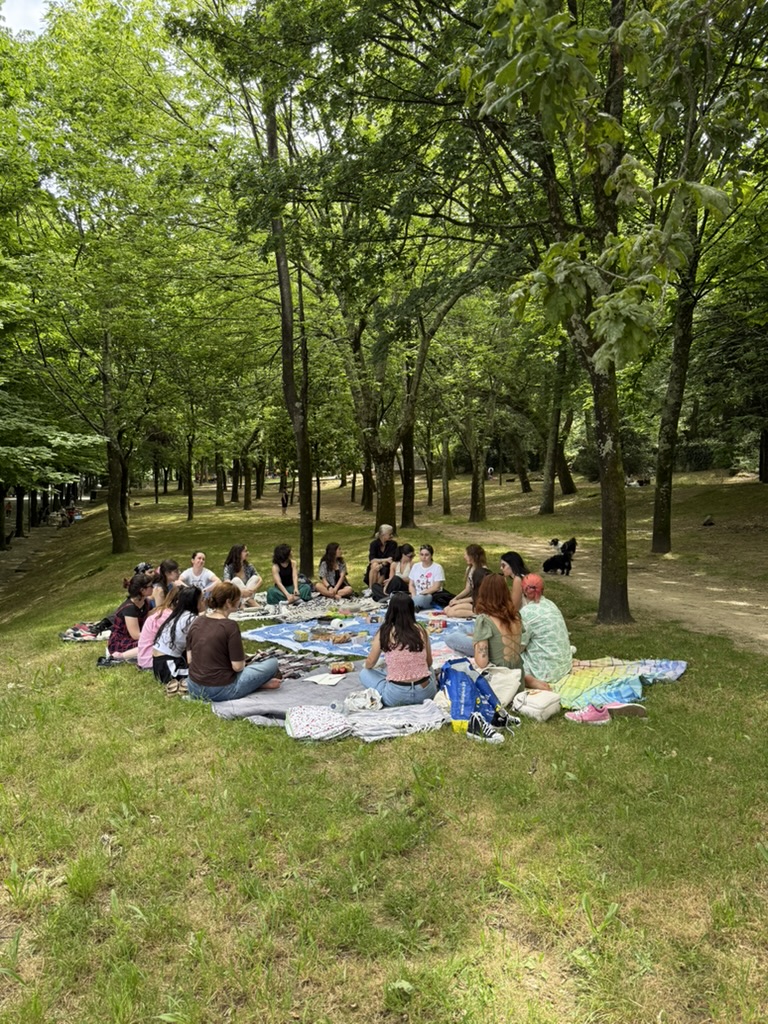
Picnic Book Club © DR
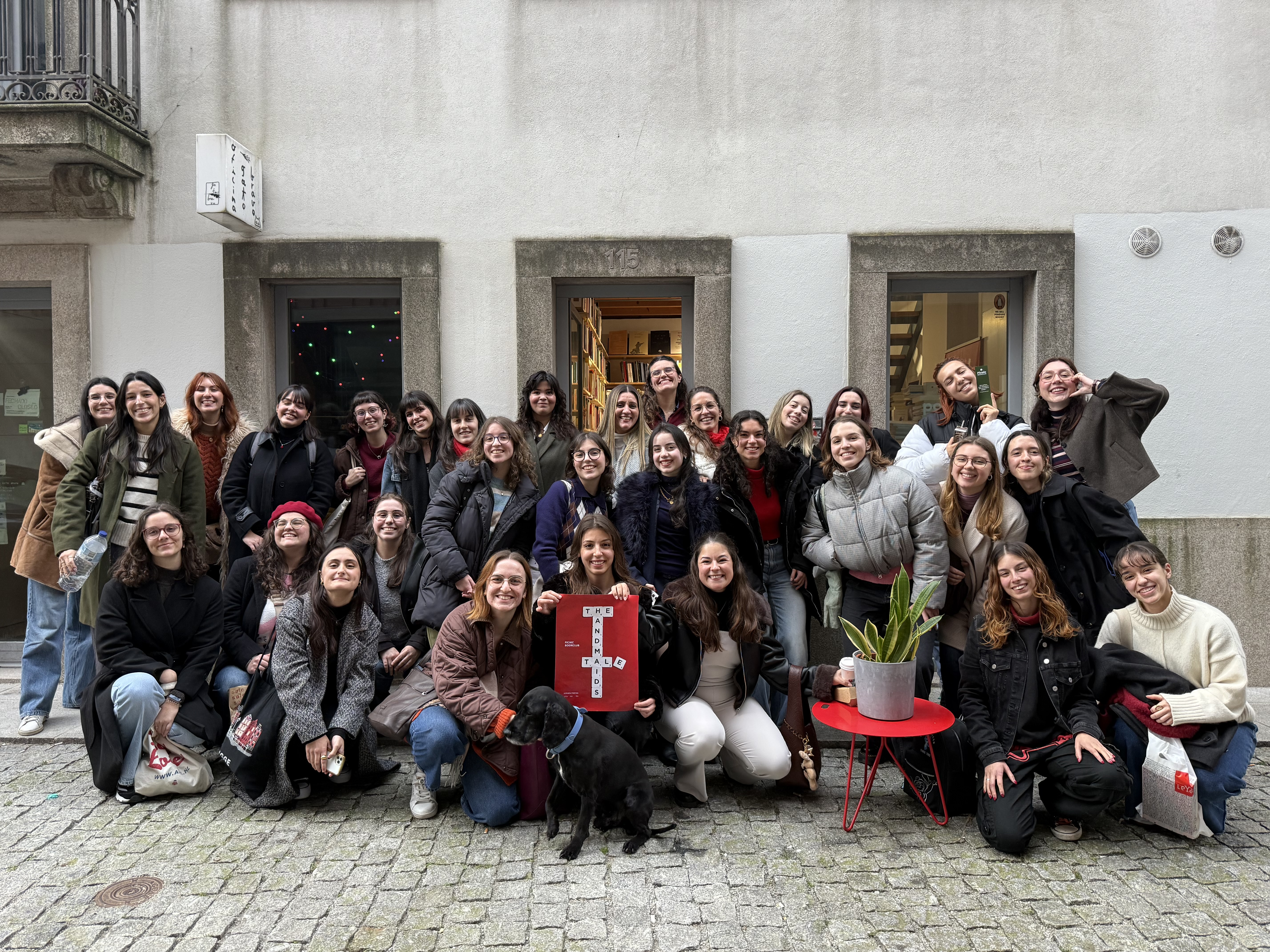
Picnic Book Club © DR
The young reader explains that she has always wanted to prevent the club from becoming merely a meeting place for people with similar tastes — “although the community is also very important” — she is interested in what happens when reading touches on everyday life and disrupts it: “I think a discussion is much more productive and reading a book is much more memorable when it is linked to issues that affect us in our daily lives”.
In this sense, “given the current state of the world and the political climate we are living in”, she emphasises the importance of “reading politically, broadening our horizons and living with a critical spirit”.
The Picnic Book Club’s programme is organised around monthly themes, which may arise from symbolic dates — “for example, 25 April or Pride Month” — or from contemporary issues, such as reading Palestinian authors.
Picnic Book Club © DR
According to Cristiana, the selection process combines online reviews – “from both literary critics and ordinary internet readers” – with suggestions from the members themselves, in an open and collaborative curation process. They seek out books with depth, capable of “raising questions or offering less familiar perspectives”, balancing Portuguese and foreign authors wherever possible.
As it operates in person, the book club is not currently accepting any more members “to ensure the smooth running of the meetings”. However, a registration form is available where those interested can join a waiting list to be contacted when places become available.
“I think coming together as a community is very important, which is precisely why I wanted the club to be in-person. This human contact and face-to-face exchange of views adds so much,” she emphasises. “Several members, including myself, have already made friends through the club, which I believe would be more difficult online,” says Cristiana.
Clube de Poesia: A Poesia Adora Andar Descalça
It is one of Porto’s newest reading clubs: inspired by Eugénio Andrade’s verse, ‘Poetry loves to walk barefoot’, a space dedicated to those who wish to experience poetry up close, without fear or formality, was launched at the end of February at the Eugénio de Andrade Poetry Library.
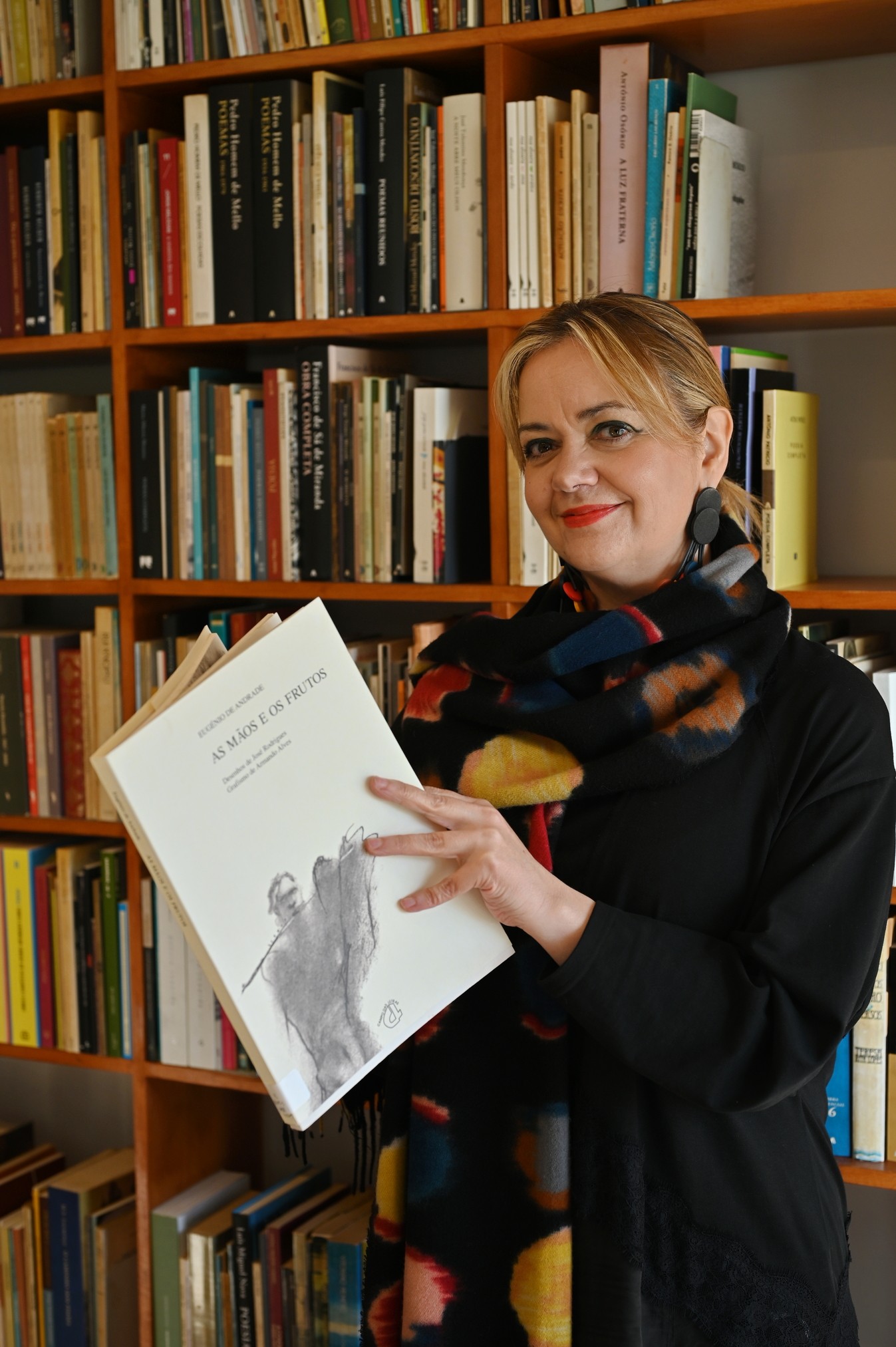
Carla Teixeira and Maria Adelaide Silva are in charge of this weekly gathering, which takes place on Wednesdays between 3pm and 4pm, with the aim of revitalising the country’s only library specialising in contemporary poetry.
“As this is a house of poetry, we had the idea of creating a club that, at its core, would reflect the collection we have in the library,” says Carla Teixeira, librarian at the Almeida Municipal Garrett Library and coordinator of the school library support service. “We want to encourage critical thinking and debate and foster a connection between the participants and this space.”
Carla Teixeira © Rui Meireles
Clube de Poesia - A Poesia Adora Andar Descalça © Rui Meireles
Clube de Poesia - A Poesia Adora Andar Descalça © Rui Meireles
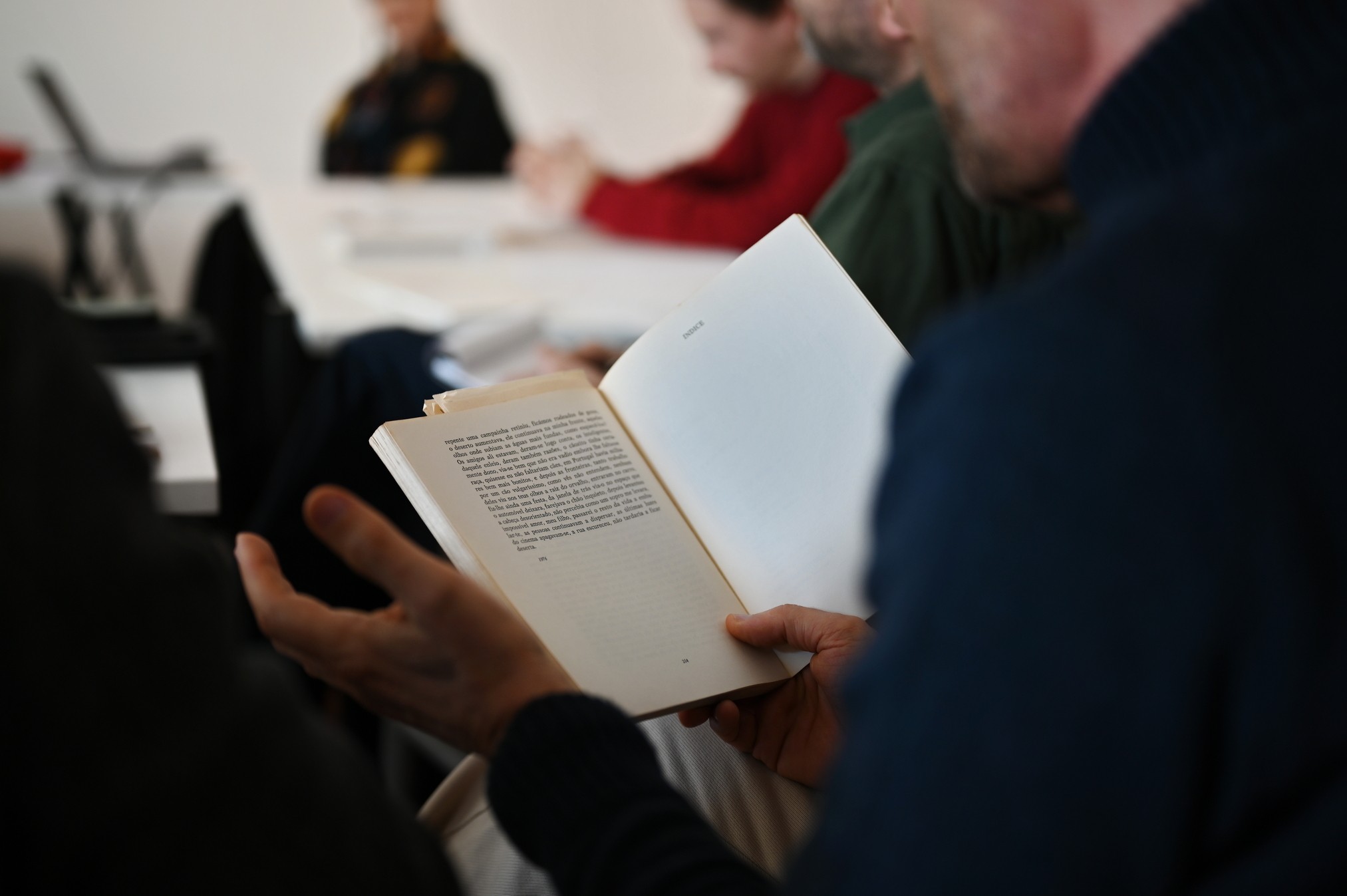
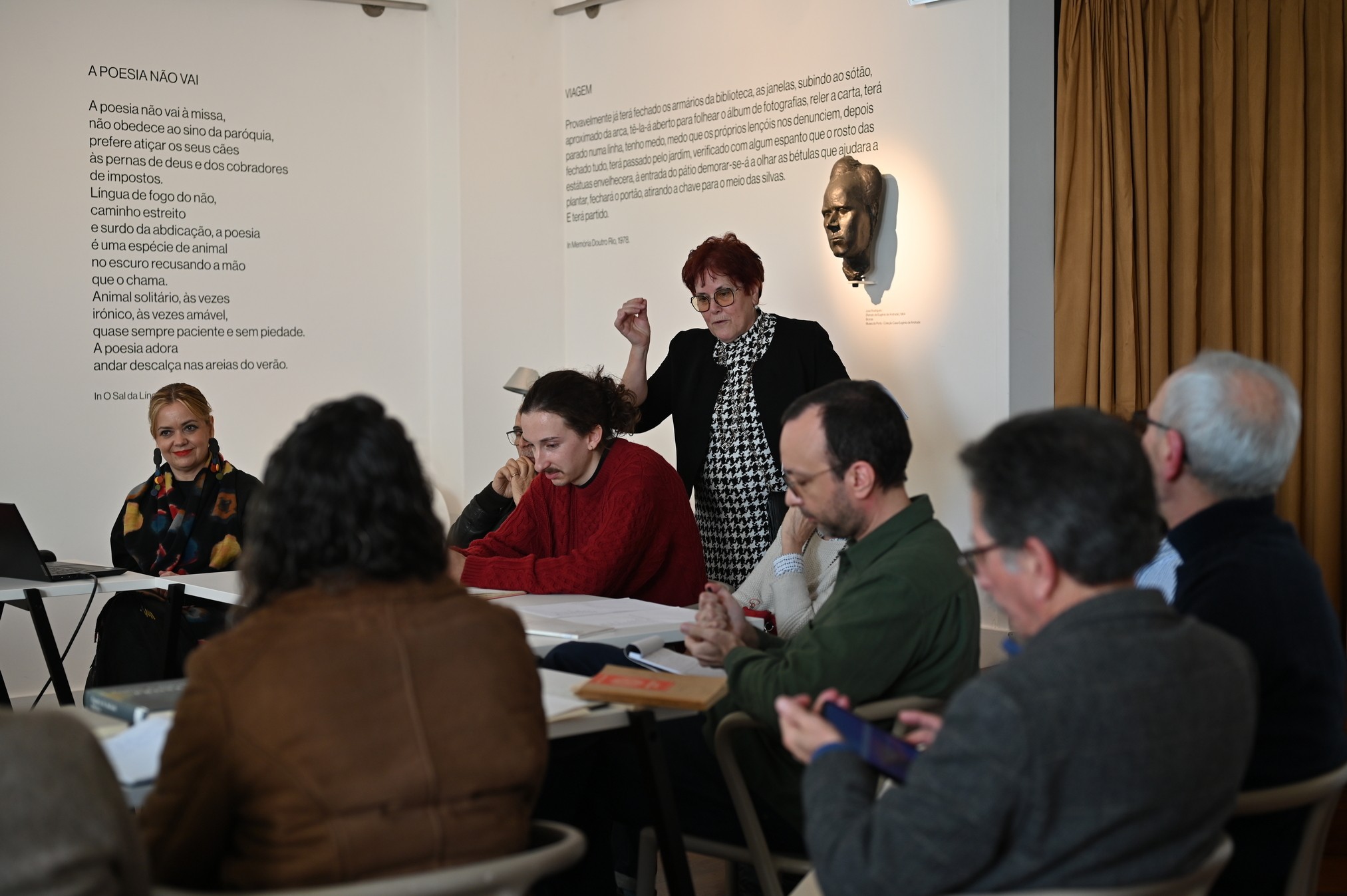
Sophia de Mello Breyner, Vasco Graça Moura, Eugénio de Andrade, Rosa Alice Branco, Manuel António Pina, Miguel Torga, Maria do Rosário Pedreira and Nuno Júdice are some of the poets who have taken part or will take part in the club’s sessions, which aim to be “a space to explore, discuss and share the world of words in a relaxed and informal setting, whether through the reading and analysis of poems by renowned authors or through reflection on universal themes”.
“We’re not in a classroom. The idea is for people to feel free to share, to discover the poet who speaks to them, who resonates with them,” says Maria Adelaide. “People don’t come here to sleep; they go to church,” she laughs. For this facilitator, the challenge is to make poetry accessible: “People often find it hard to get into poetry. We want to show them that poems contain messages and snippets of our lives.”
The target audience is broad, “from 16 years old and up”, although most of the current participants are senior citizens. Entry is free, requiring only registration via the Porto Libraries website. But even if they haven’t registered, those who are interested or simply curious can turn up because the club always operates on an open-door basis – an invitation to walk barefoot through the universe of poetry.
Literacidades
Literacidades was launched in 2019 on social media as a literary promotion project that began by linking books to places, particularly in Porto, and which quickly became one of the most followed Portuguese accounts dedicated to reading. Today, it runs an online and in-person book club, with monthly sessions dedicated primarily to books by Portuguese-language authors, held in various venues across the city of Porto and its surroundings.
Álvaro Curia and Ludgero Cardoso, both affiliated with the University of Porto, began with “this simple premise” of writing short reviews of books they had just read, then photographing them in a location around the city. But with the pandemic, “the focus shifted”: Covid-19 “sent them home” and they thought of ways to reinvent the project, notably through live conversations with authors, “for a few hours on Sunday afternoons”, as they tell Agenda Porto. José Luís Peixoto, Valter Hugo Mãe and Dulce Maria Cardoso were some of their guests, as they now recall. At the same time, they were receiving an increasing number of requests from followers for reading suggestions. “Literacidades grew and became a project [that went] far beyond sharing opinions on books.”
It was in December 2024 that they set up the book club “to bring the online world into the real world” and “to promote literature in the Portuguese language”. Both believe that, although more and more Portuguese-language authors are being published in Portugal, they still have “little space on the bookshelves”. “Our aim with this club is to read books by living Portuguese-language authors, whether they are Portuguese, Brazilian, Mozambican, Angolan… there are many little-known authors who deserve to be read,” they argue, listing names such as Ana Teresa Pereira, Hélder Gomes Cancela, Mariana Salomão Carrara and Vítor Vidal.
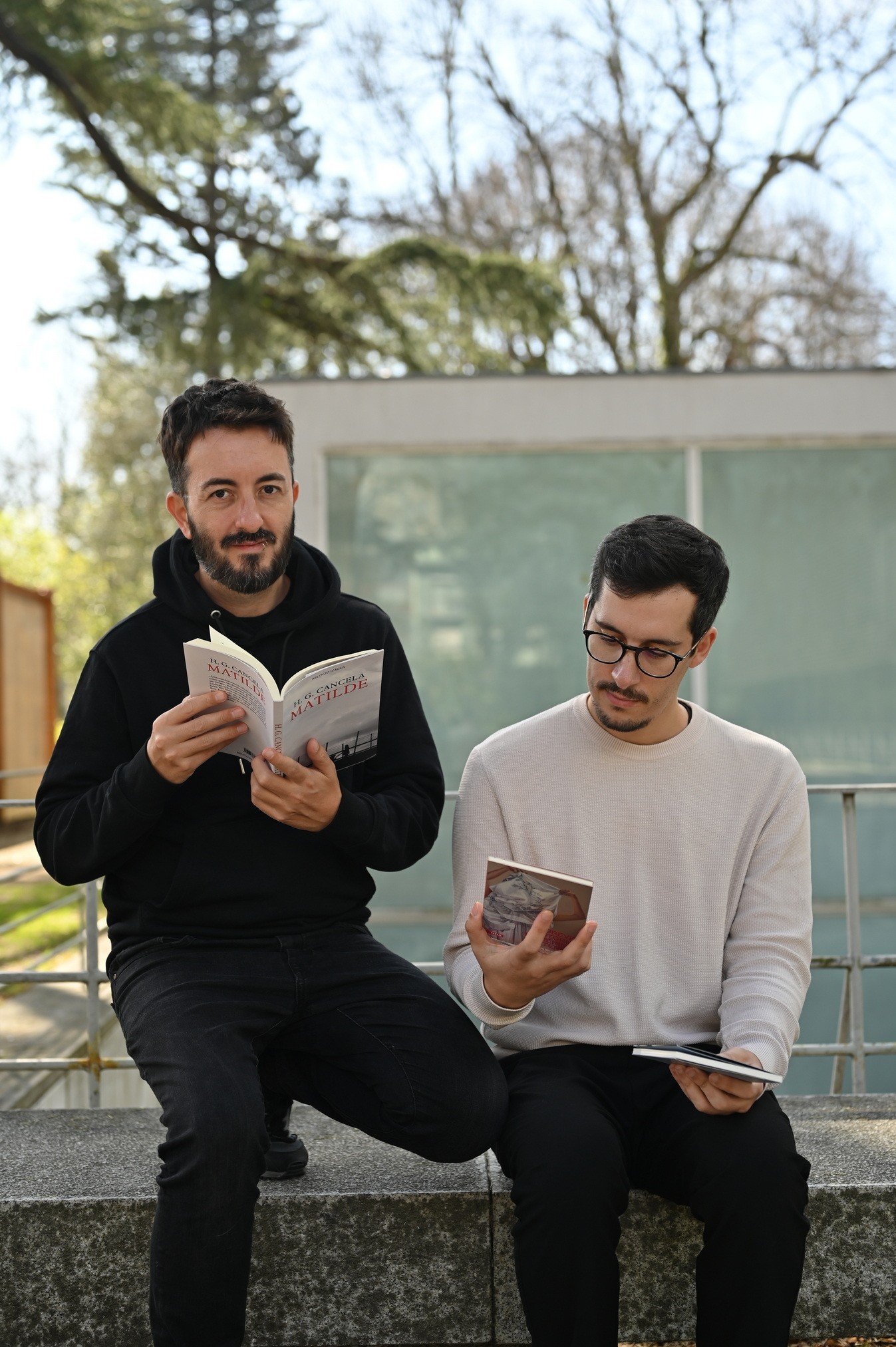
Álvaro Curia e Ludgero Cardoso, Literacidades © Rui Meireles
“People can talk about books as if they were talking about football teams”
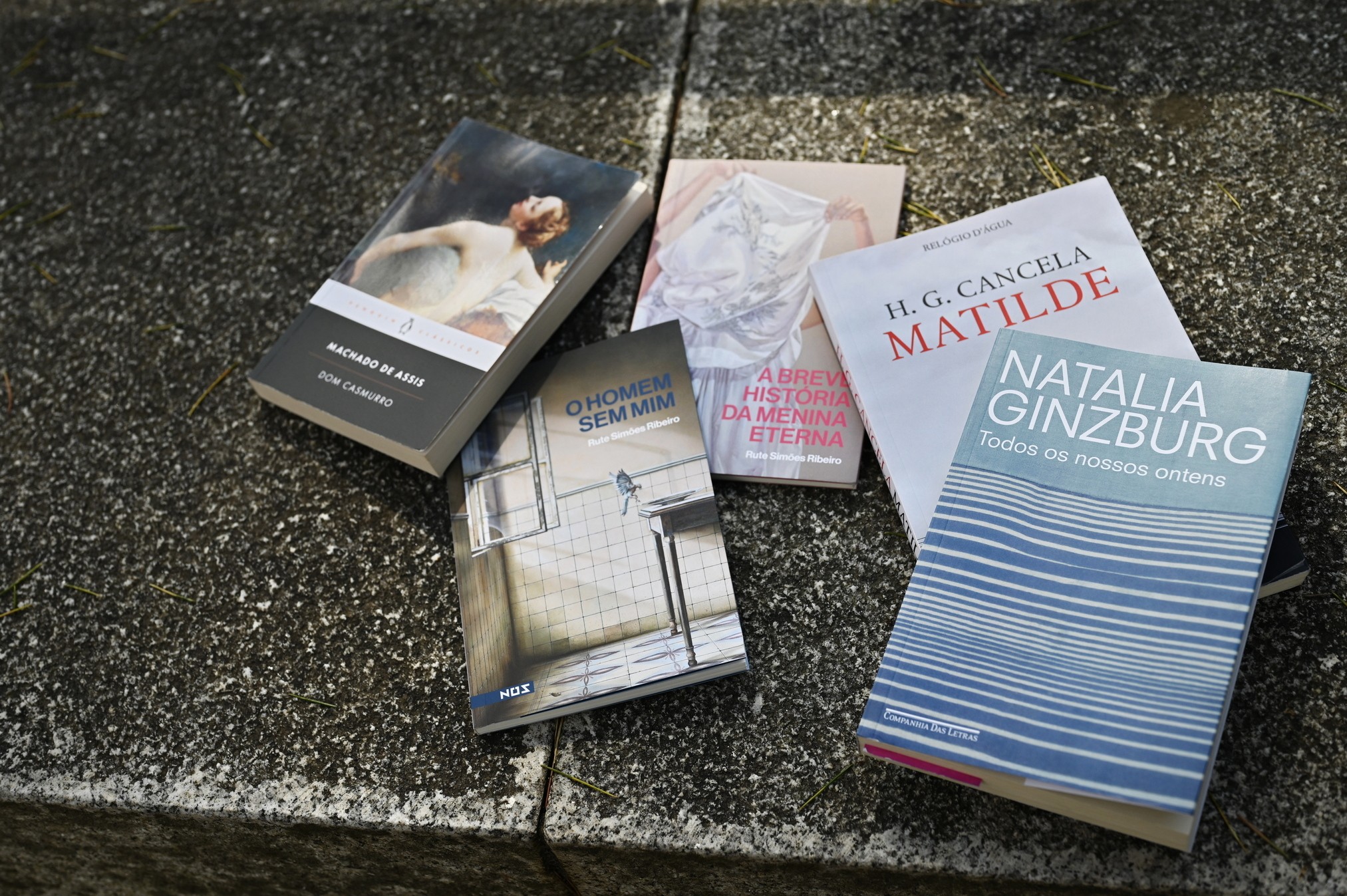
Reading recommendations from the Literacidades team © Rui Meireles
For their conversation with Agenda Porto, they are joined by Matilde by Hélder Gomes Cancela, the book that “sparked a wider discussion” at the club. “We spent nearly two hours talking almost exclusively about the character in this book, which was very interesting.”
Álvaro says that certain titles discussed at the book club have already sparked unexpected debates. “People can talk about books as if they were talking about football teams, which sometimes ends up being quite funny,” he laughs.
For the April session, which takes place on Saturday 25th at 6.30 pm at FNAC in Alameda, they have selected two titles by Rute Simões Ribeiro: A Breve História da Menina Eterna and O Homem sem Mim. “She is a little-known Portuguese author and writes very well.”
Álvaro and Ludgero regularly compile a list of the book clubs that exist across the country and have already counted around a hundred. “There are clubs to suit all tastes and preferences, both in-person and online, with groups on Discord where people discuss books chapter by chapter, for example.”
As for the proliferation of these forums dedicated to books and reading, they have no doubts: “people are fed up with being online.” “People miss being with one another, and being in a book club means broadening horizons, sharing reading experiences — and more besides.” The proof lies in what happens outside Literacidades’ sessions, they say. “We’ve already noticed that some groups have formed within the club, that is, people who go out together to literary events, for example. A real community is being built, and that’s very good.”
Reading recommendations
Álvaro Curia recommends Marta Paz Oliveira’s new book, entitled How to Walk Through a Swamp. “It is a deeply rich book that tells the story of a character, a woman, who likes to go out at night and is obsessed with stealing other women’s handbags. She does this, she explains, to relieve the women of the burden they carry. She steals their bags and thinks she’s doing a good deed. This character lives in turmoil, in a spiral of madness, but the stream of consciousness is so well constructed that you simply can’t put the book down. I’d love to meet this woman and, perhaps, go out with her one night – it would be fun,” he laughs.
Ludgero Cardoso suggests Mozambique with a Z for One-Eyed, by Manuel Mutimucuio. In this story, “the Mozambican government establishes English as the official language, replacing its local languages and the Portuguese language imposed by the former coloniser”. “This leads us to reflect on the role of language. Does language shape culture, or is it culture that shapes language? And to what extent is it worthwhile replacing a language, given that the old one was no longer spoken by the original peoples of that place? To what extent will the imposition of a language benefit the population?”
Share
Relacionados
