

EN

outubro 2026
Over the past few decades, José Pinhal has been rediscovered through word of mouth, becoming something of a mass idol. This surge in popularity was also down to the project paying tribute to him: the José Pinhal Post-Mortem Experience (JPPME). The band, which for ten years took the songs of the artist from Santa Cruz do Bispo to stages from the north to the south of the country (and the islands), and won over listeners who hadn’t even been born when he passed away, is now bidding farewell with two concerts at the coliseums in Porto and Lisbon. JPPME promise a final tribute to the master of dance who, decades after his passing, inspired so many people to sing that “life is all too short”. Agenda Porto spoke to the band in their rehearsal room at STOP.
A thick moustache, a serious gaze, a white suit over a black shirt. The figure of José Pinhal seems to have stepped straight out of the romanticised imagery of the popular dances of the 1980s, a decade in which he livened up the nights in Porto, particularly in nightclubs and discos, and released three albums on cassette (in 1984, 1985 and 1991). He died in 1993 in a car crash whilst returning from a concert. After that, for many years, nothing was heard of the singer until, in the mid-2000s, two of his cassettes found their way into the hands of Paulo Cunha Martins, a photographer, DJ and, in his own words, “a lover of obscure music”. He began by listening to them with friends, digitised them and started including some of the tracks in the DJ sets at the parties he hosted. Soon, the songs began to circulate on floppy discs, CDs and, of course, the internet. Years after those initial shares, in 2016, the José Pinhal Post-Mortem Experience (JPPME) emerged: João Sarnadas (Coelho Radioactivo) played the tracks to his colleagues at Favela Discos, an artistic collective and independent record label based in Porto, and took the first step towards the formation of the tribute band.
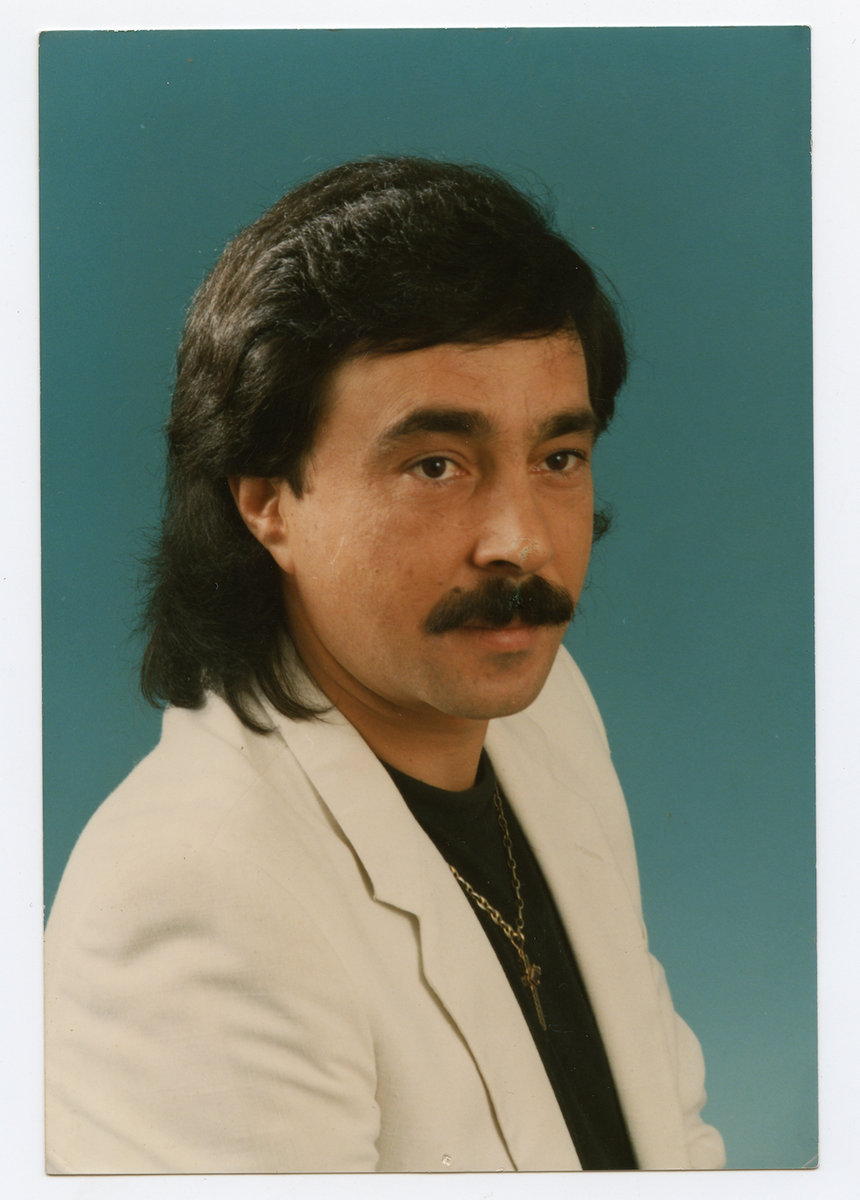
José Pinhal © DR
“Favela Discos had a residency at Café Au Lait which promoted the creation of musical projects that were a sort of ‘one-night band’; at the same time, there was the event ‘O João Faz Anos’, João Paulo Granada’s birthday party, which I was invited to take part in,” recalls Sarnadas. They became interested in the artist’s songs and decided to put together a musical project based on his repertoire. “We’d only recently discovered José Pinhal and he was a very mysterious figure because there was so little information available. The song lyrics and a few comments on YouTube videos from people who’d known him were the only clues we had. In fact, it was through one of those comments that we found out he’d passed away.”
The line-up comprised João Sarnadas (guitar), Tito Silva (keyboards/trumpet), Nuno Oliveira (percussion), David Machado (saxophone) – all from Favela Discos – and José (Zezé) Cordeiro, who “offered to play bass”. “I was familiar with José Pinhal’s music; I heard there was an idea to form a tribute band with this name and I joined straight away,” he recalls. They were still missing a singer. The band rehearsed a few times without a lead singer until Bruno Martins arrived, who, as part of the Bruno de Seda project, had already embodied the classic Portuguese romantic singer. “Zezé sent me a message asking if I wanted to be the lead singer in a dance band he was playing in, and I said yes straight away.”
The first concert took place in March 2016, at the ‘O João Faz Anos’ party, at the now-defunct Cave 45 in Porto. Musically, it wasn’t a triumph. “It went particularly badly,” Zezé blurts out, laughing. Nuno Oliveira prefers a different perspective: “It was very poor in terms of the musical performance, but it was very good in terms of emotion.” He elaborates: “We realised there was a certain magic and a unifying potential in the project. It leaves a lasting impression on everyone (laughs). At first, people were surprised: how come the songs are all so catchy, upbeat and fun, and yet nobody had heard of this until now!? How had this been hidden away?”
The following year, they made their second appearance at the same festival, this time at GrETUA in Aveiro. The group wouldn’t perform again until over a year later, at the São João festivities in Porto. That’s when José Pedro Santos (drums) joined the band. The musician and programmer was organising the Suave Geração festival, which took place on Sundays and, that year, coincided with the São João celebrations. The festival was to take place in Praça da Batalha, complete with a mobile stage; José Pedro thought it would be a good opportunity for JPPME to perform. The band accepted the challenge, but on one condition: he would have to join the group, because “they needed a drummer”. And so the line-up was complete.
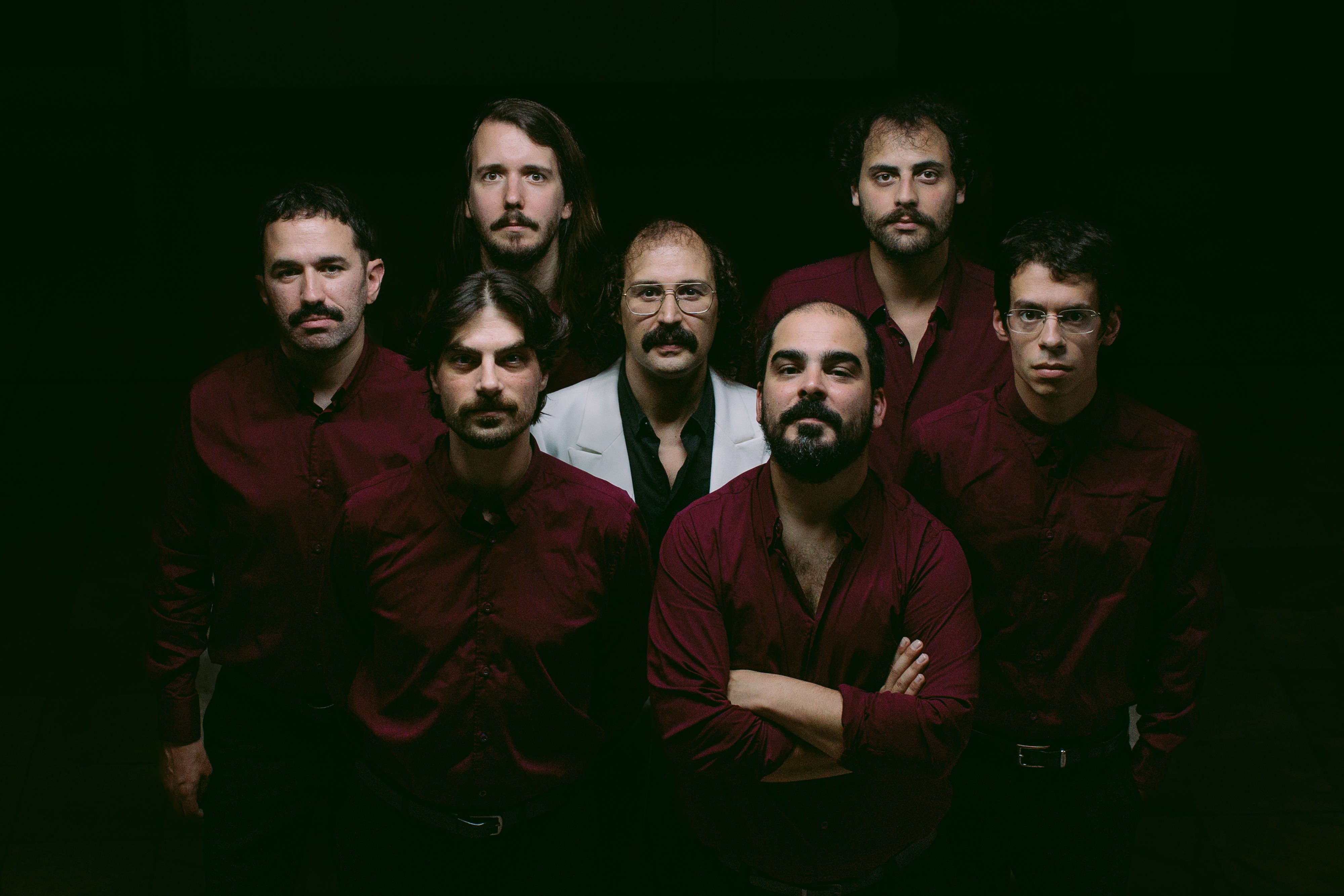
JPPME © Renato Cruz Santos
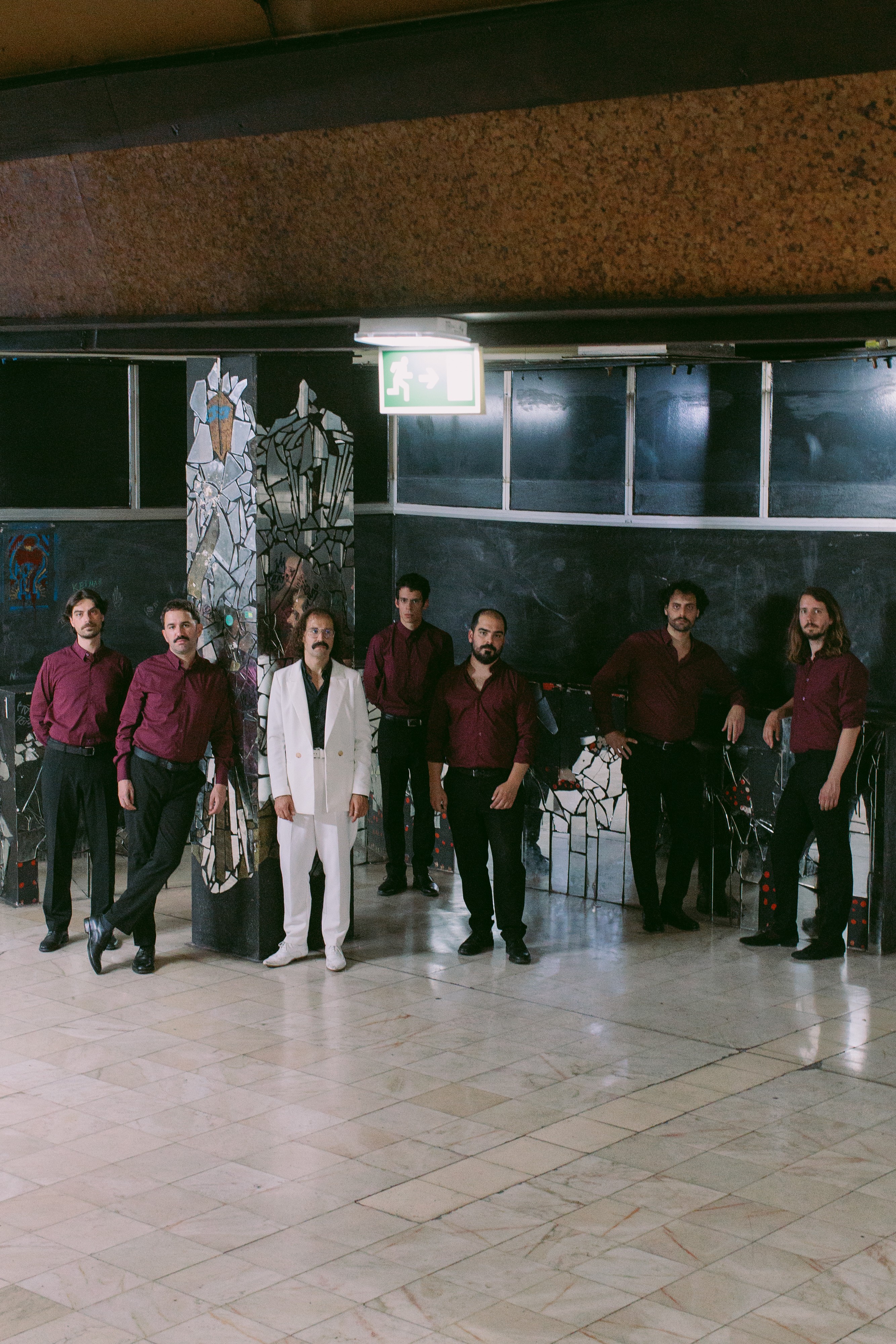
JPPME: José Pedro Santos, João Sarnadas, Bruno Martins, David Machado, Nuno Oliveira, Tito Silva e Zezé Cordeiro © Renato Cruz Santos
On stage, JPPME put on a first-class performance: Bruno Martins is dressed in white, in the style of José Pinhal, whilst the other musicians wear burgundy shirts, in a nod to a rare video recording of one of the singer’s performances in a nightclub. In that video, a barman appears beside the artist, pouring champagne into a frappe. “We try to bring José Pinhal’s world into the concerts to give them more depth; Bruno gradually picked up some of his mannerisms, and his daughter Marina, who we’ve become friends with, gave us some tips,” says Sarnadas.
But there was one line they wanted to make clear from the very beginning: JPPME was not a parody. This concern was a constant throughout the project from the very beginning. “We paid a great deal of attention to respecting that person’s memory,” explains Sarnadas. And there was also a fear that the audience might not understand what they were doing. “This project may have a touch of humour, but it’s not meant to be mocking,” emphasises Zezé. “The concerts usually end with the song ‘A vida dura muito pouco’ (‘Life is all too short’), which carries a message of joy and good humour – and that was José Pinhal’s own way of being. We’ve always been careful not to give the impression that it’s a parody,” he stresses. Sarnadas’s conclusion is simple: “The funny bit comes from José Pinhal himself; it’s not ours.”
Despite acknowledging that the project helped “a type of music that would hardly have reached the mainstream” to find new audiences, they point to others responsible for the artist’s resurgence: the aforementioned Paulo Cunha Martins and also Joaquim Gomes, an archivist of Portuguese popular music on YouTube. “Pinhal’s music was already known in various circles, but the fact that there was a band playing the songs live gave it a different kind of organic feel,” emphasises Nuno Oliveira. “In that sense, I think we did a lot to help spread his music,” adds Sarnadas.
Zezé links Pinhal’s resurgence to “a trend towards a certain kind of revivalism”, noting that “in the late 2010s, there was a revival of the 1980s”. The musician also points to “the ease with which music spreads”, thanks to the internet, and “the change in the way certain musical genres are listened to and revisited” as causes for this surge in popularity. At JPPME’s concerts, there are people from different age groups and backgrounds. And there are those who cross borders just to hear the band. At one of their gigs, the musicians met a fan who had come all the way from Finland just for the show. She had discovered José Pinhal on Spotify and this was already the third concert she had attended.
There are many stories that illustrate JPPME’s ‘contagious joy’. Nuno Oliveira recalls an incident involving a young fan, ‘a little girl who refused to budge at a concert in Freamunde, at the Sebastianas, where it was pouring with rain’. ‘There were lots of cancellations [due to the bad weather], but we decided to play. A few die-hards watched the concert in the rain. At the end, that little girl and her sister, who were very young, came over to say hello to us. Some time later, at a concert in Banhos Velhos, the girl turned up wearing a T-shirt featuring a photomontage of the band with her standing next to us.” “That T-shirt is brilliant!” interjects Zézé, laughing.
There is a recurring concern in JPPME’s work: performing the songs without losing the essence of the originals. “There are songs where we have to create a band version; and when we play them as a band, some songs sound different from the original version,” says Sarnadas. Zézé cites the track ‘Perdoa-me’ as an example, which underwent “a considerable transformation”. The original recording has a faster tempo than the one the band plays live, but “the reinterpretation was done with a view to how it would sound if we were José Pinhal’s band”. “So, we don’t try to do anything that strays from the spirit of his music.”
One of JPPME’s long-standing ambitions has always been to perform the singer’s entire repertoire. It is a task the musicians take so seriously that they “start to question their own abilities”, as Sarnadas admits, with a laugh. The third volume of the discography presented different challenges. The instrumentation is more stripped-back than on the first albums, which featured drums, keyboards and a line-up closer to that of JPPME. To adapt these songs, the musicians draw on the other volumes. “When we have to adapt songs from volume 3, we listen to the other volumes and try to work out how these songs would be played by a band,” says Bruno de Seda.
They have already played everything from the first album. From the second, at the time of the interview, two tracks were still missing. In total, seven tracks remained to complete the discography. Now, at the coliseums, there will be room for some of these discoveries. Perhaps we’ll hear Pinhal’s version of the Brazilian track ‘Rancho Fundo’, one of the most requested by fans. The full repertoire “won’t fit into two concerts”, so “there will be songs played at one show but not the other”. The intention is for the two nights in Porto and Lisbon to be different. But they assure us: “We’re going to play songs we’ve never played live before.”
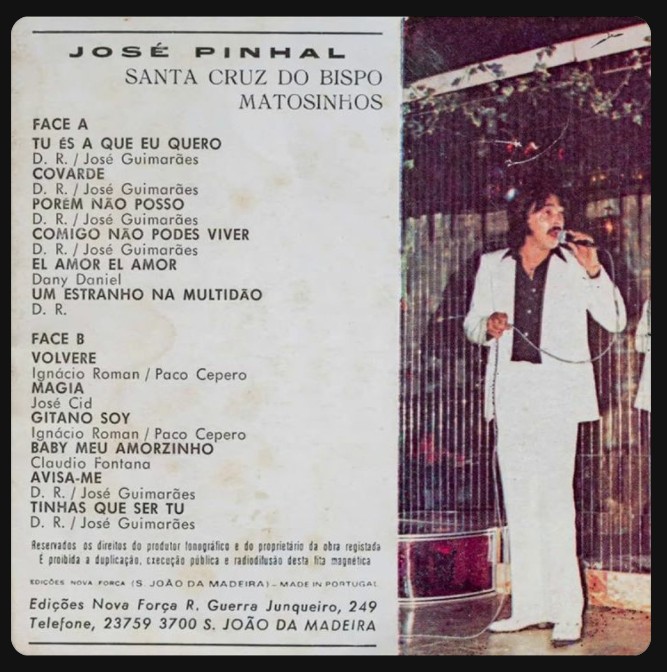
Cassete de José Pinhal, Vol. 1 © DR
Which of José Pinhal’s songs are the band’s favourites?
All the band members say it “keeps changing”. “When we’re learning a new song – which is what we’ve been doing recently – that becomes our favourite,” says Zezé. In July, when Agenda Porto spoke to the band, they were rehearsing ‘Aonde vais Amor’, from their second album.
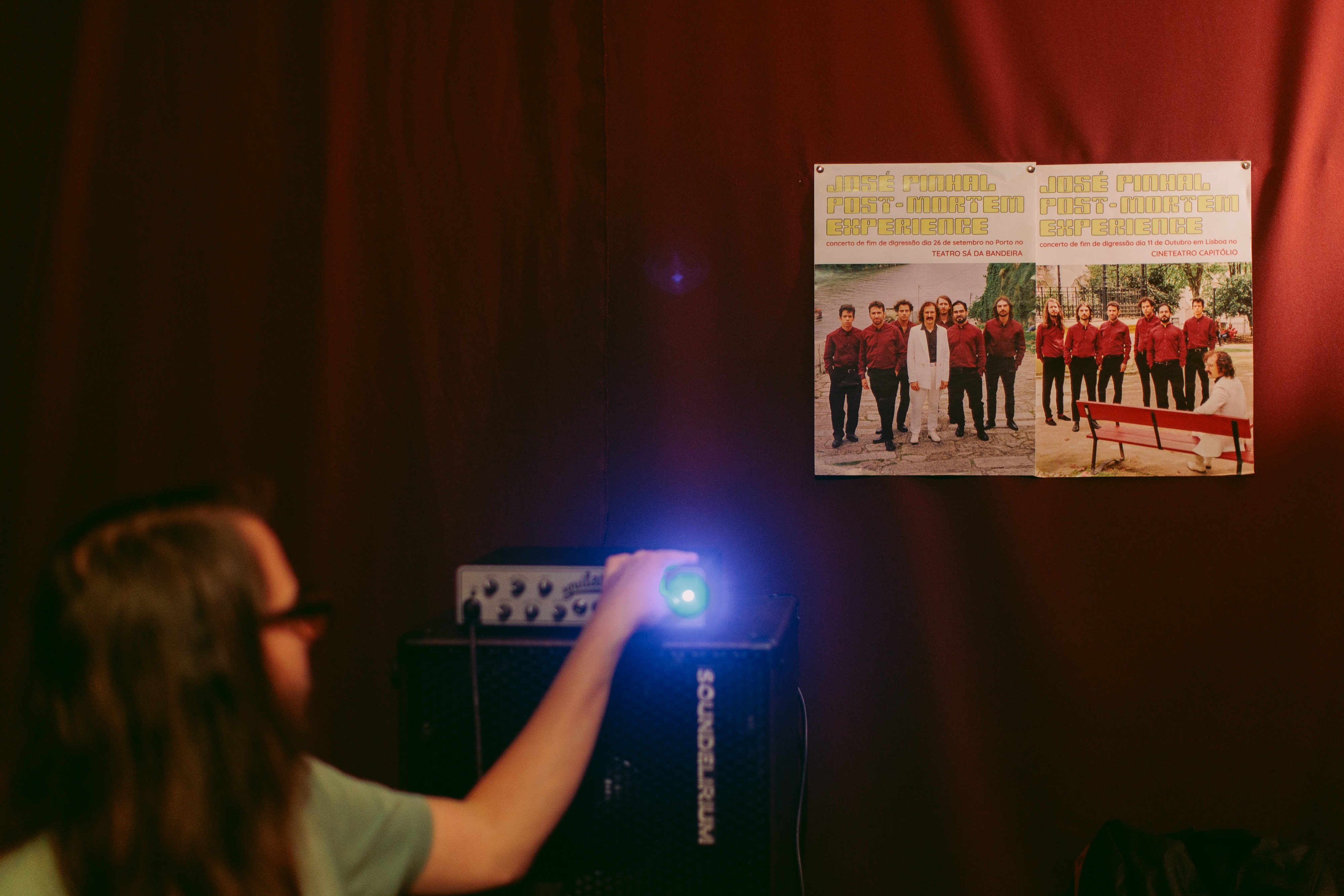
Na sala de ensaios de JPPME © Renato Cruz Santos
Songs that time has not erased
In ‘Não é possível’, a single from José Pinhal’s fourth album – which was never released but was played on Rádio Paralelo in 1991 – there is a line that today seems almost prophetic: ‘It is impossible to think that time will erase everything.’ And it hasn’t. For JPPME, the survival of the music is also linked to the preservation of the recordings. “The cassettes are disappearing, and if nobody digitises them, that memory will be lost forever,” recalls Nuno Oliveira. In this regard, Tito emphasises the importance of digitisation and highlights, as an example, the work of Joaquim Gomes, through whom they discovered many other artists and musical projects. In the case of José Pinhal, several processes took place in parallel: the cassettes were digitised, the songs began to circulate, were rediscovered by DJs, found their way onto the internet and inspired a band that started playing them live.
The farewell concerts will take place on 9 October at the Coliseu Porto Ageas and on 7 November at the Coliseu dos Recreios. The band wants these to be special concerts. “We promise our barman will be there, and we’d like to invite some people who have been part of José Pinhal’s journey: musicians, the producer, lyricists and others who are still with us,” says Sarnadas. This final opportunity to pay tribute to José Pinhal will also be a chance to recognise those who have been part of his musical history.
Afterwards, everyone will go their separate ways (though their paths will cross again in other musical projects). João Sarnadas has been working on the fourth album of his solo project, Coelho Radioactivo, due for release on 31 October; the first single, ‘Fogo de Artifício’, was released in September. Bruno de Seda’s second album is due out in November, and David Machado is preparing a new Bezbog album.
Perhaps this is the best way for a tribute band to bid farewell: to become unnecessary because what it set out to revive is no longer forgotten. After all, as you hear at JPPME’s concerts, “José Pinhal [is] immortal”.
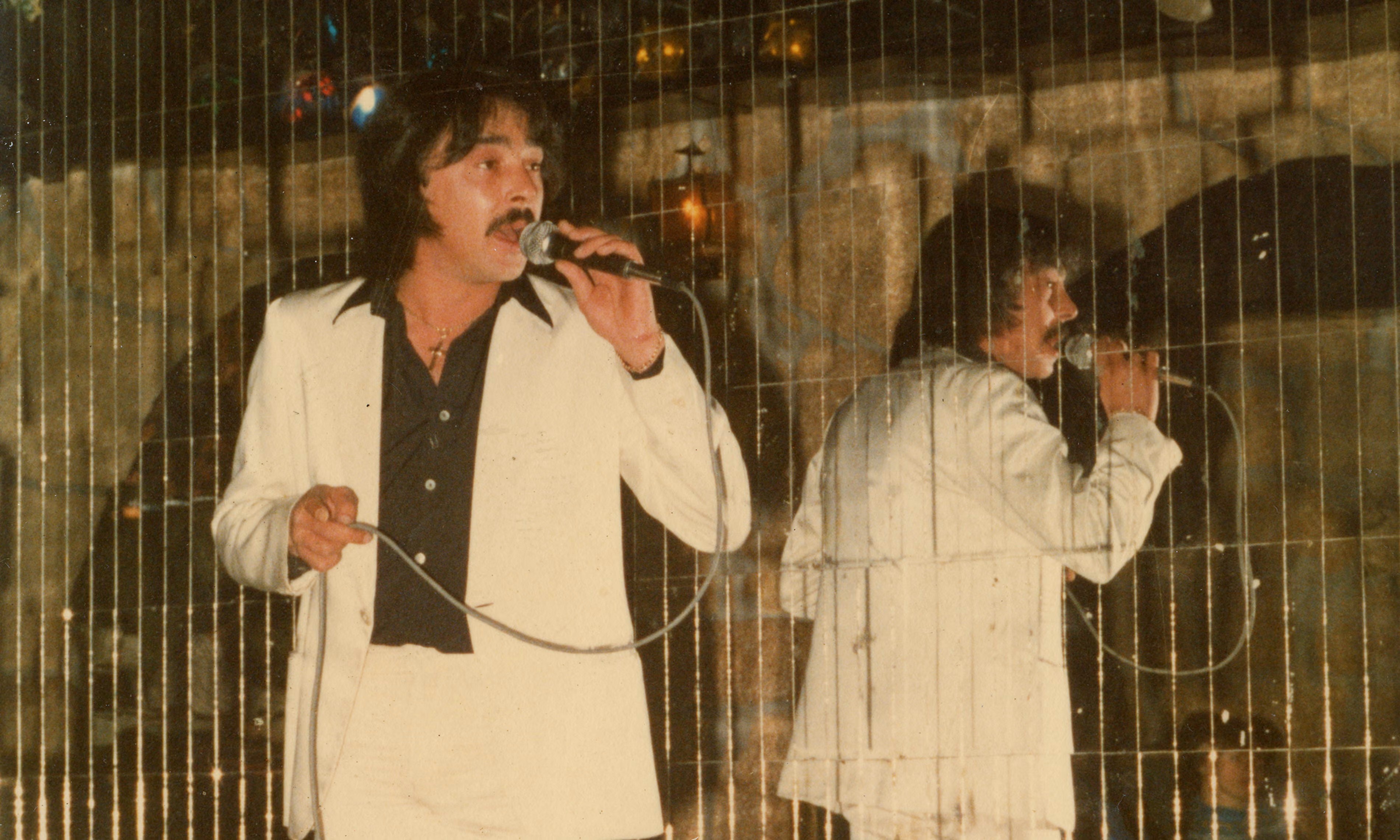
José Pinhal © DR
Share
Relacionados
