

EN

Filipa Almeida feels right at home in the wilderness. A city girl, in her own words, she grew up on the outskirts of Porto, in Custóias, at a time when urbanisation was still a long way from swallowing up the countryside. “I’d cross the road and, on the other side, there was a cornfield,” she recalls.
The long days spent playing games and having fun in the garden sparked her love of the outdoors. The desire to change the world and “do something for the environment” came later, leading her to enrol on an Environmental Engineering degree. But once she entered the job market, she saw her utopia slip through her fingers.
After completing a degree that was more focused on industry than on the environment, she began working as an environmental consultant and was fortunate enough to spend those first few years in the heart of the forest, monitoring a gas pipeline project. However, once that work was completed, her duties were limited to visiting industrial sites and returning to the office to write reports.
“That was a difficult period, because I didn’t have many opportunities to work outdoors and that really got to me,” she admits. It was then that she discovered Horta à Porta, Lipor’s community garden project, and decided to sign up. “From 2008 to 2014, I learned how to farm on a tiny 25 m² plot.”
Later, through her involvement in a social and solidarity economy project, she met the person who was then in charge of Horta da Partilha — a 1,500 m² plot set within a one-hectare farm in Arca d’Água — who asked Filipa’s group for help with food production.
“There were no designated plots; everyone looked after everything,” she explains. “We grew vegetables, herbs and so on.” After first trying her hand at urban gardening on a personal level, this experience enabled her to get involved in the community aspect on a regular basis.
In 2020, while working as a freelance environmental consultant, Filipa joined the team at Noocity, a Portuguese start-up founded in 2013 and shut down in the meantime, which developed smart products and services for urban farming at home, in businesses or in collaborative spaces.
At the same time, requests were piling up from acquaintances, or friends of acquaintances, who had gardens or vegetable patches to look after or plots of land to cultivate and needed help. Drawing on her training in permaculture design, she began designing green spaces and putting into practice her belief that “gardens can also be edible”.
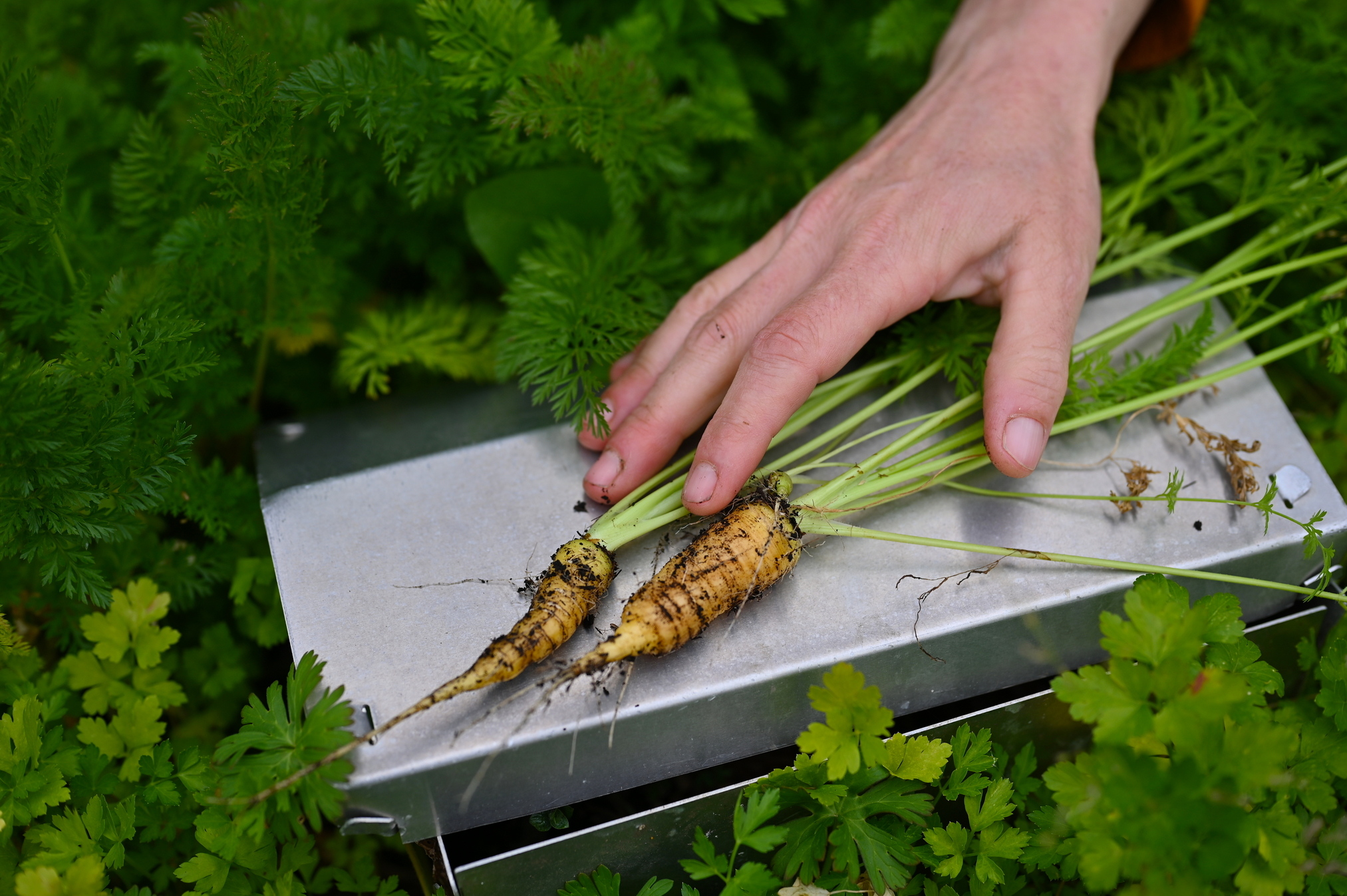
“We can have incredibly beautiful gardens, where the aesthetic aspect is very much at the forefront, but we can also grow our own food in them,” explains the founder of Jardins al dente, a project named after this concept that brings together all the services she provides.
As she has built up her work on various projects, as a consultant, urban gardener, organic farming trainer and garden designer, Filipa Almeida has taken on the care of several gardens across the city, ranging from those at educational institutions such as the Faculty of Nutrition and Food Sciences at the University of Porto (FCNAUP) or Porto Business School (PBS) to those at locations such as Alameda Shop & Spot, the Porto and North Tourism Association, and Espaço Agra, amongst others.
“On average, I have three or four vegetable gardens a week to tend to or organise workshops for,” reveals the urban farmer. The work varies from garden to garden depending on its purpose. Some focus on production, “because [these organisations] donate to charities” and, therefore, “need to [produce] quantity and [make] an impact.” “In those cases, there are casual conversations, how’s the back pain, how’s the granddaughter who was born this month, but there isn’t so much of a focus on topics related to agriculture.”
Other vegetable gardens, “partly because they are smaller”, prioritise “bringing a community to life” around them and therefore require more preparation. “With the former, you just turn up and do the necessary work; with these, you need to think of a related theme and/or activity,” she adds. Although the aim is to impart knowledge, the workshops are nothing like a lesson. “I always try to teach as we go along [with the tasks].”
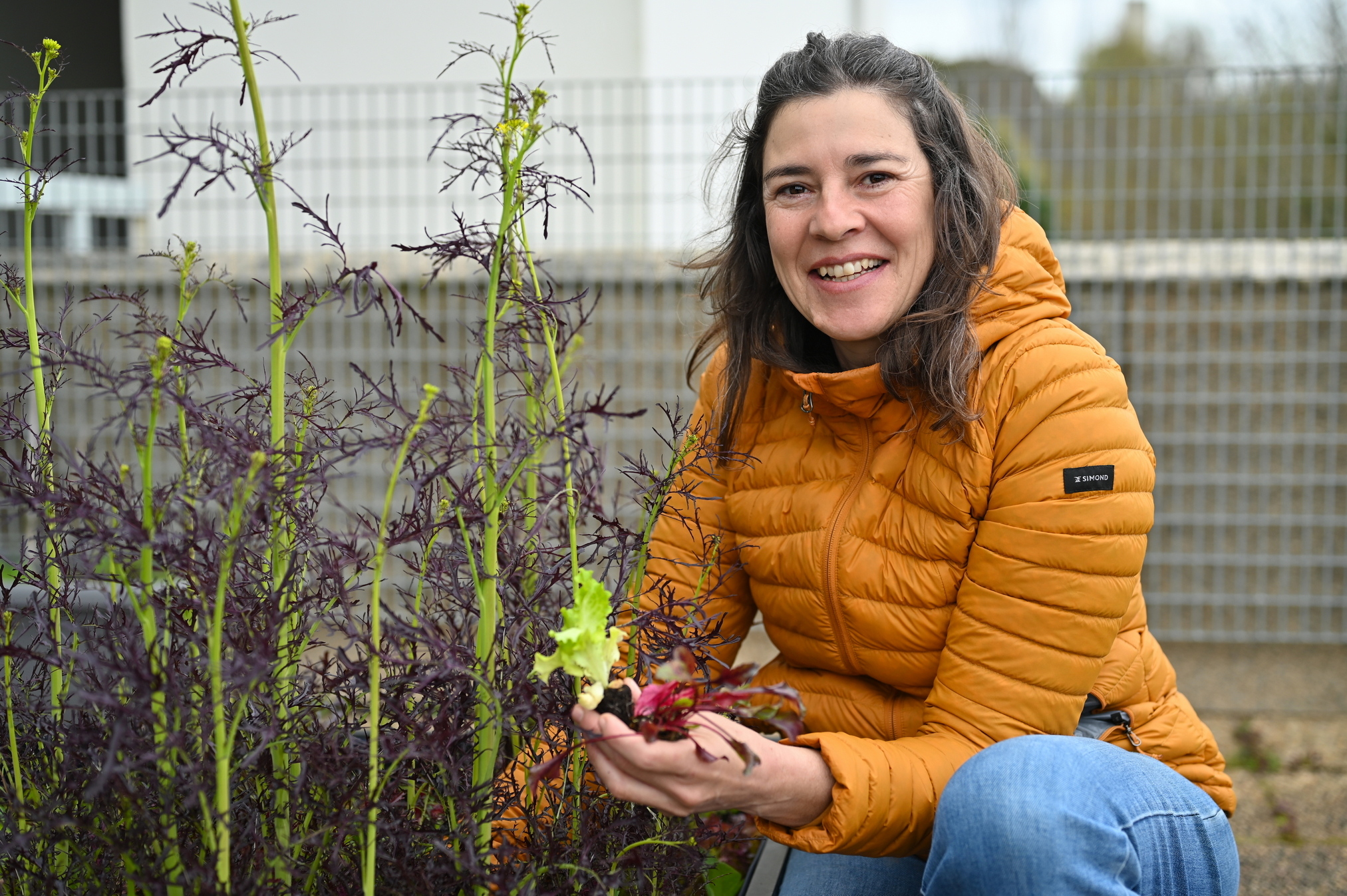
When she isn’t getting her hands dirty, Filipa is doing “back-office work”, which includes communication and report writing, or attending lectures for her degree in Landscape Architecture. In addition, she takes on one-off projects and, more recently, she's been working with other colleagues to promote the urban agriculture movement in Portugal. “Everyone knows it exists, but there is little systematisation of the information,” she points out.
This April, all work beyond the vegetable patches will have to wait, as it’s time to plant all the spring and summer crops. “March is still a bit unpredictable, but April is the time to plant tomatoes, cucumbers, peppers, aubergines, lettuces, onions, courgettes, everything, really...”.
Over the coming weeks, Filipa will be rushing about from one vegetable patch to another, clearing the beds and fertilising the soil in preparation for the spring planting. “It’s the most physically demanding time of year,” she acknowledges.
Even with the promise of chaos, the grower can’t hide her excitement at the arrival of spring. “It’s the season that appeals most to my senses. It’s the smells, the textures, the colours, the light that starts to change,” she notes. Despite this reasonable list of arguments, she cannot choose a favourite season. “I’m lucky not to suffer from that so-called ‘vegetable blindness’ that many humans suffer from,” she jokes. “I can find beauty even in winter.”
Whatever the season, you’re likely to find her enjoying it in Parque da Cidade, her favourite outdoor space in Porto. “Whenever I go there, I feel as though we’ve stepped into another world. The further in we go, the more it feels as though we’re leaving the city behind.”
Photography: © Rui Meireles
Share
FB
X
WA
LINK
Relacionados
