

EN

Fevereiro 2026
‘I'm terrible with dates,’ he warns us right at the start of our conversation. Alfredo Teixeira, 60, began playing music before he ever imagined building instruments. He taught himself to play stringed instruments ‘around the age of 14’ and has been a ‘more or less self-taught’ builder since 2006. He started by building a cavaquinho and then several violins – an instrument he also plays – until he made his first Portuguese guitar.
At the age of 18, he went to study electric guitar at the Porto Jazz School, but gave up; he studied architecture for three years until, at the age of 21, he decided to study violin at the Porto Conservatory. ‘At the time, it was a bit strange because I was taking classes with seven- and eight-year-olds,’ he recalls. He played the mandolin in Vai de Roda, a traditional music group, and in JIG, a Celtic music group. ‘After that, I'm not quite sure what I did, but I was always doing a lot of things.’ He even had an event planning company with his brother and composed music for theatre (he worked for many years with Circolando). Music never left his life, it just changed form.
“I started building because I wanted to have cool instruments to play.”
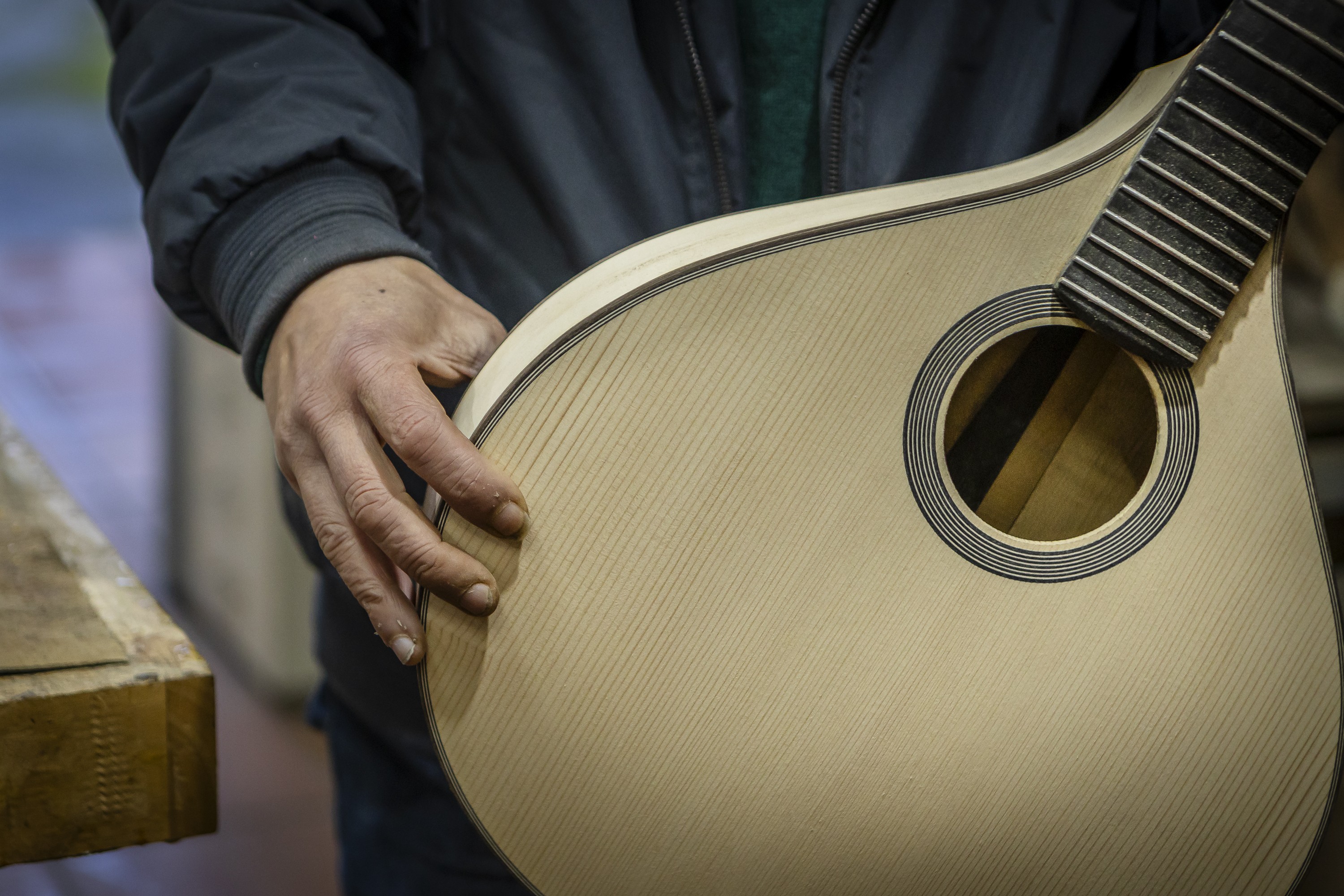
Guitarra portuguesa © Ana Caldeira
When he had his events company, Alfredo invited a student of the well-known guitarist António Luciano (Toni das Violas) to lead a workshop on building cavaquinhos. As there were few participants, he decided to join in too. “I built my first cavaquinho and, from then on, I threw myself into it. I went it alone, doing my own research. As I play the violin, I started trying to make violins, reading the little information that was available on the internet at the time. Then a neighbour challenged me to make a guitar, and from then on I didn't make any more violins,‘ he laughs. Today, he mainly builds Portuguese guitars and fado guitars – ’but there are a lot of people who don't agree with this name," he adds.
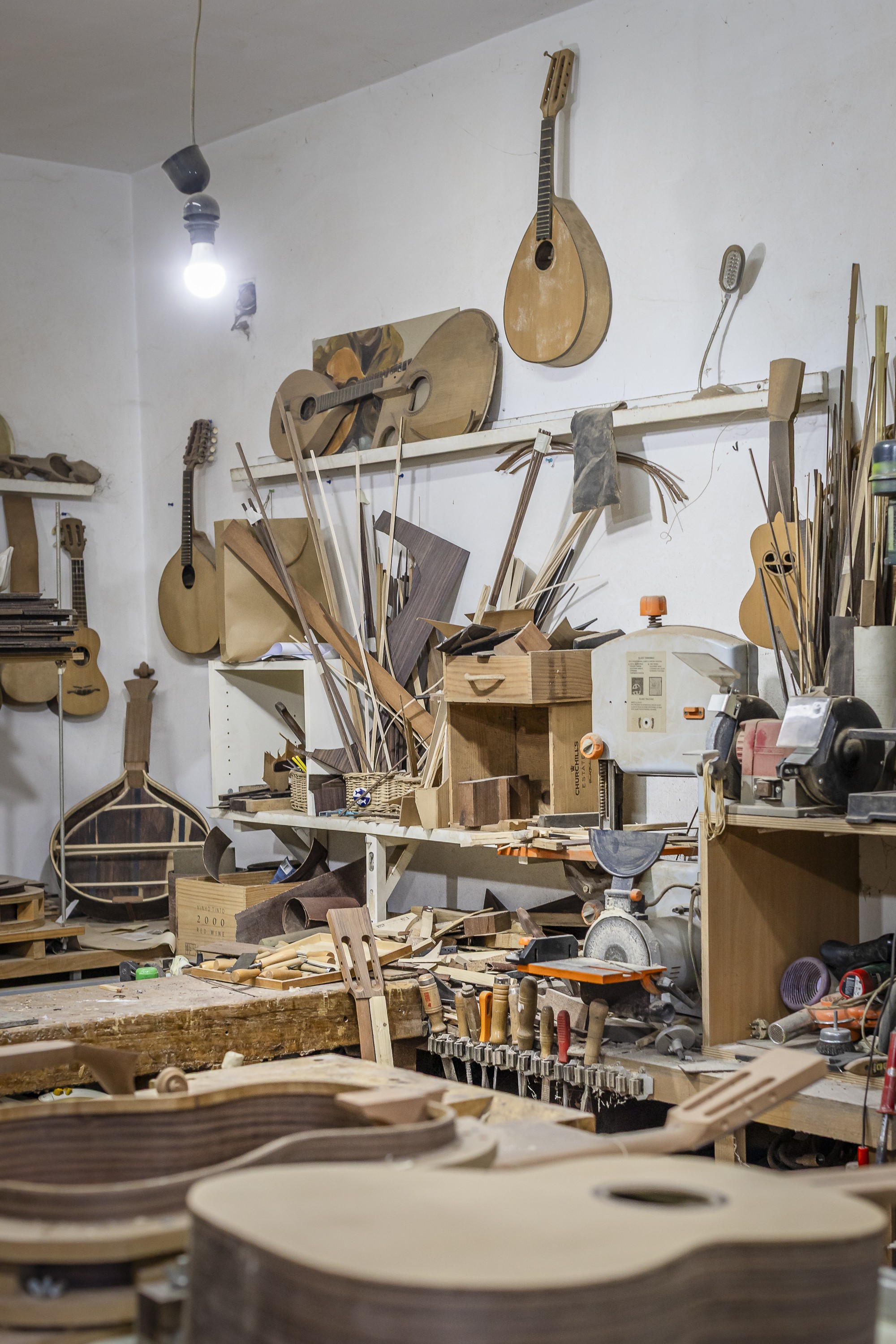
‘Mr Toni das Violas is the last of the Porto school of guitar makers. I started making guitars on my own, but Toni learned at António Duarte, which was the most iconic place in Porto, and that's where these guitars were made,’ he says, pointing to a Porto model hanging on the wall.
Translated with DeepL.com (free version)
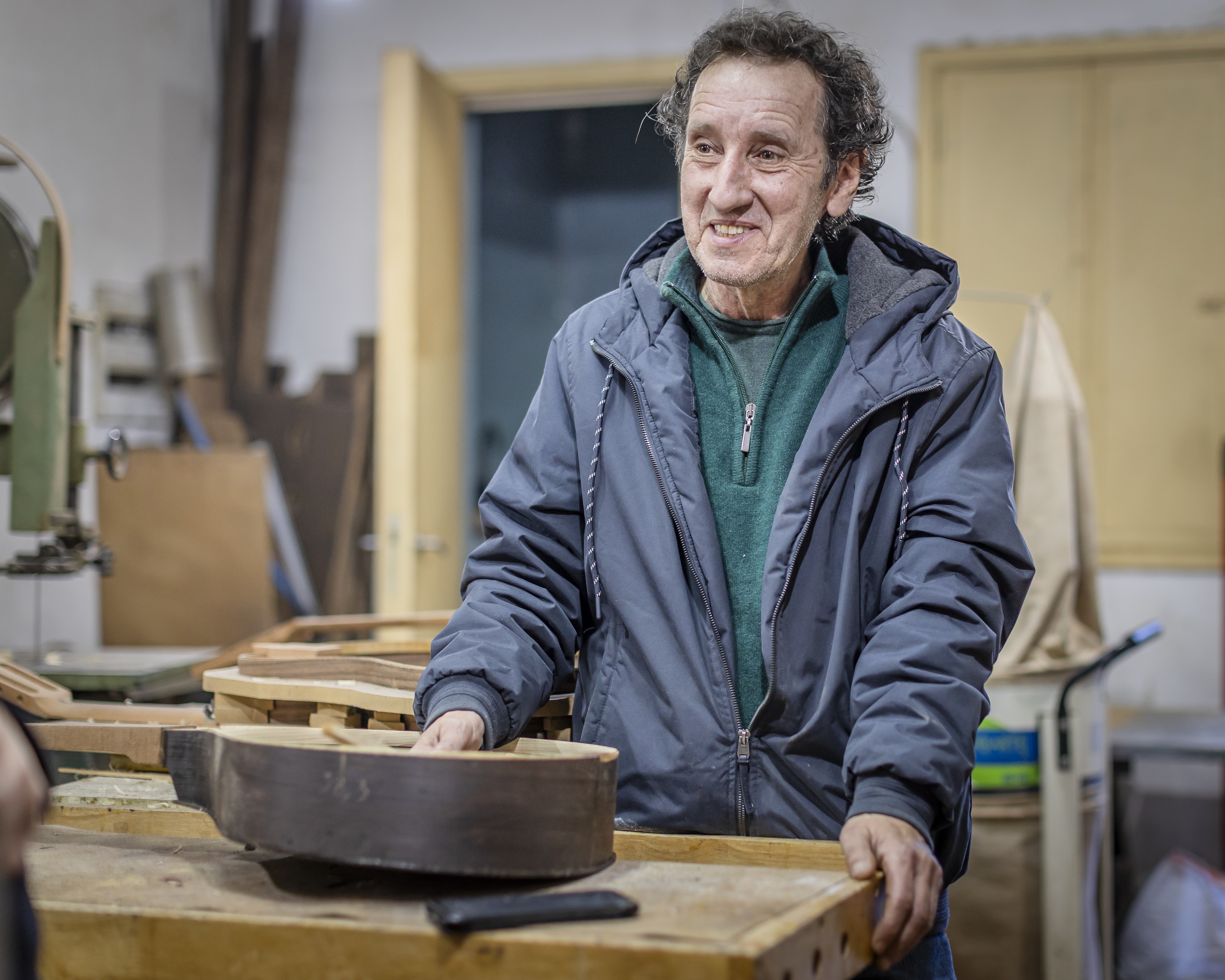
© Ana Caldeira
Over two decades, this violin maker – ‘there's no need to say luthier because I'm Portuguese’ – has lost count of the instruments he has built, as well as those that have come into his hands for repair. Alfredo admits that he started building ‘because I wanted to have cool instruments to play’. “Then I started to like it more and more because you never know exactly what the result will be; no matter how much you try to improve it, there are many factors, starting with the wood, which is never the same, and which is perhaps the main factor in making all instruments different,” he says.
In addition to patience, skill and the shellac finish — which prolongs the completion of the work by months — it is the wood that dictates how an instrument will sound. Walnut and rosewood are the woods that the luthier uses as raw materials to build his instruments. He tells us that in Portugal, ‘the most expensive instruments are made of rosewood and the cheapest are made of walnut,’ but that he currently buys his wood online, ‘and Indian rosewood is cheaper than walnut.’
Alfredo began by showing his work to a few friends, ‘and from there, things started to happen.’ ‘Today, fortunately, there are more people building instruments in the country, but when I started building Portuguese guitars, there weren't any. There must have been four or five people with some renown building instruments,’ he says.
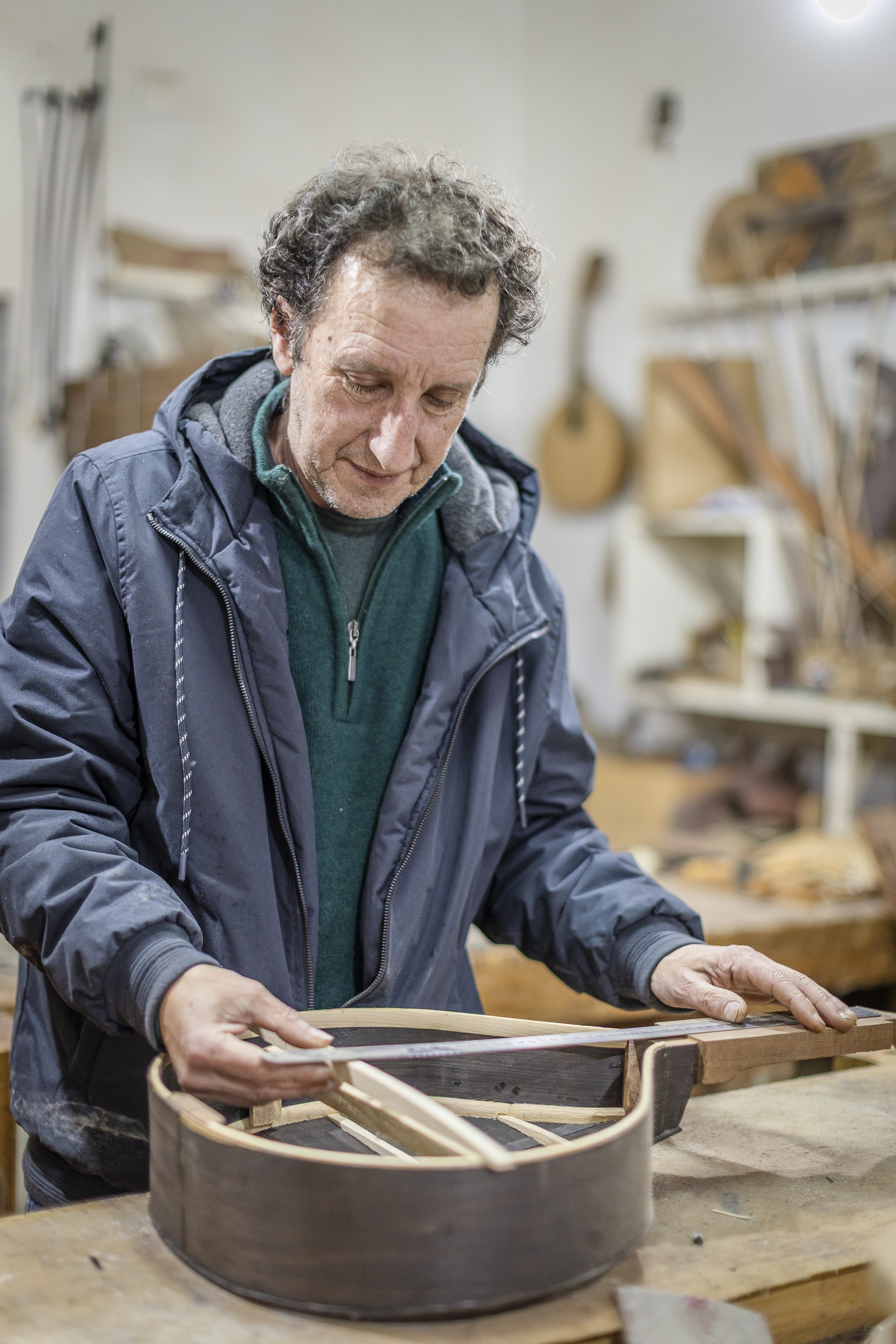
© Ana Caldeira
“My instruments have a sweet sound”
One peculiarity of this luthier is that he “does not make instruments to order”. Alfredo insists that musicians try out different instruments and then choose the one that best suits their personality. “Every musician looks for a sound and every luthier has a sound,” he says. That is why he argues that “there is no competition among guitar makers”: “my sound will not be to everyone’s liking,” he assures us. The guitar maker considers that his instruments have “a sweet sound”: “I try to achieve a rounded sound; I don’t like sounds that are too assertive, too high-pitched or too metallic,” he reveals. Incidentally, he recalls ‘the funny story’ of a friend of his who went to give a concert in Australia and was approached by a member of the audience who asked him if the guitar he was using had been purchased at Casa da Guitarra because he also had a mandolin built by Alfredo and ‘recognised the sound’.
“In fado, the Portuguese guitar should not overwhelm the voice”
For Alfredo, each instrument carries a specific sound intention, and in the case of fado, the guitar should serve the singer. “If we are playing fado, the Portuguese guitar should not overwhelm the voice; it should be in a sound zone that allows the voice to continue to dominate,” he explains. He emphasises: “the voice is the most important thing; that’s why I look for an instrument that is sweet, that provides a good foundation for the voice, but doesn’t overpower it.” However, he warns that if you are going to play ‘in a noisy fado bar, with people eating, the instrument needs to “shout” a little more’: ‘some people prefer a Portuguese guitar with more treble, with more brightness to reach further in these spaces.’
A few years after he started building and repairing stringed instruments, in 2012, Alfredo founded Casa da Guitarra.
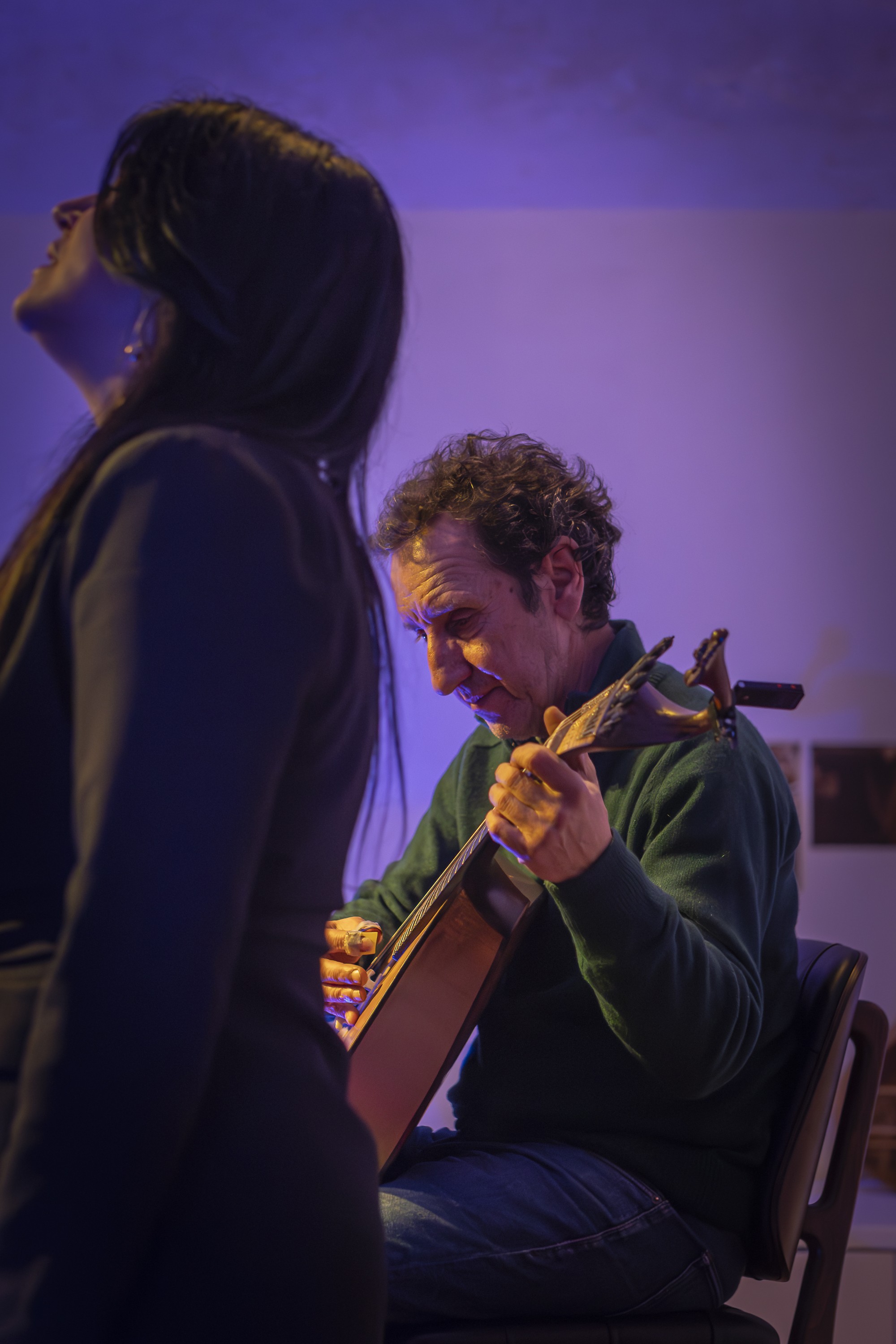
© Ana Caldeira
Silence, the fado is about to be sung
It's six o'clock in the afternoon, and Casa da Guitarra, on Avenida de Vímara Peres, near the upper deck of the Luiz I Bridge, is already packed – tourists eagerly awaiting to hear the fado being sung. Alfredo's Portuguese guitar and Rogério Rocha's fado guitar are already on stage, ready for the musicians who will accompany the two fado singers performing that evening, Carla Cortez and Isa de Castro.
This venue has become part of the city's tourist itineraries. There are fado sessions every day. In the summer, there are up to three sessions a day. ‘We were the first venue, and now there are 16 venues – and no one gets in each other's way, there's room for everyone. They are mainly tourists, there are few Portuguese,’ says the musician shortly before performing. ‘A tradition has been created in Porto that didn't exist before. Street fado already existed, but it wasn't customary to have fado in the late afternoon. And here in Porto, just as people come to watch the sunset at Jardim do Morro, they also come to listen to fado.’
The idea of one day creating Casa da Guitarra came from a memory from his adolescence: Alfredo had bought a guitar that ‘was very difficult to play because it was very hard,’ and he was advised to go to the workshop of luthier Domingos Cerqueira, in Costa Cabral, ‘a very important figure in the history of the guitar in Porto.’ ‘When I entered the workshop, I was really amazed because he was there with his tools, working, accompanied by a bunch of people playing and singing, and that never left my mind,’ he recalls.
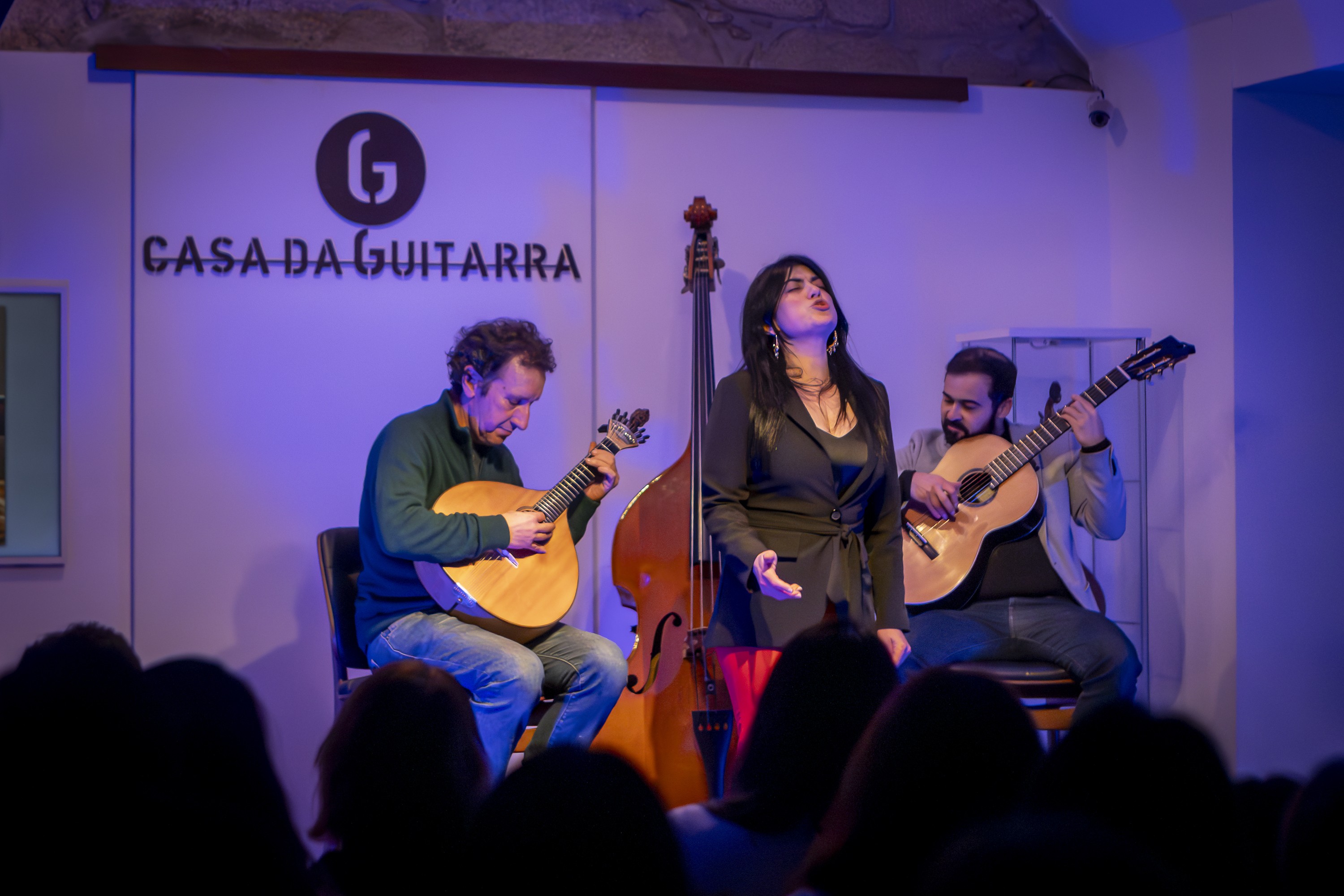
Fado na Casa da Guitarra. Alfredo toca guitarra portuguesa. © Ana Caldeira
© Ana Caldeira
When he began building instruments, he dreamed of opening a space that resembled ‘the workshops of the guitar makers of old.’ ‘I suggested to my brother that we open a shop where we could not only sell and build instruments, but also hold shows and gatherings; a place where people could play, chat and take lessons in Portuguese guitar, braguesa, cavaquinho and mandolin.’
‘We are a shop specialising in traditional instruments, and initially we didn't do anything with tourists in mind; the surprise was that tourists started coming much more than the Portuguese.’ The musician recalls that, on weekends, they used to promote traditional or acoustic instrument shows, until one day someone suggested doing a fado show. “We tried it and it went very well, so we decided to start with fado shows on certain days of the week, at six in the afternoon – because the fado people perform at night and were free at that time.”
At a certain point, fado ‘began to be a success and started to pay the bills,’ because today, owning a musical instrument shop ‘is not a profitable business.’ ‘Most people buy online, and most shops in Porto are doomed to disappear,’ he predicts.
It was during the pandemic, and then with the rise in rents, that Casa da Guitarra lost square metres and free music lessons and acoustic concerts, as well as the construction and restoration of instruments live. Even so, and despite only operating in a single space, which also houses a permanent exhibition of Portuguese string instruments, it continues to promote various workshops. The next one will take place on the 14th of this month; it is a Portuguese guitar workshop, led by José Manuel Neto, a renowned master of the Lisbon Guitar, who on the same day, at 9:30 pm, will give a concert at the Monastery of São Bento da Vitória, accompanied by Pedro Santos on the accordion and Carlos Manuel Proença on the fado guitar.
The Portuguese Guitar
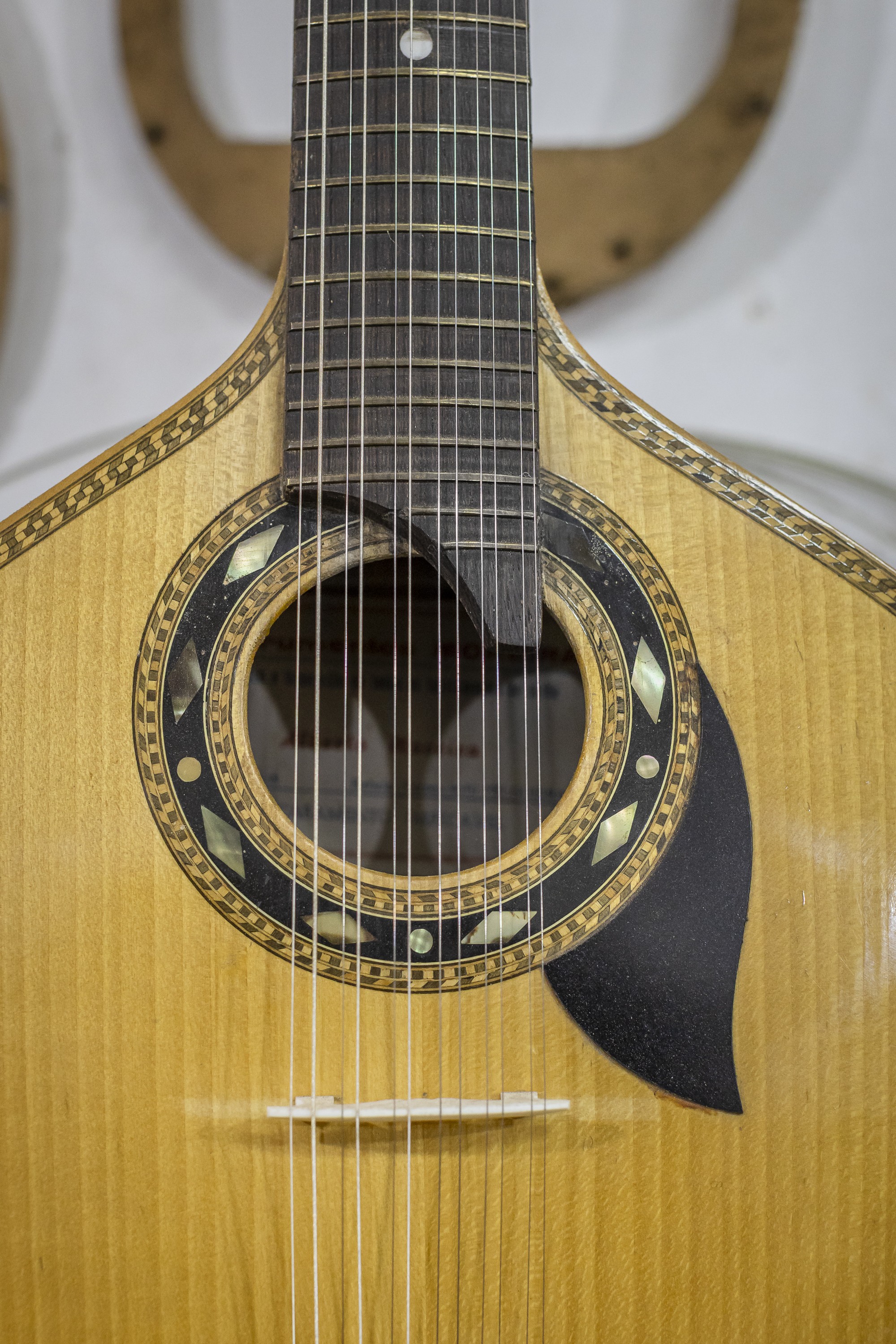
When talking about Portuguese guitars, two models are almost always mentioned: the Coimbra and the Lisbon. But before these distinctions existed, there was only ‘the guitar’. We discovered that this original model may have been the Porto model. ‘There are no historical certainties,’ says Alfredo Teixeira, emphasising, however, that ‘from what he has read and from the instruments he has handled, until around 1930 “it was like this”: there was no Lisbon or Coimbra guitar. There was the Portuguese guitar.’
According to an article by Pedro Caldeira Cabral, ‘a scholar on the subject’, the change came when Artur Paredes, Carlos Paredes' father, sought another sound power and, together with João Pedro Grácio Júnior, a master luthier, rethought the instrument: ‘the body was enlarged and given different characteristics, namely the string division, the size of the bridge up to here [demonstrates on the neck of the instrument], which is a quarter of the string length, which gave it some scientific rigour and greatly improved the sound - which became deeper and more powerful.’
Meanwhile, Armandinho, a legendary figure in Lisbon guitar circles, collaborated with another member of the Grácio family to expand on the original model. The goal remained the same: to gain projection and body of sound. Thus was born the Lisbon guitar, ‘a little more restrained’ than the Coimbra model.
The old guitar, smaller and less powerful, was discontinued. The new models offered more volume, more sustain and a better response to the demands of musicians.
© Ana Caldeira
The guitar that ‘fell by the wayside’ — the one from Porto
Alfredo's first encounter with one of these old ‘tiny guitars’ with a flower on the scroll [head] took place in António Duarte's workshop. ‘I tried to find out the story behind it.’ He discovered a forgotten model, predating the standardisation of Lisbon and Coimbra. ‘Some people said it was a lady's guitar because it had a flower on the scroll,’ he says. ‘That's not true because these guitars had completely different heads; some had flowers, others had faces — I even found one whose head was a bulldog with a cigar,’ he laughs.
But what are the characteristics of the Porto model? "It was smaller and, normally, the side was narrower. It was made of maple or sycamore — the sound characteristics of both woods are very similar, and the decoration was extremely simple.‘ And, by the way, he notes that the Coimbra guitar may have ’inherited a little of that simplicity,‘ because the Lisbon guitar ’is full of mother-of-pearl and is more exuberant." ‘I have a theory, based on the guitars that have come to me for repairs, that the tear [on the head of the Coimbra guitar] is a kind of simplification of the flower [on the Porto guitar],’ he concludes.
Share
FB
X
WA
LINK
Relacionados
