

EN

The name of the project itself conveys an idea of movement – winding. ‘We realised that this is a movement that children make when playing in the street; they don't walk in a straight line.’ Agenda Porto spoke to the co-creators of this initiative.
Anyone walking through the streets of Porto will have come across posters and billboards with slogans such as: ‘I want a green city’; ‘I want a free city’; ‘I want a peaceful city’; ‘I want a lively city’. This is part of Serpentina's awareness campaign on the right to play and the right to the city – A Brincadeira está na rua! (Play is in the street!), which asks us: ‘What do you want from your city?’
‘This question is a kind of pun on the question asked to children, “What do you want for Christmas?”. Perhaps the [best] gift would be to change the city,’ says Maria João. The aim is to reflect on ‘the conditions that the city offers for play; whether it is a child-friendly city.’ ‘The idea that playing outdoors is very important, and is important for health reasons, for children's freedom and creativity, and in all seasons of the year. This is the main message of the campaign,’ Maria João tells Agenda Porto.
The invitation to play in the street is evident in the four posters: ‘trees in the street to play in the shade’; ‘climb the slide barefoot’; ‘go to the garden with school friends’; ‘play outside even in bad weather’. "It's a kind of micro-poetics of the child-friendly city: green, free, gentle and alive. And here we are talking about mobility and ecological issues that offer opportunities to play – more than the toys and screens you have at home."
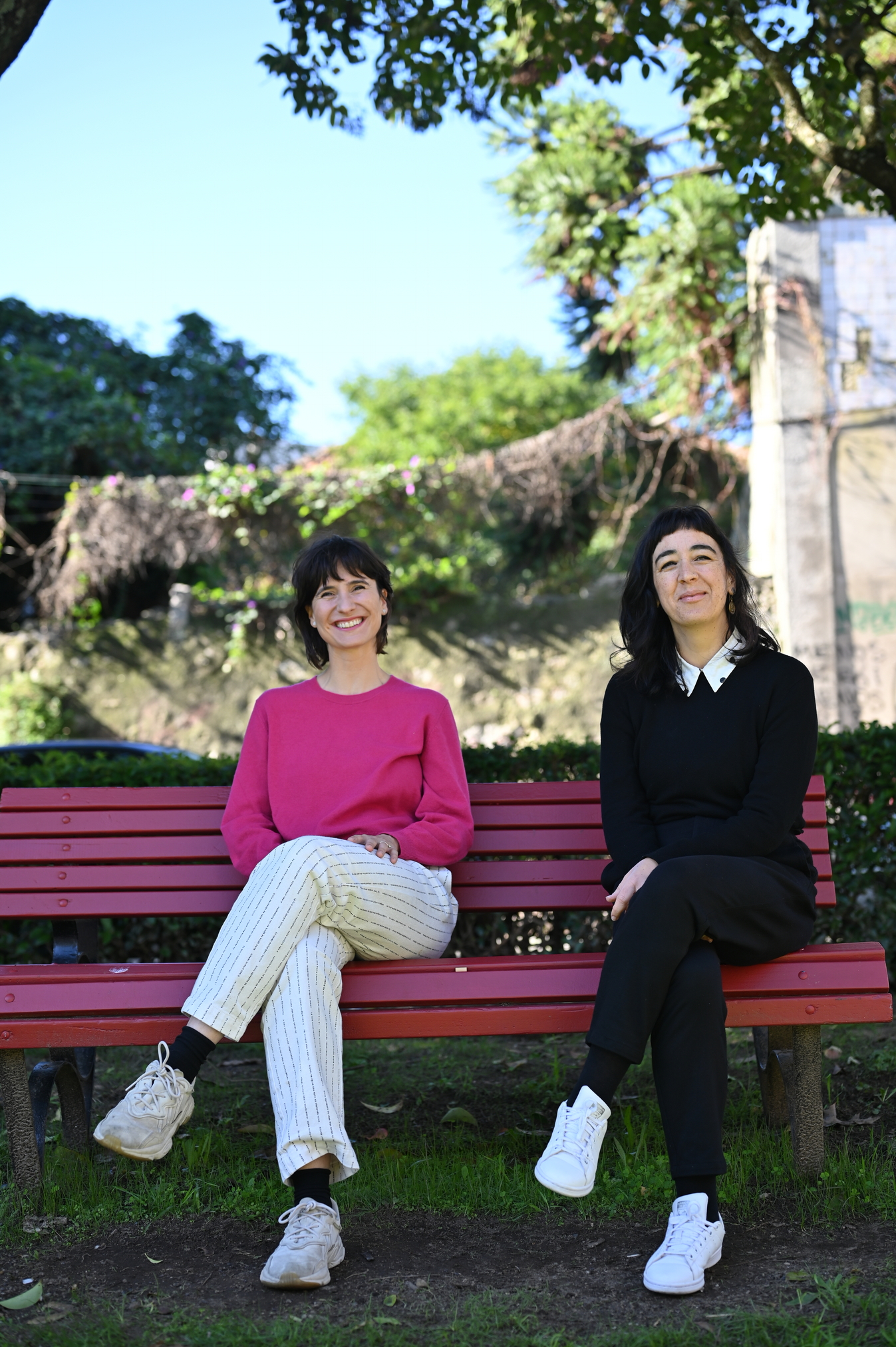
Maria João Macedo e Patrícia Costa © Rui Meireles
To make this campaign memorable and help spread the message, Serpentina challenged Mão Verde (António Serginho, Capicua, Francisca Cortesão and Pedro Geraldes) to create an original song, with lyrics and vocals by Capicua, which also has a music video (produced by the Macedo Cannatà studio and animated by Gustavo Carreiro and Matei Monorau). ‘Now we are going to focus a lot on showing this animated video that conveys our message, and we also want to use it with children in activities related to dance, for example,’ says Maria João.
This song features the campaign's ‘slogans’: it calls for a green city, first and foremost, ‘a city with more trees, with more nature; a free city where you can wander around, where cars are not so dangerous, or at least where there are areas where traffic can be restricted to allow children to explore,’ she explains. It also calls for a city ‘where children are visible and seen, because they play in the street, even in bad weather, and a gentle city, which is a city with more time’. "Children's time is different, it is slower, and it is very important to understand this. It is also gentle in terms of mobility: active mobility, on foot, by bicycle, which is very important for the very construction of children's autonomy," she explains.
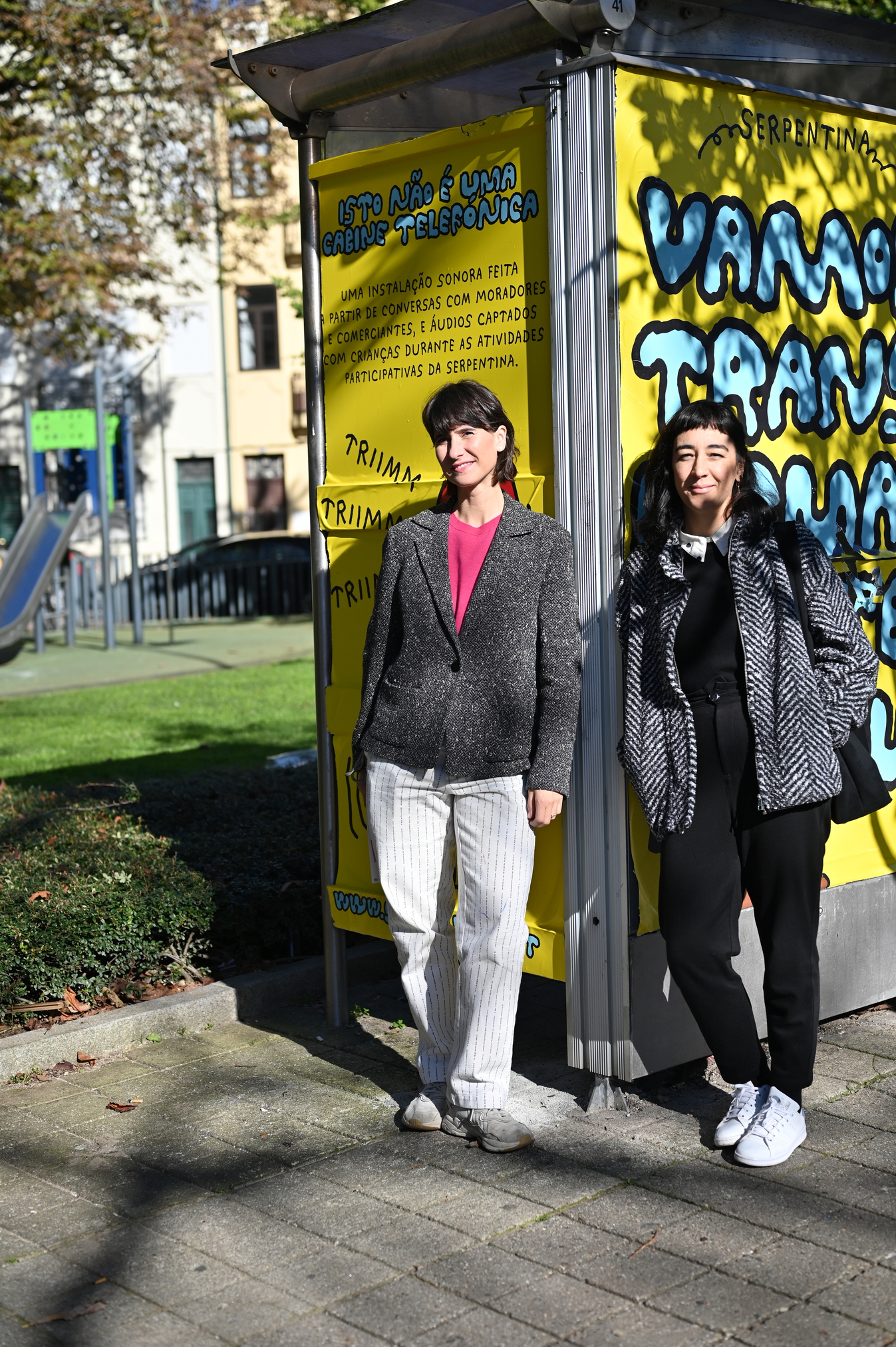
"Isto não é uma cabine telefónica", instalação no âmbito da Porto Design Biennale © Rui Meireles
But let's go back to the beginning of Serpentina. And at the beginning, there was the concern of two mothers about the lack of spaces where their children could play. Patrícia, a social educator, and Maria João, a communication designer, decided to demand the renovation of the small playground in Largo de Soares dos Reis, in Bonfim, where they both live. From there, they began to design an idea for urban transformation based on the right to play and claiming public space for everyone. ‘It has been a process as mothers, because we feel that the city is ill-prepared for us to enjoy it with our children, for them to be able to play freely in the street,’ says Patrícia Costa.
After several unsuccessful applications to different entities, the project was selected to be part of this year's Porto Design Biennale and gained the support of the Municipality of Porto, which will finance the playground's renovation, with work scheduled to begin in June next year.
However, since April, Serpentina has been carrying out several initiatives involving the local community, namely residents and traders in the area, cultural programmers and, of course, the greatest experts in the art of play – children, who have been a kind of consultant for this urban transformation movement [see video below]. “At first, the exercise focused heavily on the Largo de Soares dos Reis playground; we held several workshops and street tours with a group of 35 children from the O Meu Lugar no Mundo association,” says Maria João, emphasising that “children surprise us a lot because they have creative ideas, and it is very interesting to see how generous and altruistic they are.”
“Many of the ideas involved only allowing non-polluting vehicles to drive around there; they talk a lot about trees, because they like trees – there are adults who don't like them, because they drop leaves and attract rats, but children like them. And the trees are also proposals for play, which is this “subversive” design we have here," says Maria João, pointing to one of the campaign posters.
Some of these conversations with children and local traders are part of the sound installation ‘This is not a telephone booth – Serpentina Phono-conversations’ in Largo de Soares dos Reis, and can be heard until 26 April. This was a proposal by Serpentina, as part of the Porto Design Biennale, which ‘emphasises the importance of community involvement in the recreation of the city.’
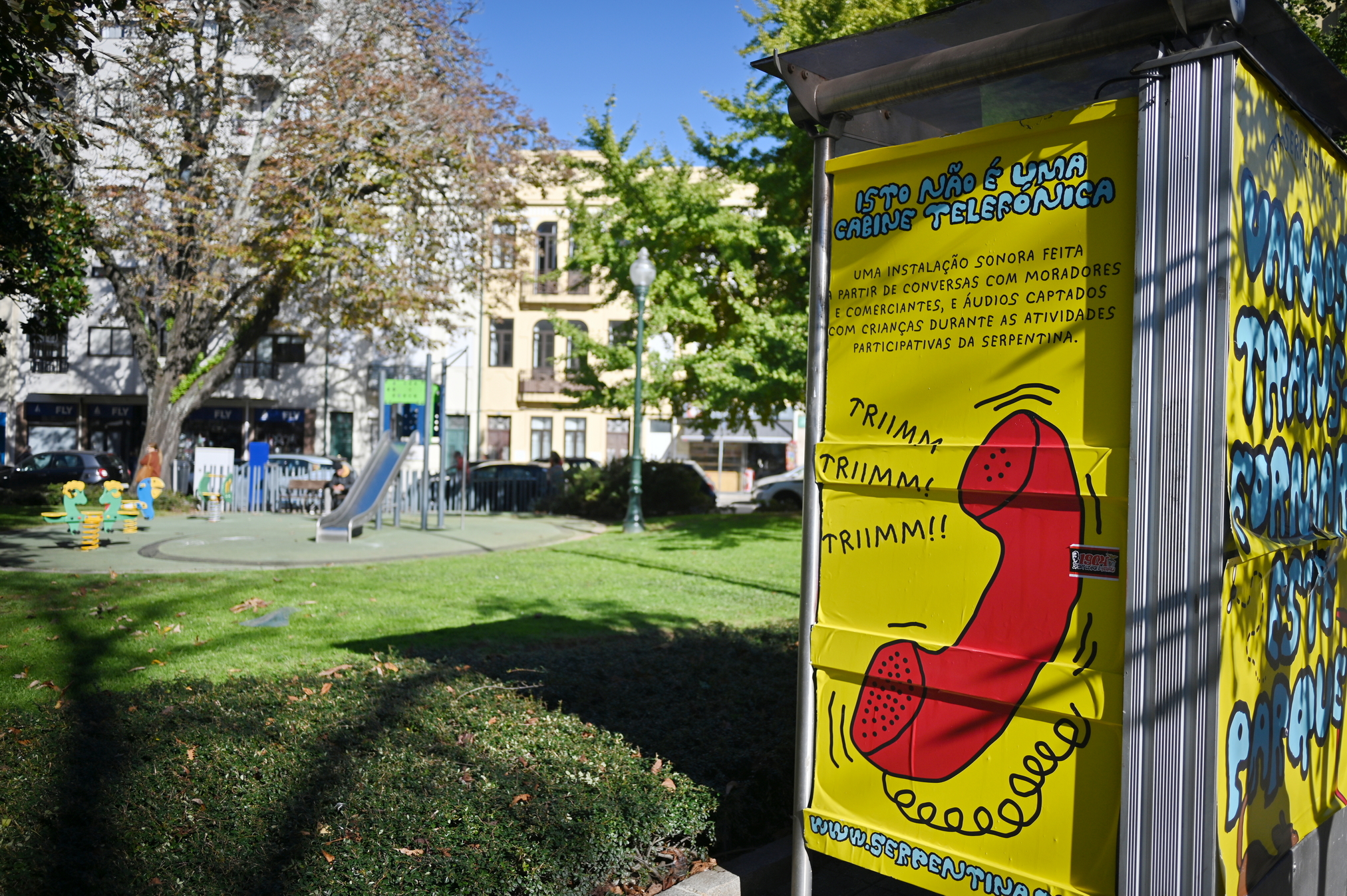
"Isto não é uma cabine telefónica" no Largo de Soares dos Reis © Rui Meireles
‘It is important to realise that public space, when claimed, can be used by people without them having to consume in order to enjoy it.’
A play laboratory: turning parks and streets into social spaces
The Serpentina urban transformation project, which began with proposals for the rehabilitation of Largo de Soares dos Reis, has been extended to a ‘green triangle’ at the intersection of Barão de São Cosme and Joaquim António Aguiar streets, which they call Parque da Alegria. Maria João and Patrícia challenged the Municipality of Porto to place three garden benches in that unused ‘green triangle’, about a two-minute walk from the playground they want to intervene in. The benches were installed in early October.
‘During our diagnostic walks, we tried to identify places that had potential for use by families in this area. And this one, in fact, was a very underused green space,’ says Patrícia. ‘Suddenly, just by installing these three benches, the municipality realised that the experience of this place had already changed,’ confirms Maria João. ‘We want Parque da Alegria to be a playground laboratory, where this space can be used to experiment with other ways of playing, without slides or swings, but as a space to demonstrate that these structures are not essential for play to happen,’ she argues.
The aim is for this space to be identified as a meeting place; not as a place to pass through, but as a place to be. Indeed, with the installation of benches, the space has become popular. ‘Many families with young children live here, and this is a place where we can meet and socialise a little and get to know our neighbours.’
Patrícia and Maria João hope that these small, low-cost urban transformations will be replicated in other parts of the city. ‘It would be great if we could spread this type of small-scale initiative throughout the city and the rest of the country,’ they say enthusiastically.
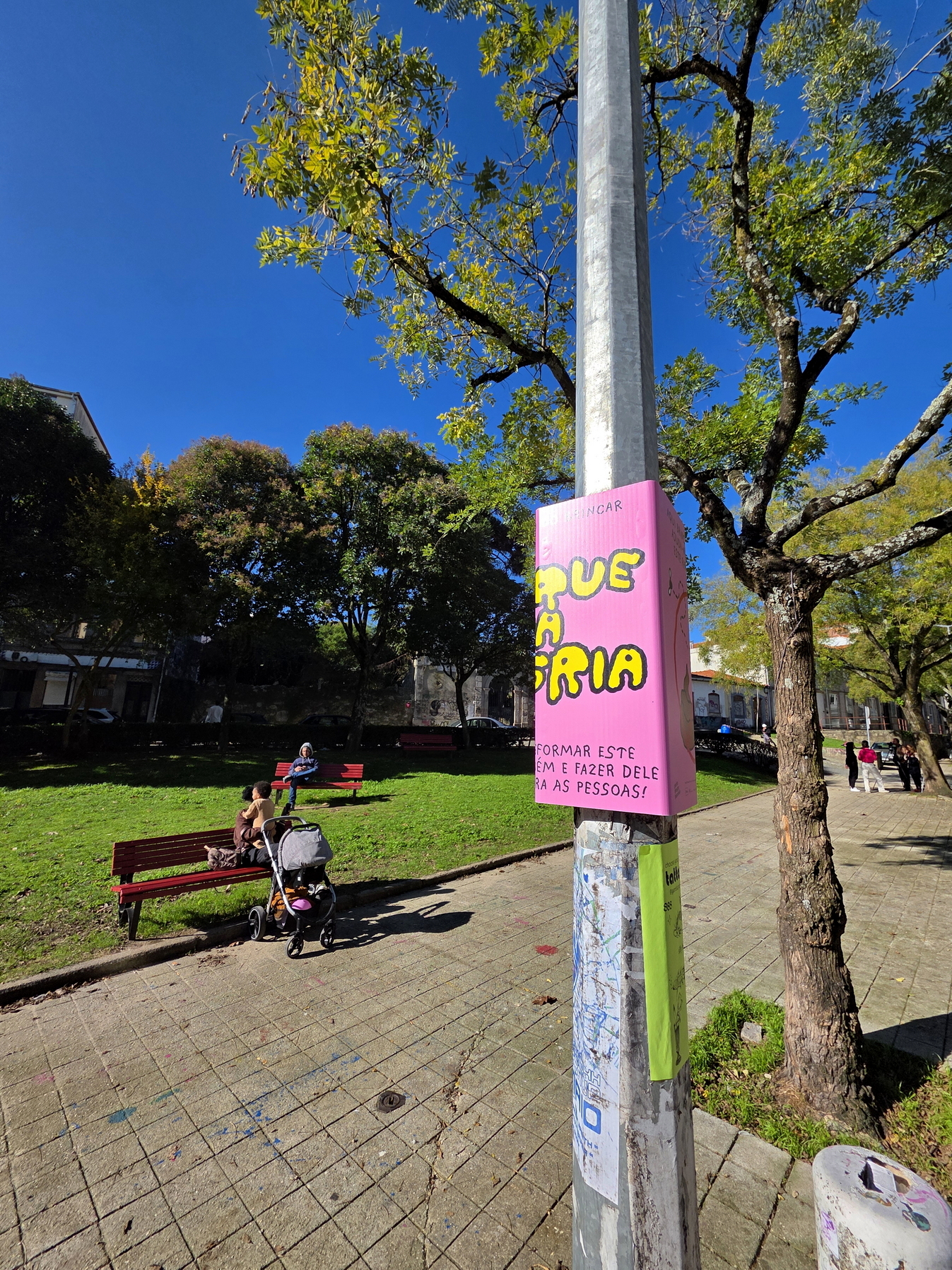
Parque da Alegria © Rui Meireles
Share
FB
X
WA
LINK
Relacionados
