

EN

A Máquina Zero, Nuno Sousa © Cruz Santos
March 2026
Clube de Desenho [Drawing Club] was born out of a common concern: the need to think about teaching and practising drawing together. ‘Being a teacher is a very lonely activity,’ recalls Sofia Barreira. ‘You're there with your students, but you have doubts, you want to discuss things, exchange ideas with your peers. We missed that.’
Sofia Barreira, Marco Mendes, Nuno Sousa and Carlos Pinheiro crossed paths at Belas Artes while they were students, but it was later, when Sofia and Nuno were teaching and attending a master's degree at the Faculty of Architecture in Porto, that the idea was born. ‘On the day I defended my thesis, I felt a huge void,’ says Sofia. ‘Two years of work summed up in a 30-minute conversation. And then I thought: what now? That's when I challenged Nuno to create our own school, our own programme.’
In 2010, they created a club in the literal sense of the word: an association of people brought together by a common interest in a space of autonomy, freedom and collective decision-making. ‘When we started, we created a space that didn't exist anywhere else,’ says Nuno Sousa.
The Drawing Club was “a reaction to several things we didn’t like about teaching and the artistic world,” says Marco Mendes. “And there was a very strong bond and complicity between people, a sharing of values that led us to create a space where we could be more autonomous and freer,” he emphasises.
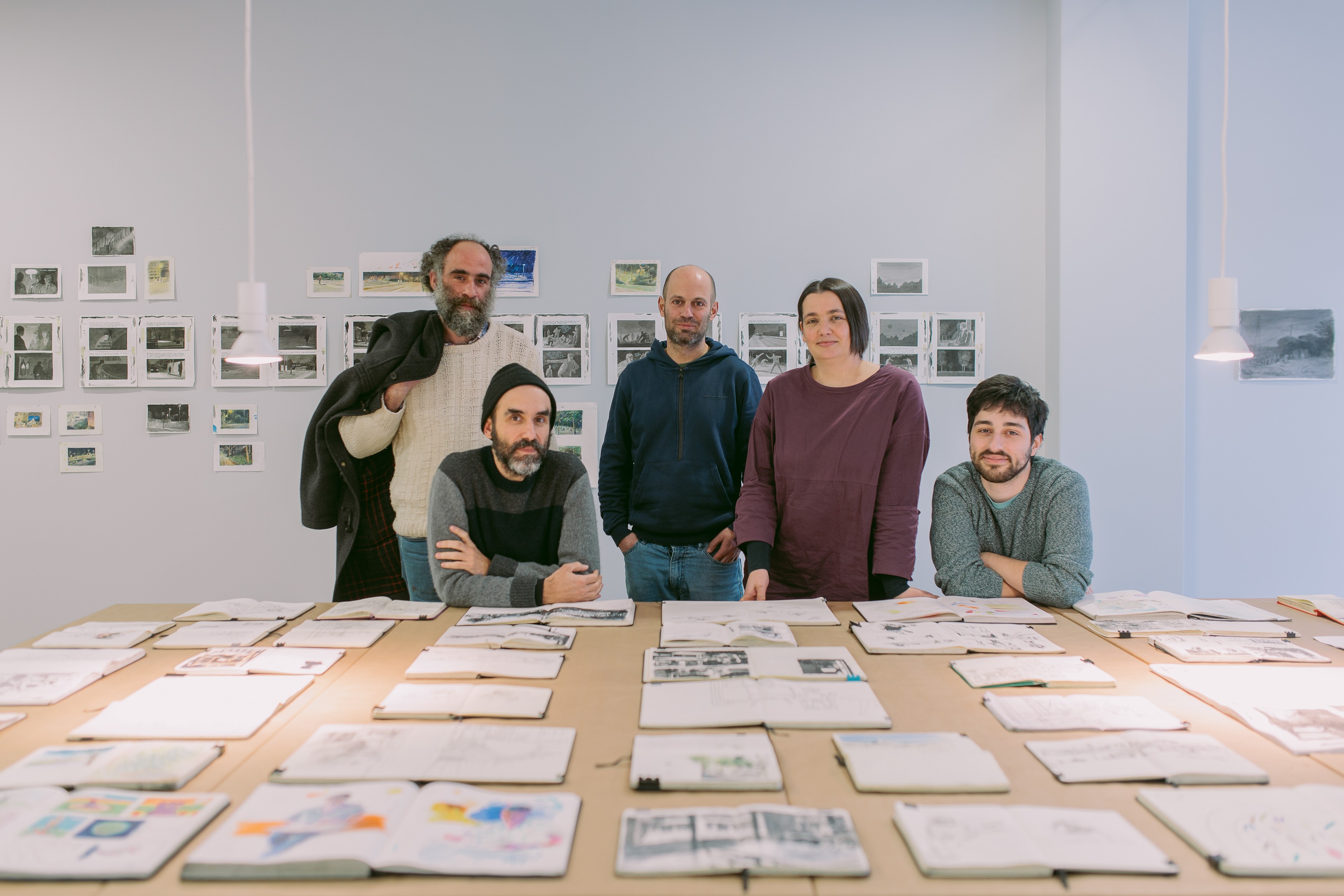
From the left to the right: Carlos Pinheiro, Nuno Sousa, Marco Mendes, Sofia Barreira e Diogo Nogueira. © Renato Cruz Santos
Incidentally, Nuno adds that “they wanted to do the opposite of what is ‘normal’; we really are a club, in the sense that there is no cynicism”. “We were educated at a time when artistic training was very cynical, given by teachers who had a [hostile] attitude towards teaching,” he laments, recalling that “one of his first teachers at university said that ‘he had to come and teach, but he didn’t want to’, which is a horrible thing to say to students.” “We don’t have that prejudice between what it means to be an artist, what it means to teach, what it means to learn; we mix it all up a bit,” he summarises.
In 2020, ten years after its creation, the club now has a permanent address at 970 Rua da Alegria, adding an exhibition space and another for workshops to its educational programme, currently with seven resident artists. "Initially, we were restricted to classes and courses, but our goal was always more ambitious. What we have here now, the gallery, was already a dream back then. This desire to intervene in the city's cultural scene has always existed – and that was perhaps what has changed the most since the beginning; the studios were also a utopian idea, but today they are a reality," says Marco Mendes.
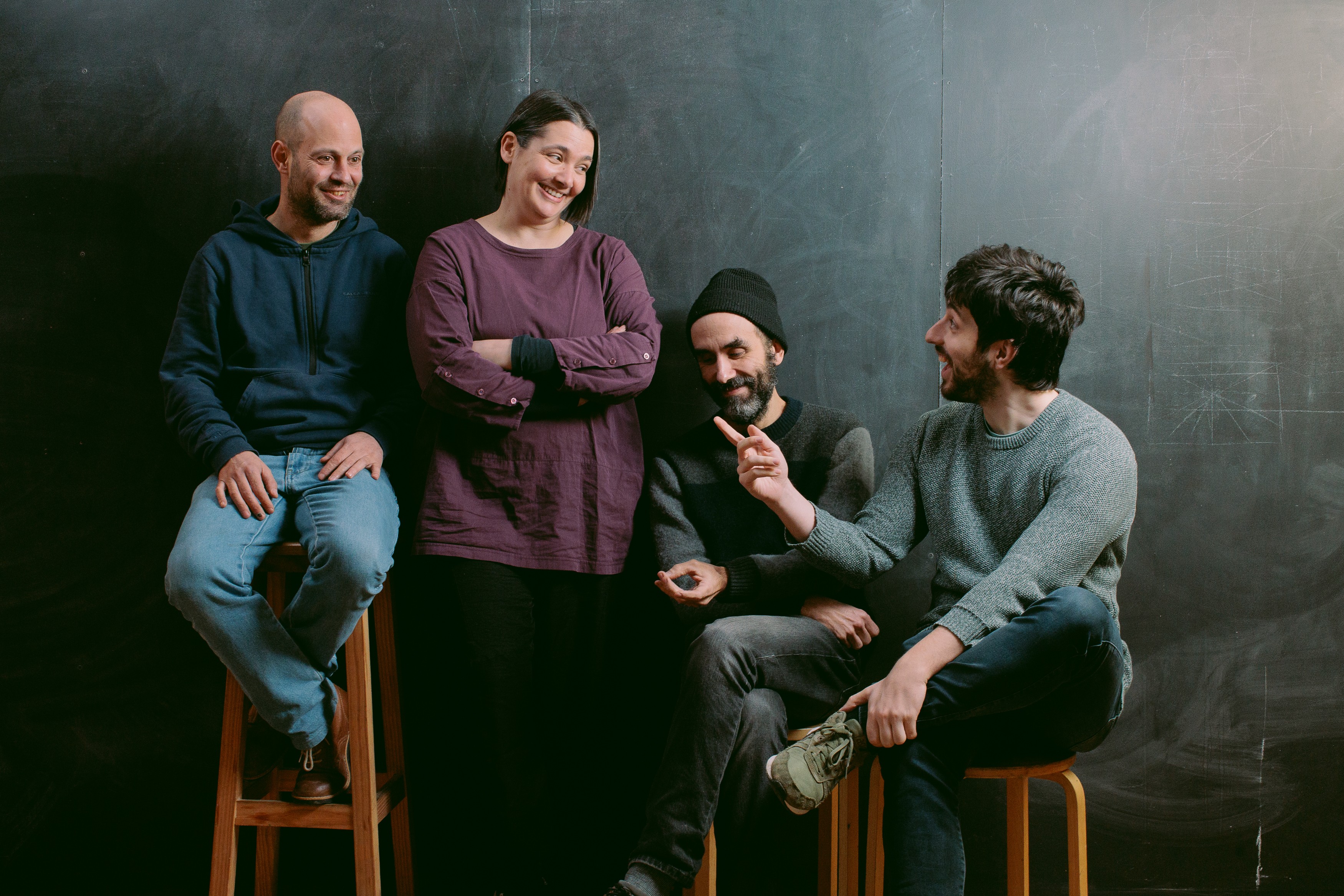
Marco, Sofia, Nuno e Diogo © Renato Cruz Santos
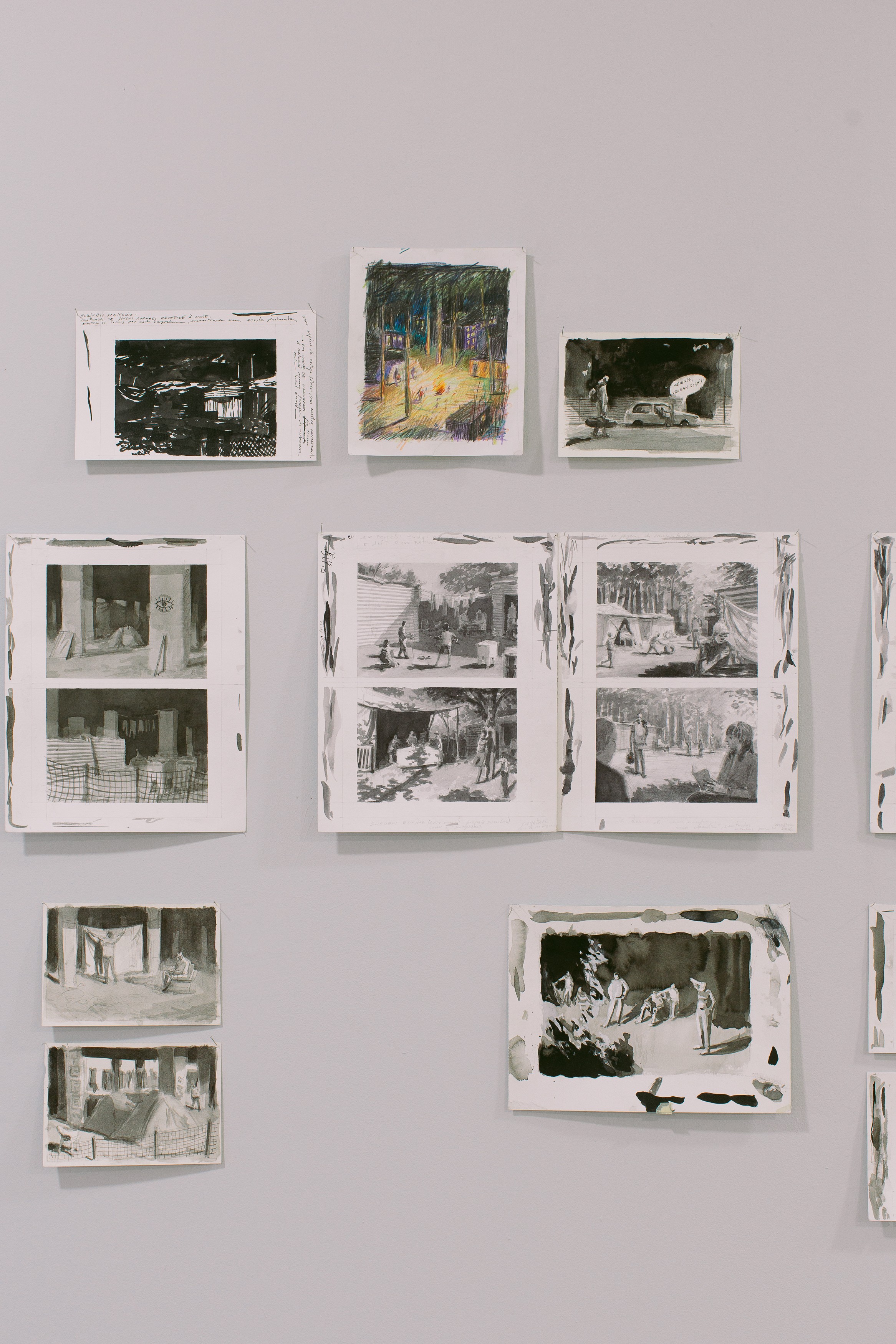
Exhibition A Máquina Zero, de Nuno Sousa
The original group remained intact and expanded. Today, three more members are part of the artistic direction: Diogo Nogueira, Irene Loureiro, and Sofia Neto.
Diogo, 26, is the youngest member of the team. He was 10 when Clube de Desenho was created. He started out as a student and later joined the collective. "When I entered the Faculty of Fine Arts, I felt I needed some guidance in drawing and this place was recommended to me. I really liked the atmosphere, the people became my friends, and when I finished the course I started collaborating and ended up joining. The Drawing Club was essential for my growth as an artist and teacher," says the artist, who is now doing a master's degree in Painting in Paris.
Diogo is one of the artists featured in the exhibition that opens on 4 July, which is supported by Criatório, a programme that supports artistic creation and programming in the municipality of Porto. ‘We invited Diogo and Irene to be curators and participants in a collective exhibition of younger artists who have passed through Caldas da Rainha,’ says Sofia.
This month, on the 7th, the exhibition A Mão Esquerda das Trevas (The Left Hand of Darkness) by Isabel Carvalho, a multidisciplinary artist from Porto who combines visual arts, writing, editing and book publishing, will open. Then, from 2 May, there will be a new exhibition by Ricardo Baptista, a comic book author.
‘We had support from Criatório, and we will have programming until the end of August, but when there is no support, we still do the exhibitions and “wear the shirt”,’ Sofia assures us, adding that ‘the support allows us to pay production costs and have a symbolic amount to pay the artists.’
‘The artists are even surprised: are they going to pay me to exhibit? (laughs). It's not customary to pay the people who make things happen. Basically, the money is to pay people - but we are not dependent on support to put on an exhibition programme,’ stresses the teacher and artist, who also restores furniture.
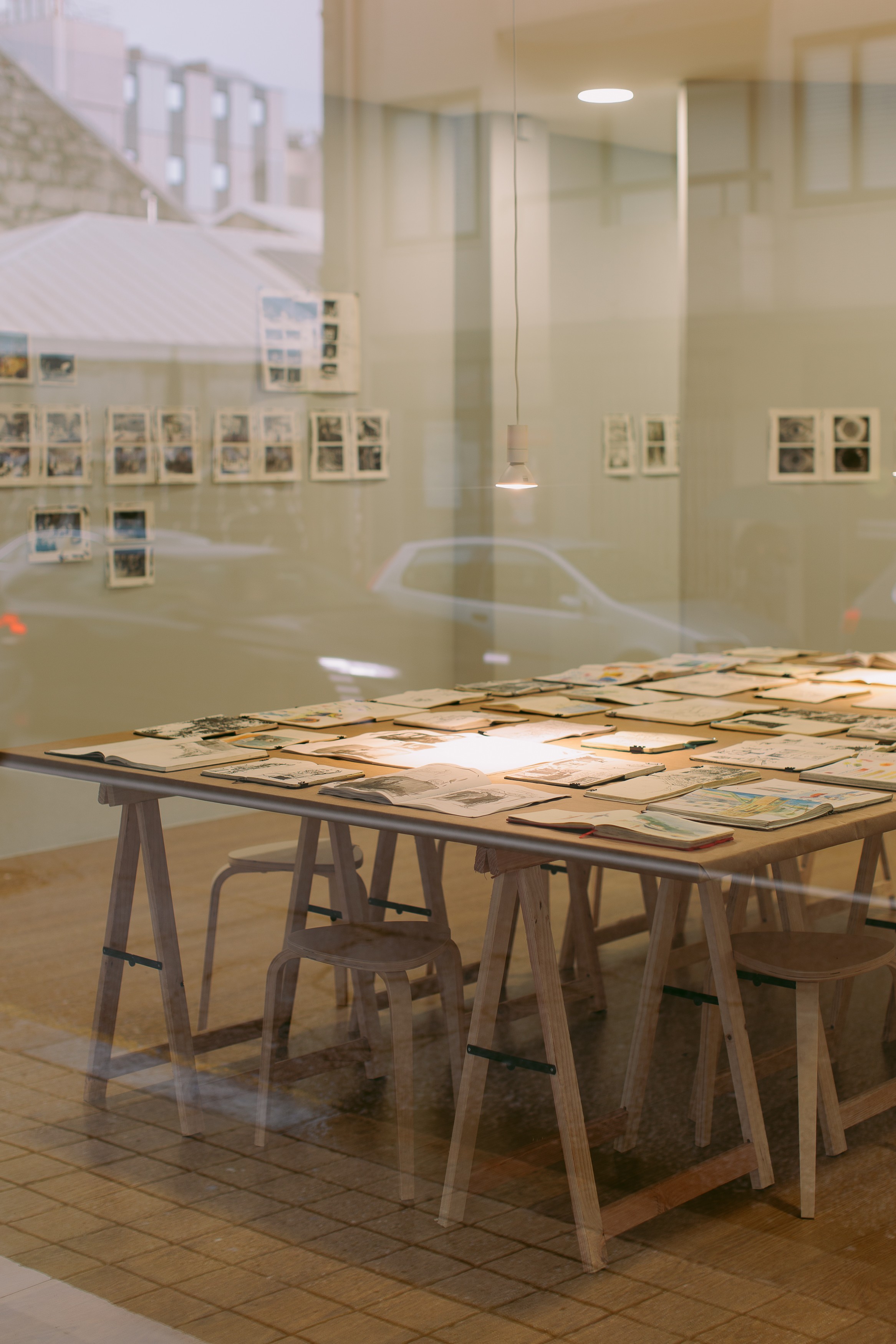
Clube de Desenho © Renato Cruz Santos
‘In sketching, we work on issues related to the act of observing. Perhaps one of the most important aspects – more than techniques, which are easy to teach – is knowledge of the world, the relationship we have with the world. A person who sketches, paints or writes has a very different relationship with the world.’
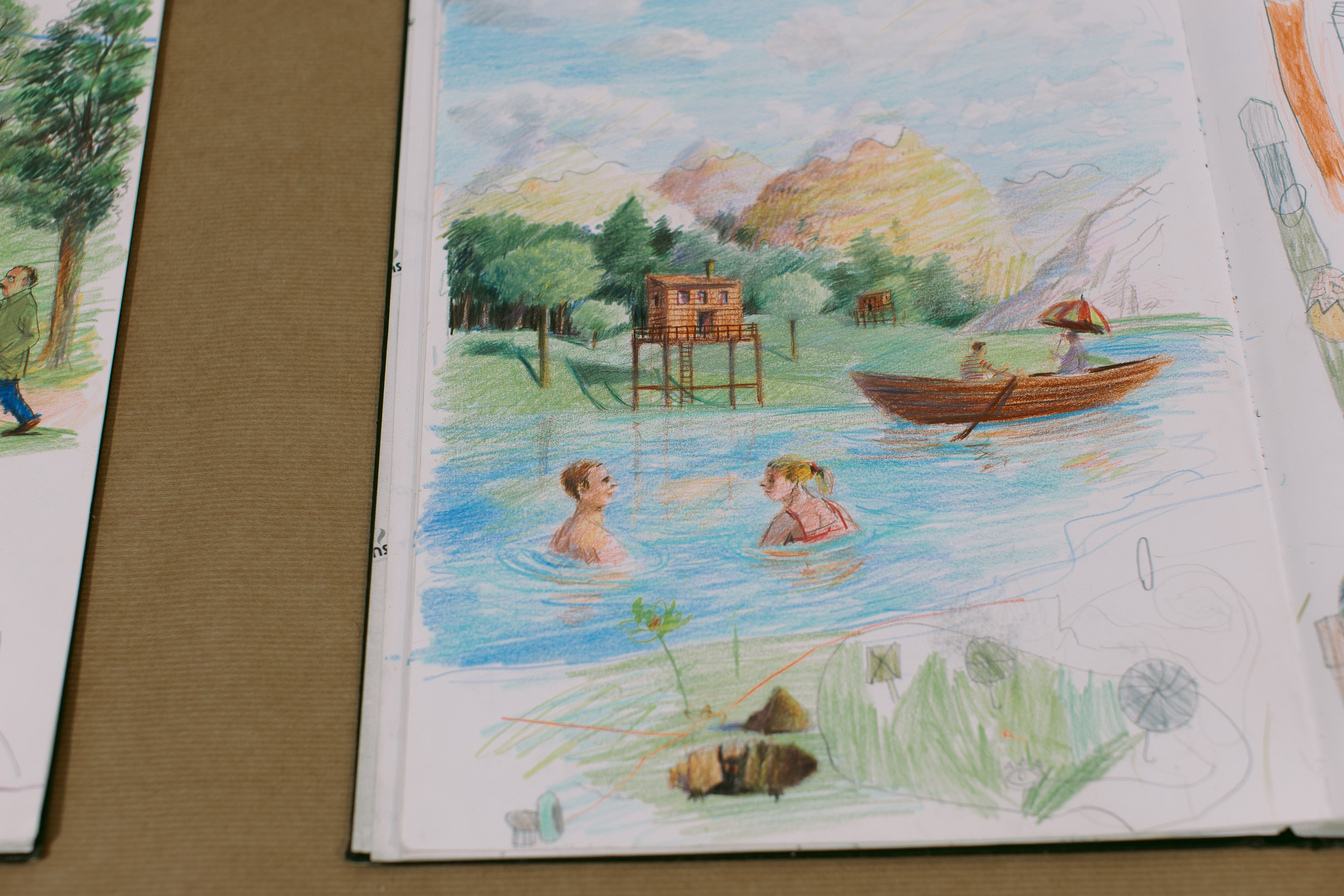
Exhibition A Máquina Zero, de Nuno Sousa
Drawing as an open practice
Drawing is the club's main curatorial focus, but it is not its only focus. ‘Drawing is interpreted as a starting point; we invite artists for whom drawing is part of the process,’ explains Diogo, but this ‘does not mean that the exhibitions are only about drawing.’ Painting, sculpture, performance and other languages coexist naturally. ‘Drawing is there, sometimes in an underground way,’ adds Sofia.
Joint research into drawing, critical deepening and collective learning open to the community are the objectives of this unique space, which currently offers three training courses: an oil painting course, an observational drawing course and model drawing sessions.
‘The courses are for those who want to learn or return to a more structured teaching and learning environment, and the groups [of students] are always very heterogeneous, which creates a balanced dynamic — that is the richness of a space like this,’ emphasises Sofia Barreira. ‘And they are not necessarily people from the arts,’ adds Nuno Sousa.
For the drawing teacher, ‘more than techniques, which are easy to teach,’ ‘issues related to the act of observing’ are worked on. ‘Perhaps one of the most important aspects is knowledge of the world, the relationship we have with the world, and a person who draws, paints, or writes has a very different mediation with the world,’ he maintains.
Nuno highlights the club's ‘informal side,’ in the sense that no grades are given, ‘despite the fact that the work is critiqued.’ For Nuno, this is a space for pedagogical research: ‘We brought here the knowledge we acquired as teachers at various universities. What we do is both a summary and a critique of those programmes.’
This position is also a reaction to a competitive and individualistic model that is very present in the artistic milieu. ‘There is pressure for everyone to follow their own path alone, to isolate themselves and compete with others for the same things,’ he observes. ‘Our reaction has always been the opposite: the greater the pressure, the more we have come together.’
The Drawing Club thus asserts itself as a meeting point between peers. “It is very difficult to maintain energy and discipline when working in isolation, with family life and academic work,” says Nuno, emphasising that his exhibition A Máquina Zero, which was on display until the end of February, “only happened because it was in this context.” “It is a struggle, it is resistance.”
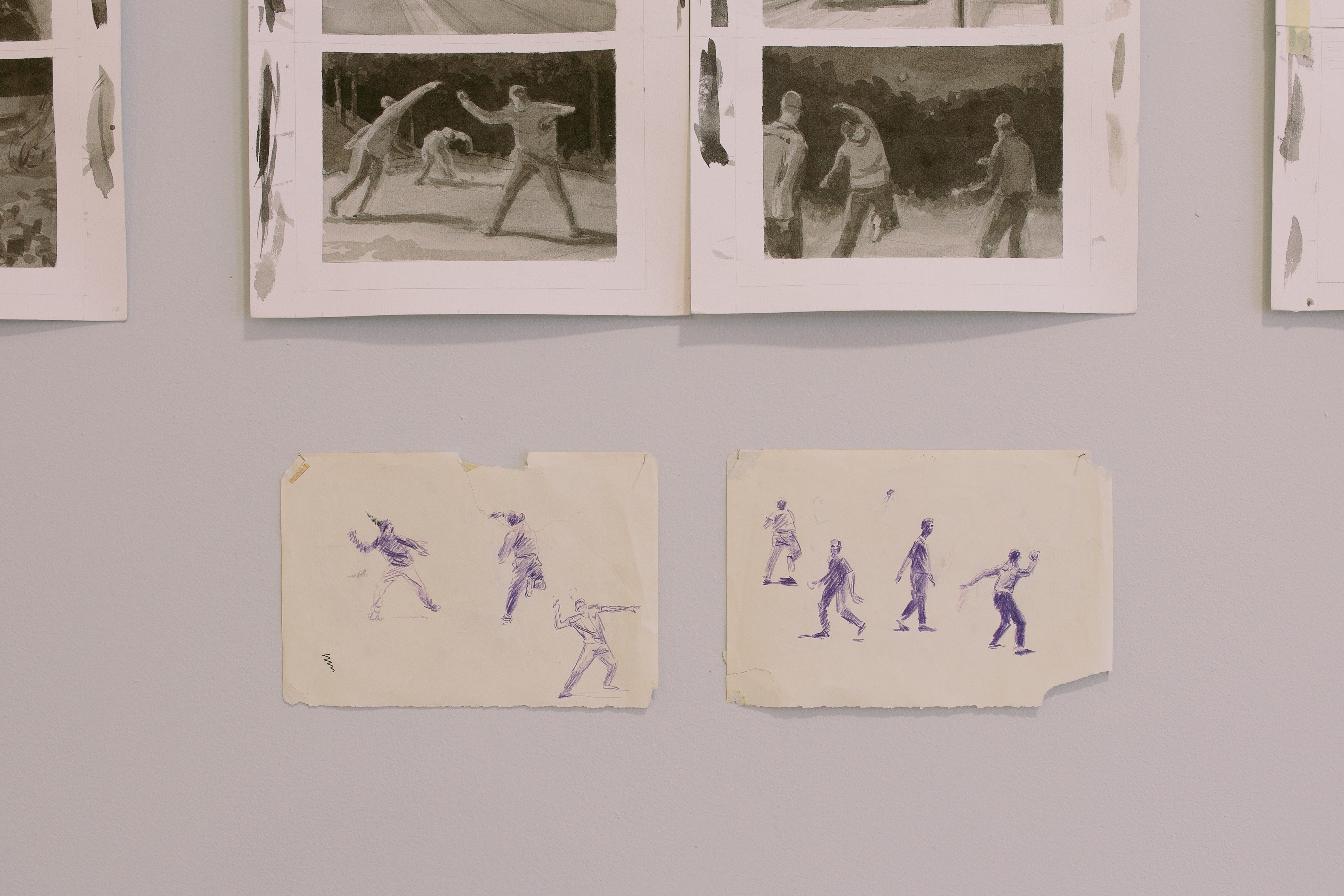
Exposição A Máquina Zero, de Nuno Sousa
Over the years, the club has established several partnerships with venues such as Oficina Arara, Casa da Imagem and Circolando, and has taken drawing outside its doors, namely to the Soares dos Reis National Museum and Café Ceuta – and now to the Museum of Convergences, as part of the Fluxo exhibition. Objects, People and Places – in addition to the outdoor courses it promotes, which explore the “most hidden corners and paths” of the city of Porto.
In the future, the Drawing Club wants to focus on publishing. ‘Some of us already publish fanzines, newspapers and other independent editorial projects, but we have this desire. There is a desire to keep things alive and dynamic and open to others,’ concludes Nuno Sousa.
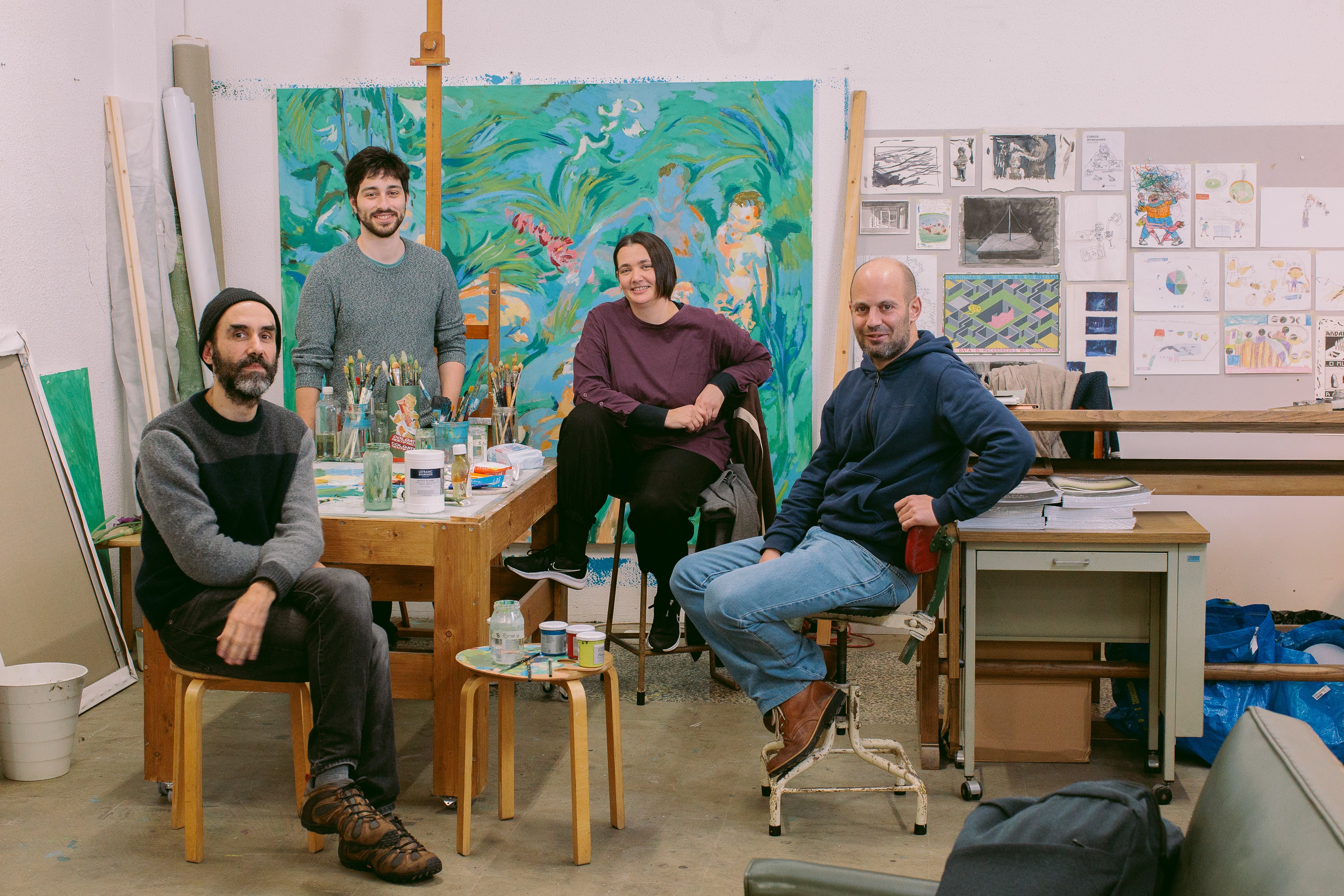
Clube de Desenho © Renato Cruz Santos
Share
Relacionados
