

EN

outubro
“If you won the Euromillions, what would you like to do with your life?”, they asked each other when they first met. The clichéd question, as they call it, made them realise that setting up a cultural centre was a dream they shared. The musician Maria Carvalho Vazquez wanted “a place that, through art, could in some way transform the lives of some people”; the dancer Edmilson Botelho felt the same, but envisaged “one here and another in São Tomé and Príncipe”, where his roots lie. 1 November marks a year since they opened Bamu Zunta Mon in Porto.
On the second floor of 432 Rua do Bonjardim, the couple have combined their artistic talents and given shape to their shared vision. They have already organised classes, workshops, film screenings, talks, concerts and social gatherings – different ways of celebrating, “in their raw form”, distinct cultures. They run weekly dance sessions, with a variety of styles to choose from for those who want to try it out or are already experienced, whether dancing solo or in pairs; but, as Maria explains, they do not want to be just another ordinary school.
Having realised that many “people want to learn the steps” but “don’t know where each genre comes from”, they aim for their courses to convey “the surrounding culture”—that is, a historical and social context that shows “everything that went into” the emergence of that practice. This intention, rather than simply guiding the programme, is a statement of their stance: “those who come to learn semba do not come to learn [just] a few semba steps; they come to learn Angolan culture”.
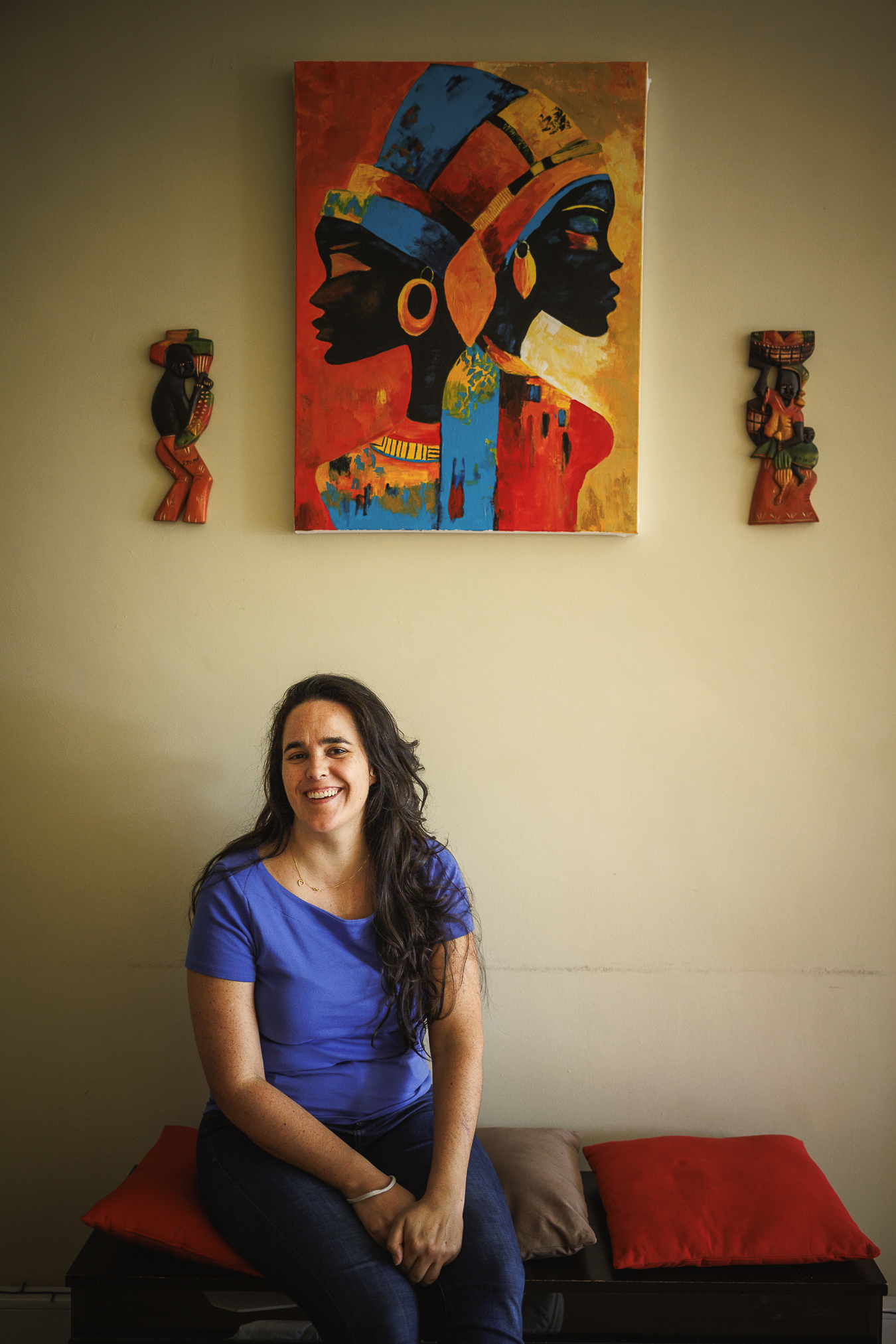
Maria Carvalho Vazquez worked for a software company before founding Bamu Zunta Mon. © Guilherme Costa Oliveira
This ethos permeates other activities, such as her ‘Cantos em Travessia’ – dinner-concerts where guests talk “about their country, where that music comes from, and how it was created”. “Of course, it has to be a fun occasion, but it must retain that essence; we prefer to get people thinking a little,” adds the Porto native. She also gives the example of the ‘Conversar o Mundo’ series, documentary screenings followed by discussions on “various issues”, to encourage reflection “on what we’re doing here, what our role is in this context”. Maria quotes a phrase from her friend Chico Bastos, a Brazilian musician who runs a choro workshop there, to sum up the idea: “art is the best way to get to know a culture”.
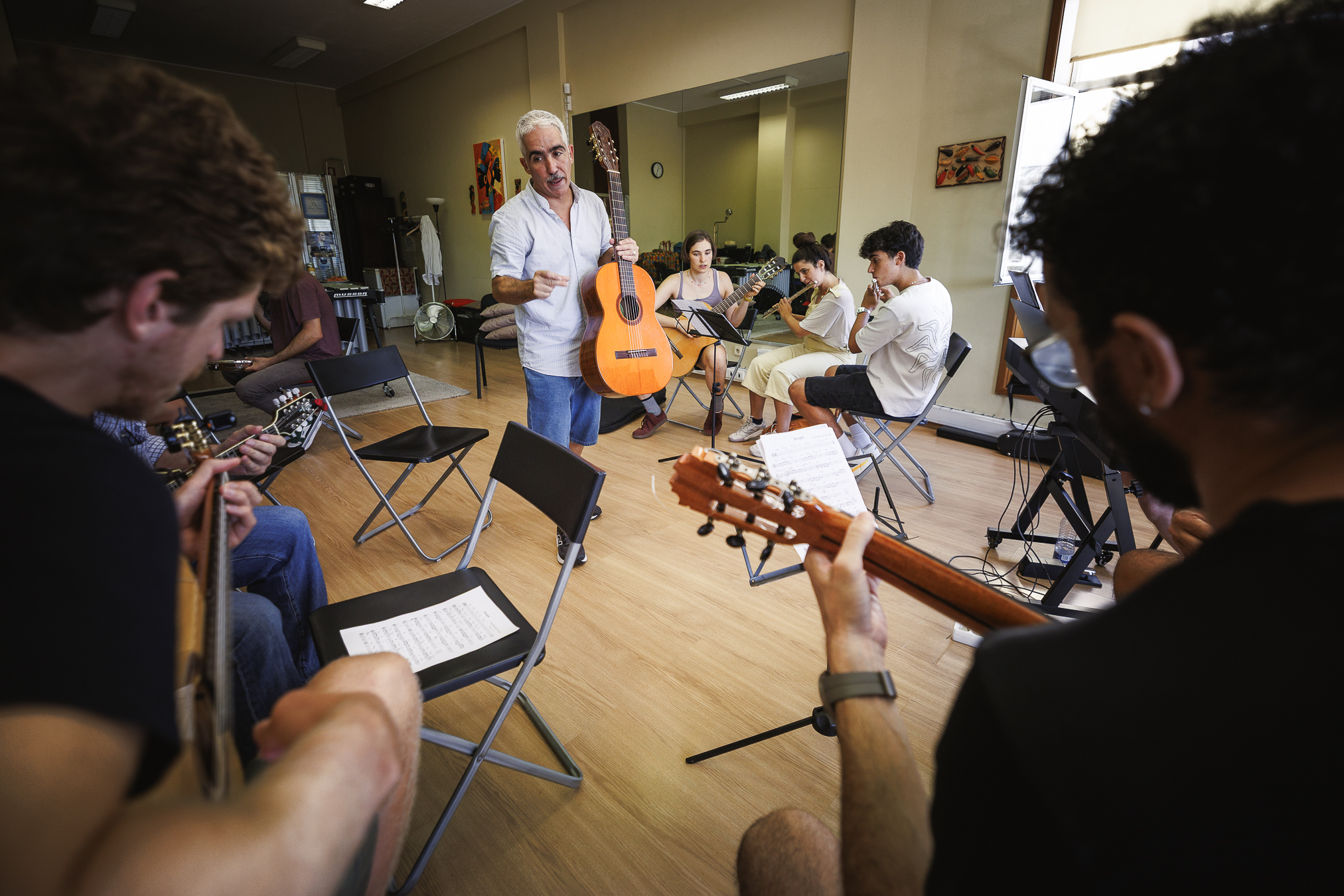
Saberes que Passam choro workshop, led by Brazilian musician and composer Chico Bastos on the first Saturday of every month. © Guilherme Costa Oliveira
Kizomba, blues or puíta, from here to China
Bamu Zunta Mon’s concern for the roots of each form of expression is also evident in his respect for its original form. “Someone complained to me, saying I didn’t know how to dance kizomba, and I was left trying to work out what they meant,” recalls Edmilson, smiling. He realised that he “didn’t conform to the standard” of the “Europeanised” form that the Angolan rhythm has taken on in recent years. “When a culture reaches other countries, it needs to be adapted, and that’s normal, because people [from outside] aren’t used to that way of being; what happened with kizomba is that this adaptation changed the original form slightly.” The dancer says that the style has lost an element of “improvisation” and social experience, and that its standardisation also stems from a certain “European supremacy” that imposes itself on “many cultures, especially those from Africa, and which, in a way, devalues their true essence”. He adds that “there are things that can be very simple to understand, but you have to experience them to be part of [them]”. He jokes that he even sees people “dancing kizomba by doing just one step throughout an entire song”, but by that he does not mean that “there is no soul, no commitment”. He argues that “these are different ways of being that cannot be judged”, not least because he believes that “kizomba is growing a great deal with this change”. What he would like is for people not to understand it solely “through those standards, because there is so much more to it than that”.
© Guilherme Costa Oliveira
Immersing himself in a dance beyond its choreography has been a key part of Botelho’s professional journey. He specialised in blues and lindy hop, styles which, because they come from other parts of the world, required him to “delve deeper” and attend “classes with native dancers”. “I discovered that these dances have a lot in common with my own culture, as well as with that of Angola and beyond, because the basis of the steps, the instruments and the rhythms are all very similar”. Even in the social context in which these African-American genres originated, he found parallels in the past of São Tomé and Príncipe, where the ‘puíta’ emerged – a style whose “rhythm is very much present in the blues”, he says. In the classes he leads, the dancer invites people to understand “how each dance has evolved”: “in Texas, the blues is danced one way; in Memphis, another; in Mississippi, yet another… all of this is rich, cultural, historical and part of our identity”. And with a swing in his words, he returns to kizomba: “Here, it has lost some of its identity, or rather, it has lost a certain edge; it has transformed – and that’s a good thing; culture transforms, and that’s how it evolves too”.
Between 9 and 11 October, Bamu Zunta Mon is organising the third edition of the Blues Juke Joint Weekend, a festival described as an “extension of the association” which is set to get plenty of people up and dancing at its venue and at A Beneficência Familiar, nearby. It will be an international gathering of “people celebrating the blues”, says Edmilson. “Juke joints were those small bars where the Black community could gather to share their sorrows, to sing about their sorrows – and their joys too!”, he explains. “The blues emerged in these places, where there were none of the amenities we find in a bar today; it was all as rustic as possible, with dim lighting…”. “It was all done in secret; they couldn’t express themselves,” adds Maria, before her partner returns to the festival: “We’ve managed to bring people from Brazil, the United States, much of Europe, and there are even people coming from China to dance.”
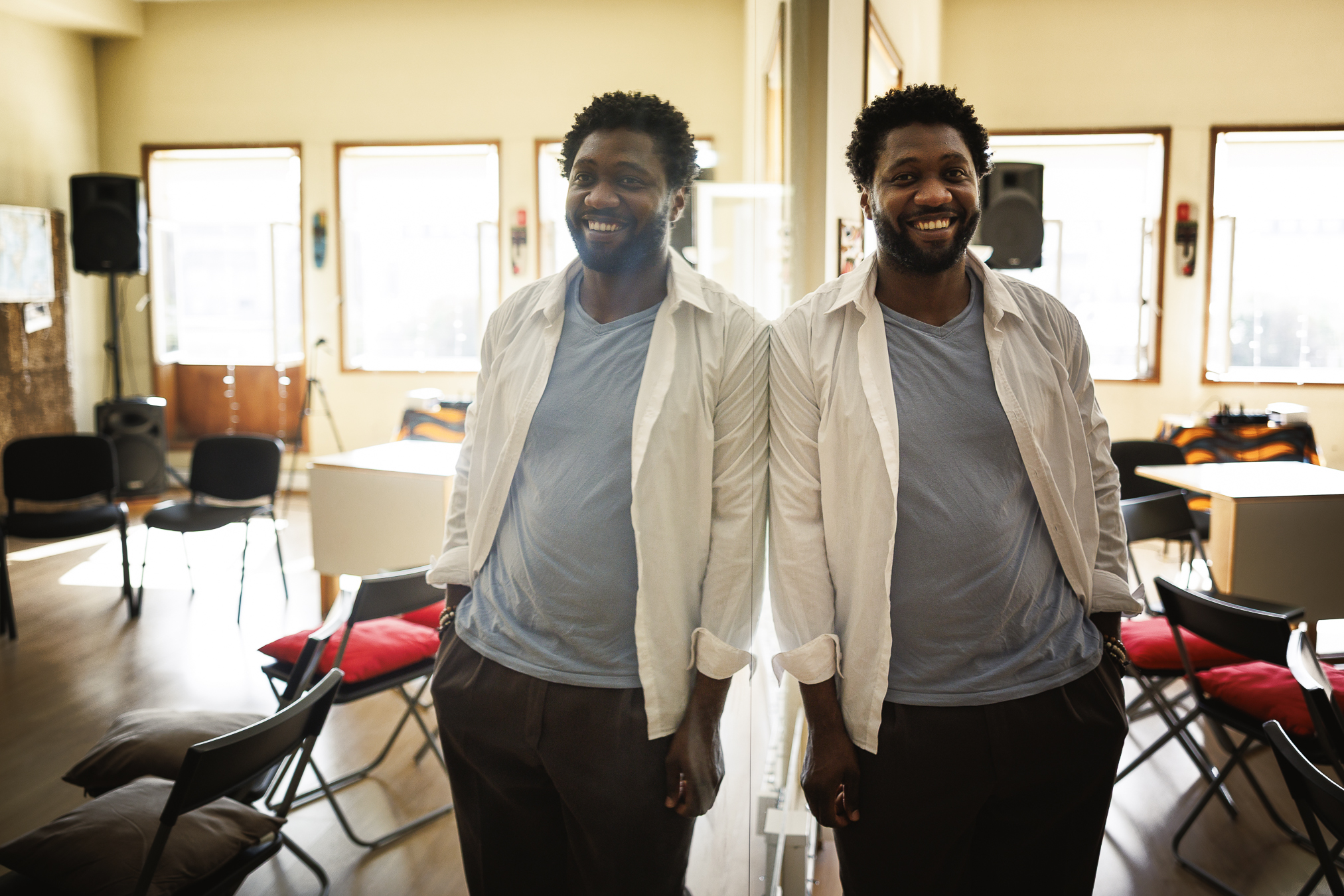
Edmilson Botelho was born in São Tomé, but it was in Porto that he discovered the blues and lindy hop. © Guilherme Costa Oliveira
Mão a mão, enche a associação o palco
“Mostrar as culturas” dos países africanos de língua portuguesa foi um foco desde o início. A começar pelo de Botelho: “os nossos primeiros eventos foram para mostrar a puíta, a dança tradicional de São Tomé e Príncipe, e mesmo na inauguração tivemos calulu [prato típico do arquipélago] feito pela mãe dele”, conta Carvalho Vazquez. Servem petiscos também nos tais jantares-concerto, “comida tradicional de Moçambique, de Angola, de São Tomé, de Cabo Verde…”, mas é apenas ponto de partida: “queremos ir para o mundo, ou seja, começar aqui, mas alargar”, aponta Maria. “E o nosso nome vem daí”.
Bamu Zunta Mon foi retirado de uma música dos Calema, em que a dupla canta “Bomu zunta mon / Bomu naqui o vofa / Zunta mon fesu ba sola ba tela no bawê” (“Vamos juntar as mãos / Vamos não ter receio nem vergonha / juntar as mãos como a base de uma vassoura para a nossa terra crescer”). O trecho está escrito em forro, um “crioulo de São Tomé”, diz Edmilson, para logo corrigir: “gosto mais de dizer língua de São Tomé”. “A nossa vassoura não é como as de cá, é com folhinha de palmeira – e se as juntarmos, pouco a pouco, construímos uma vassoura”.
Os primeiros dedos que se começaram a entrelaçar foram, claro, os do casal e do seu entorno. Somaram-se depois os de familiares e amigos, como Tony Mondlane, que “dá as aulas de danças tradicionais moçambicanas”, ou os de “muita gente brasileira” próxima. Um dos desafios agora é atrair público africano. Encetaram algumas relações, contactaram “associações de estudantes” de países da CPLP e querem tornar o seu projeto cada vez “mais acolhedor para todos”, transformá-lo num “espaço-casa”. Aspiram até, um dia, criar “um projeto social” que ajude no acolhimento desses jovens, para que se sintam menos “perdidos” à chegada, como passou a Edmilson. “Todas as pessoas que vêm devem sentir um bocadinho isso”, diz Maria.
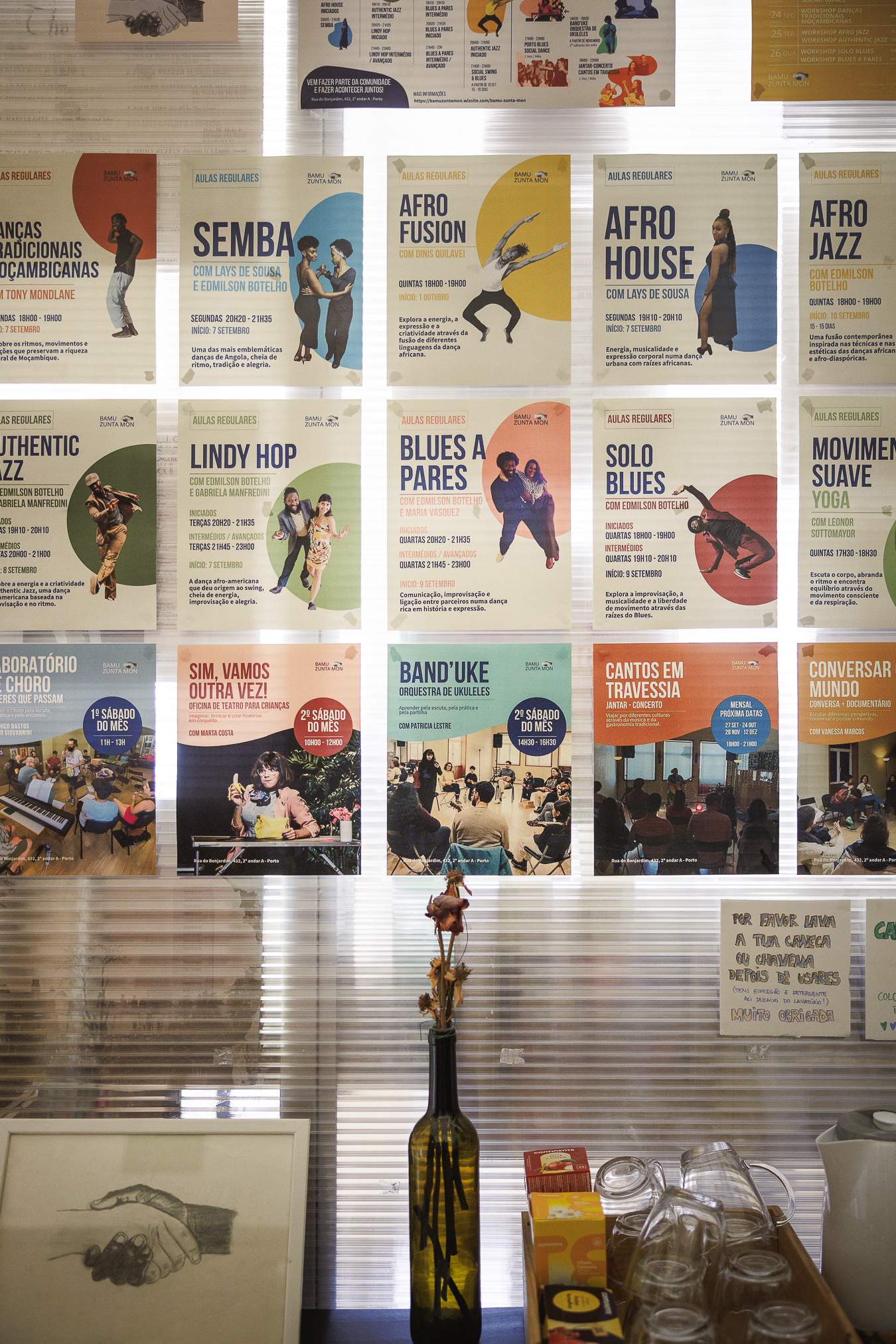
At Bamu Zunta Mon, there are weekly dance classes, with a range of styles to choose from. © Guilherme Costa Oliveira
The journey also takes in Portugal. Botelho points out that, as his partner is a member of Sopa de Pedra, an a cappella group from Porto, he had the opportunity to delve into the world of traditional Portuguese music, which he says has “nothing to do with what you see from the outside”, and which allowed him to meet “musicians who make instruments, such as adufes – quite technical things”. As an immigrant, he notes that he rarely hears about this aspect of national culture, before emphasising that this is precisely what they are looking for: people who have lived with elements of identity from different cultures and wish to “discuss or share” them, whether from Africa, Europe or wherever.
To document the association’s early days, and “to give a little glimpse behind the scenes”, they are filming a documentary. This initiative is complemented by a monthly newsletter, *As Cartas do Bamu*, in which, as well as publicising the programme, they reflect on the challenges that arise, “what isn’t seen, and which ultimately becomes a bit more about human connection”. A way of turning strangers into friends, he says. For now in Porto, one day perhaps in São Tomé or elsewhere.
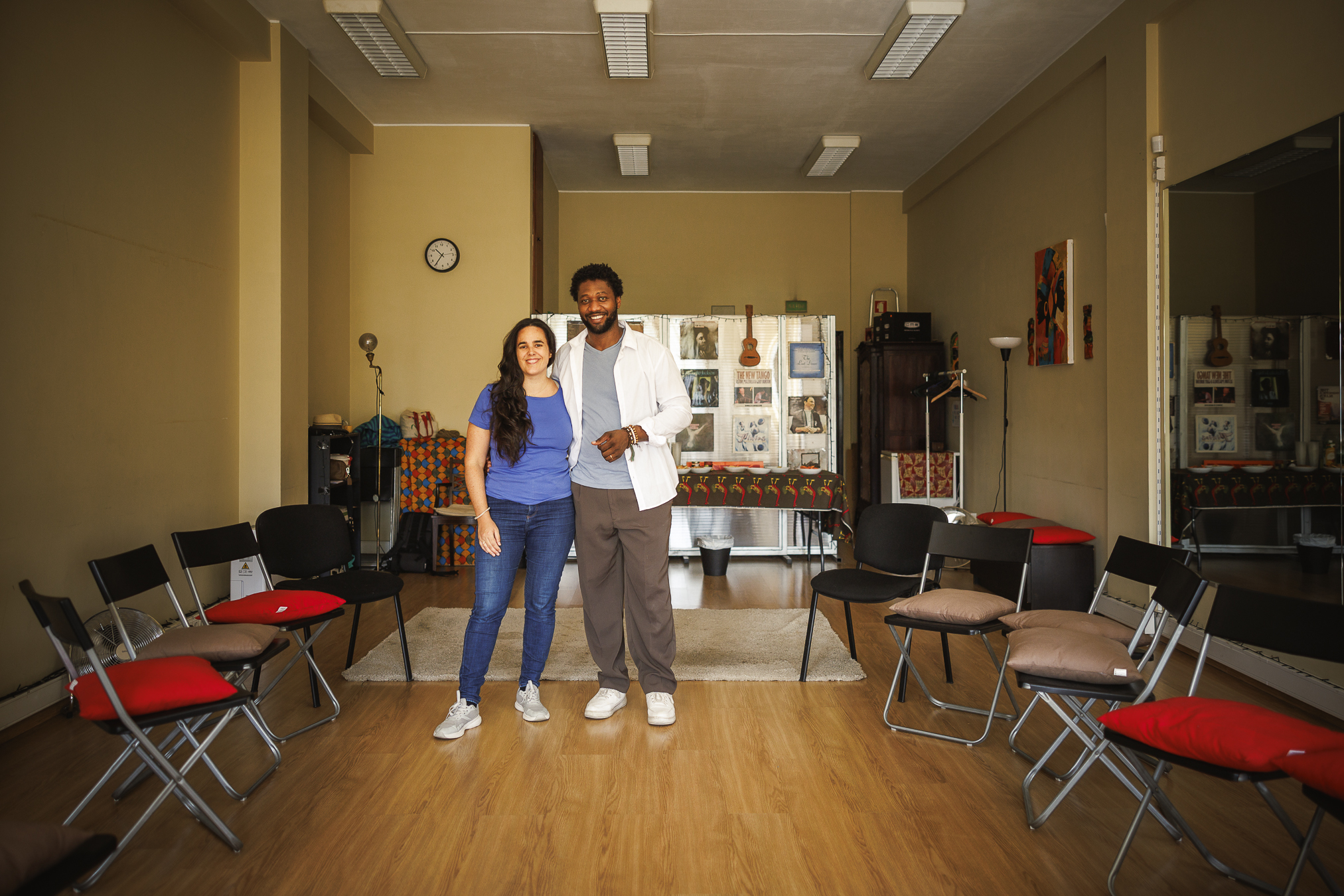
It will be a year in November since Maria and Edmilson opened their association. © Guilherme Costa Oliveira
Share
Relacionados
