

EN

Janeiro 2026
Amparo 99 is located on the border between the parishes of Bonfim and Campanhã, an independent cultural space where anything seems possible. Here, all artistic and cultural projects find a place, whether they come from Porto or China (a geographical reference that will make sense later). We spoke with two of the founding partners to learn more about this place that has become synonymous with experimenting, creating, and sharing.
The collective behind Amparo 99 has just celebrated its second anniversary. They say there are no coincidences: the project was born precisely two days before Agenda Porto hit the newsstands for the first time.
We visited number 99 Rua do Amparo, a few steps from Avenida de Fernão de Magalhães. We are welcomed by Zhang Qinzhe, or simply Quinzé, and Beatriz Costa. Together with them, the core group is completed by Luís Perdiz (Pepas), Francisco Frutuoso (Frutas), Diogo Jesus (Jesus), performer Ana Rita Xavier and designer Rúben Rodrigues.
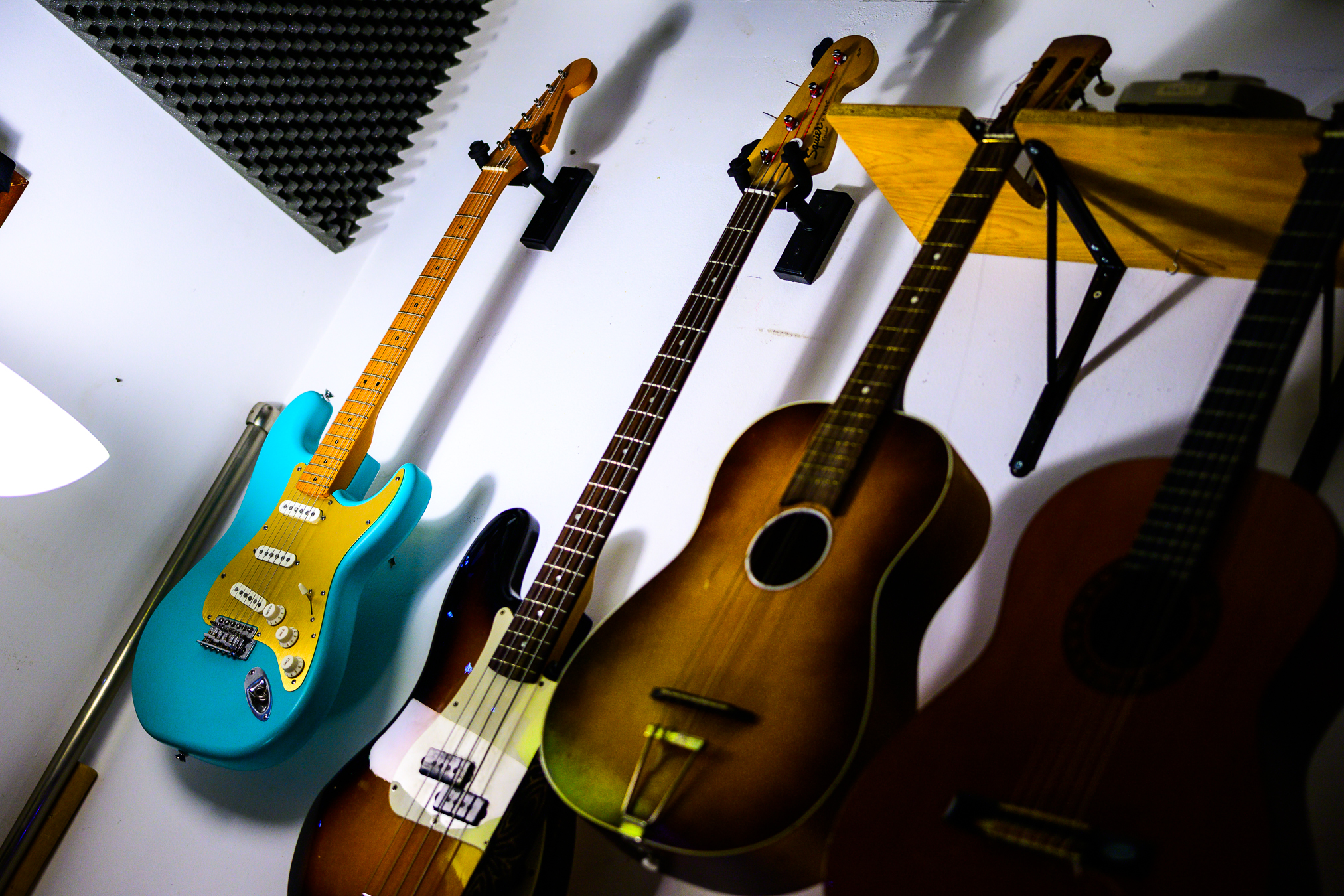
The entrance door reveals the philosophy of the house: in the window display rests the colourful door of a car, transformed into an invitation to curiosity. We enter, passing through the sound room, where guitars, mixing desks, cables and even a small analogue television decorated with crochet fill the space. We cross the corridor and arrive at the main room, a multifunctional black box where almost everything happens, from quiet nights to nights full of people.
© Nuno Miguel Coelho
A space to experiment and take risks
‘Welcome to Amparo 99! This is a group for people who share a passion for music, art, culture and drinking a few beers,’ reads the association's description on social media. And that's exactly how it feels there.
Zhang Qinzhe, born in China and based in Portugal since the age of seven, arrived in Porto after spending time in Aveiro, Reguengos de Monsaraz and Coimbra. He has a degree in multimedia and currently works in video, lighting, generative graphics and digital scenography. “Amparo 99 is a place for experimentation,” he explains. “Here I can test new ideas, put things together the way I want. It is, first and foremost, a workspace for artists, which occasionally opens its doors to the public.”
The collective took over the space at the invitation of Ermo do Caos, a cultural movement that previously occupied the same location. “They invited us to continue the project and we didn't hesitate. We felt it was important not to let this place die. We inherited some of the previous dynamic, but what we do here today already has our own identity.”
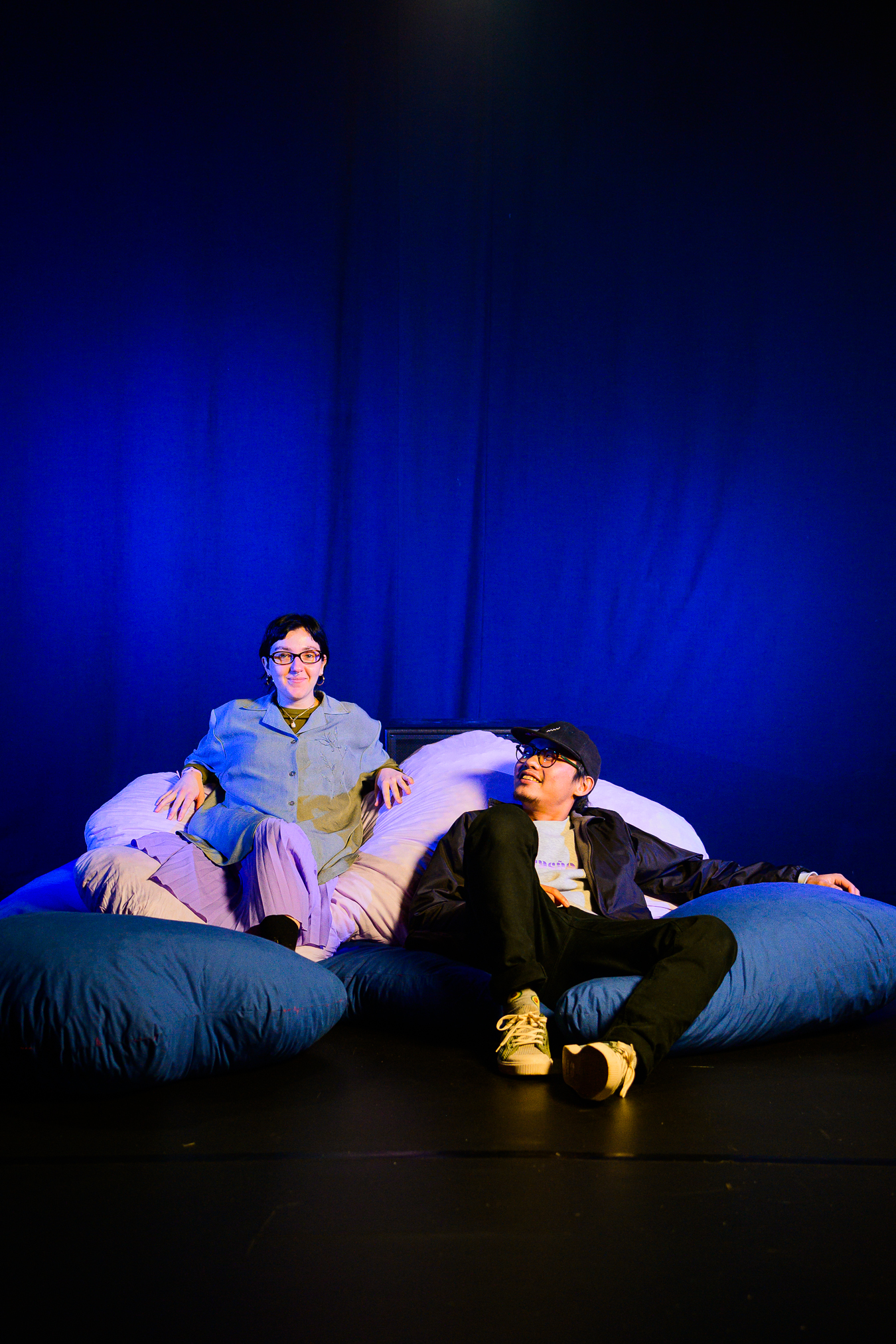
Beatriz Costa e Zhang Qinzhe © Nuno Miguel Coelho
Beatriz Costa, illustrator and animator, describes Amparo 99 as ‘a young cultural association with very diverse activities.’ She lists: ‘concerts, animation and illustration workshops, gastronomy, board game nights, dance, theatre, cinema, performance... there are no limits.’
For Beatriz, Amparo's greatest strength is the way it welcomes newcomers, its community spirit. ‘Amparo is our creative space. We work here, we socialise, we welcome artists in the very early stages of their projects. Those who come here feel welcome. They often arrive without knowing exactly what they are looking for, and leave with a good impression and a desire to return.’
In addition to rehearsals and residencies, Amparo 99 hosts pre-productions and experiments that do not require a final presentation. ‘You can come just to try it out, even without any commitment,’ emphasises Qinzhe. ‘We have equipment for filming, recording, lighting design and dramaturgy. The room is versatile and adapts to each artist's needs.’
© Nuno Miguel Coelho
Helping them take their first steps
Beatriz also highlights the role of the space in supporting those who are at the beginning of their careers. ‘Many artists have nowhere to rehearse. The venues where they perform are not always able to accommodate long processes, and this can be financially burdensome. Here, we act as a middle ground; we have the conditions, time and openness to welcome these teams.’
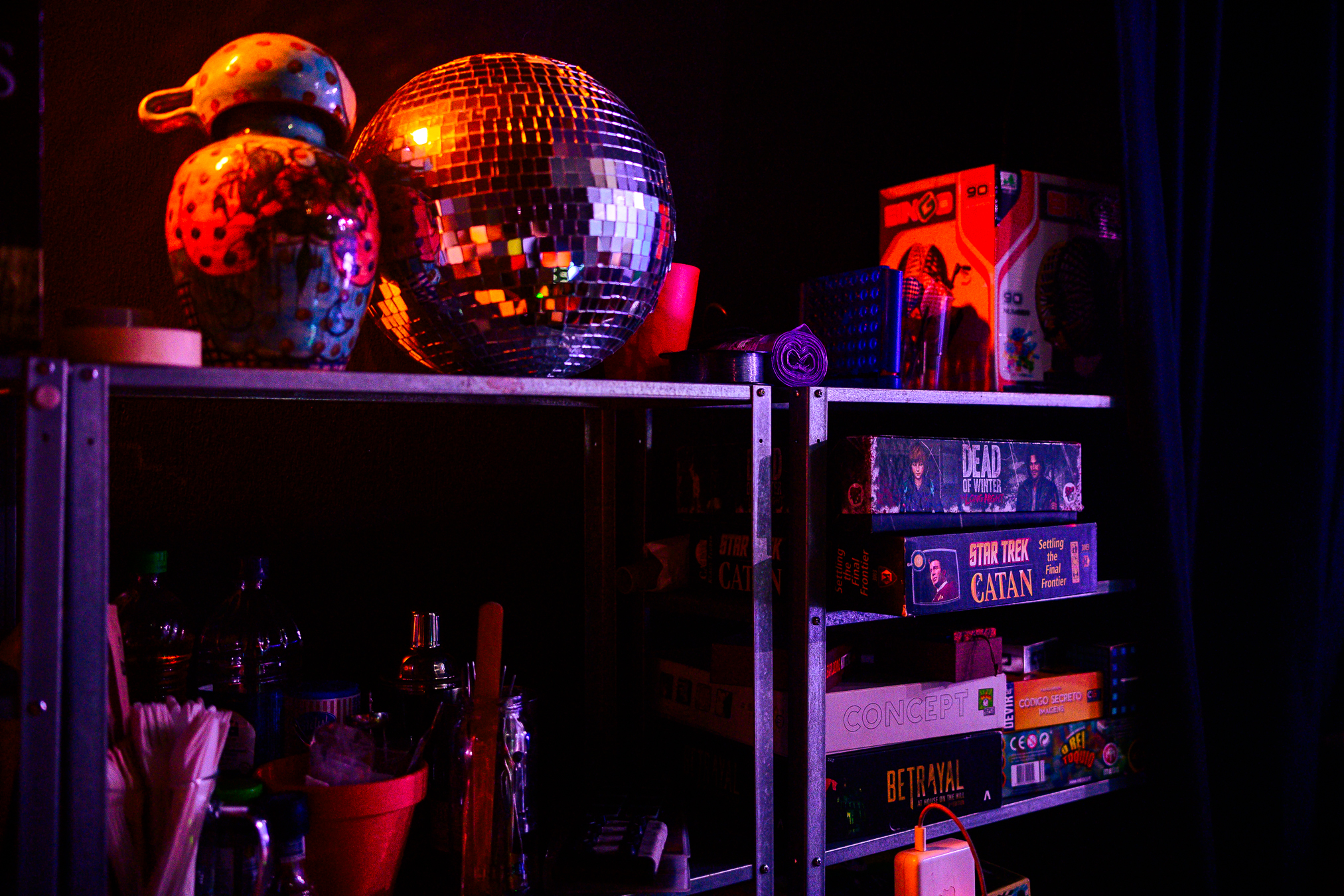
The public also knows what to expect: board game nights regularly fill the house, as do concerts, which have attracted more than 60 people. But one of the most eagerly awaited events is always the Chinese New Year celebration. "We start with a workshop where people learn how to make gyoza, from the flour to the final dish. Then the evening ends with a dinner to celebrate the start of the new year. For many, it is one of the most memorable moments, a fusion of gastronomy, culture and community."
For the coming months, Amparo99 is preparing a series of workshops dedicated to TouchDesigner, a tool for generative graphics, light and digital mechanics. The aim is to create a visual community in Porto. ‘We will have three workshops and video jams with guest artists. Everyone brings their own projector and we transform the black box into a living box of improvisation for hours,’ describes Qinzhe.
A network that grows at the pace of the city, where ideas meet and multiply
‘We are building a loyal audience, slowly but steadily,’ says Quinzhe. Artists contact Amparo99 via email, through recommendations or by directly seeking out the collective. Beatriz emphasises that Amparo 99 wants to be part of the city, not just exist in it. “We visit other spaces, get to know other associations, open doors. And, at the same time, we are remembered by those who have been here. We have created a network of people who know they have a place here.”
“Living together, new ideas emerge,” sums up Qinzhe. “We apply for grants together, we develop projects together. Alone, it would be much more difficult.”
“And that’s what makes sense in a cultural association,” adds Beatriz. “Mutual support. The feeling that there is room for everyone.”
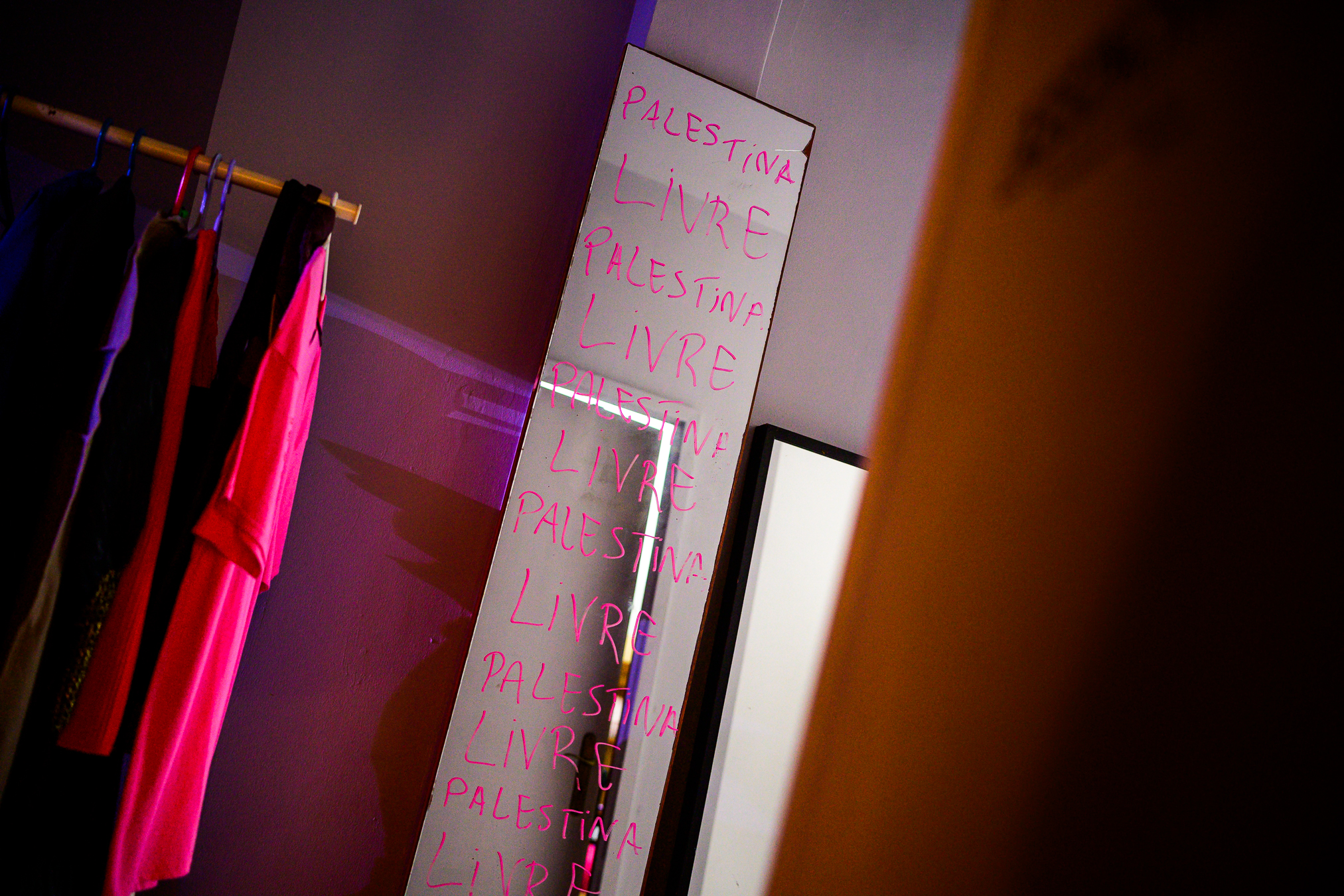
Amparo 99 is, in the end, exactly that: a shelter. A place where artists experiment, take risks, fail, start over. Where Porto gains new voices and where, for many of them, they find, for the first time, a home, a stage and a future.
© Nuno Miguel Coelho
Share
FB
X
WA
LINK
Relacionados

Workshop
