

EN

outubro 2026
During a picnic by the sea in the late 1990s, whilst reading the news announcing the construction of the Casa da Música (as part of the Porto 2001 – European Capital of Culture project), Abi Feijó and Regina Pessoa found themselves wondering: “Why not one for animation?”. From that summer scene, which was quite cinematic in its own right, the idea took root that, a quarter of a century ago, led to the founding of the Casa da Animação, as its current president, João Apolinário Mendes, explains to Agenda Porto.
The institution, which has since supported animated films produced in the country, is “quite diverse”, he says, as it brings together a large number of professionals in the field, as well as students and even mere “enthusiasts”. Apolinário Mendes recounts that he joined when “I was still at university doing my degree”, “I must have been about 20 years old”. Almost two decades later, and following a career as a producer, director, researcher and lecturer in this field, he took over as director, succeeding Abi Feijó himself, as well as Manuela Lima, Luís da Matta Almeida and Regina Machado.
The defence of the sector’s interests is therefore achieved through the unity of those involved. The Casa da Animação’s website lists the main national studios and features an extensive database — the Animateca — containing films made in Portugal. The promotion of these works takes place both at home and abroad, with internationalisation also being fostered through creative partnerships, such as those facilitated by its Animation Forum, an event that encourages “co-production with foreign studios”.
The founders’ initial aim — to “create a space for promotion” — was joined “over time” by other objectives, such as teaching. The Casa has opened an Animation Academy, a platform that promotes “specialisation and technical and artistic development” among “students, young professionals and creators” through “training programmes and mentoring schemes”, as detailed on its website. João Apolinário Mendes highlights what guides them: “Trying to identify what is needed for Portuguese animation to continue to grow”.
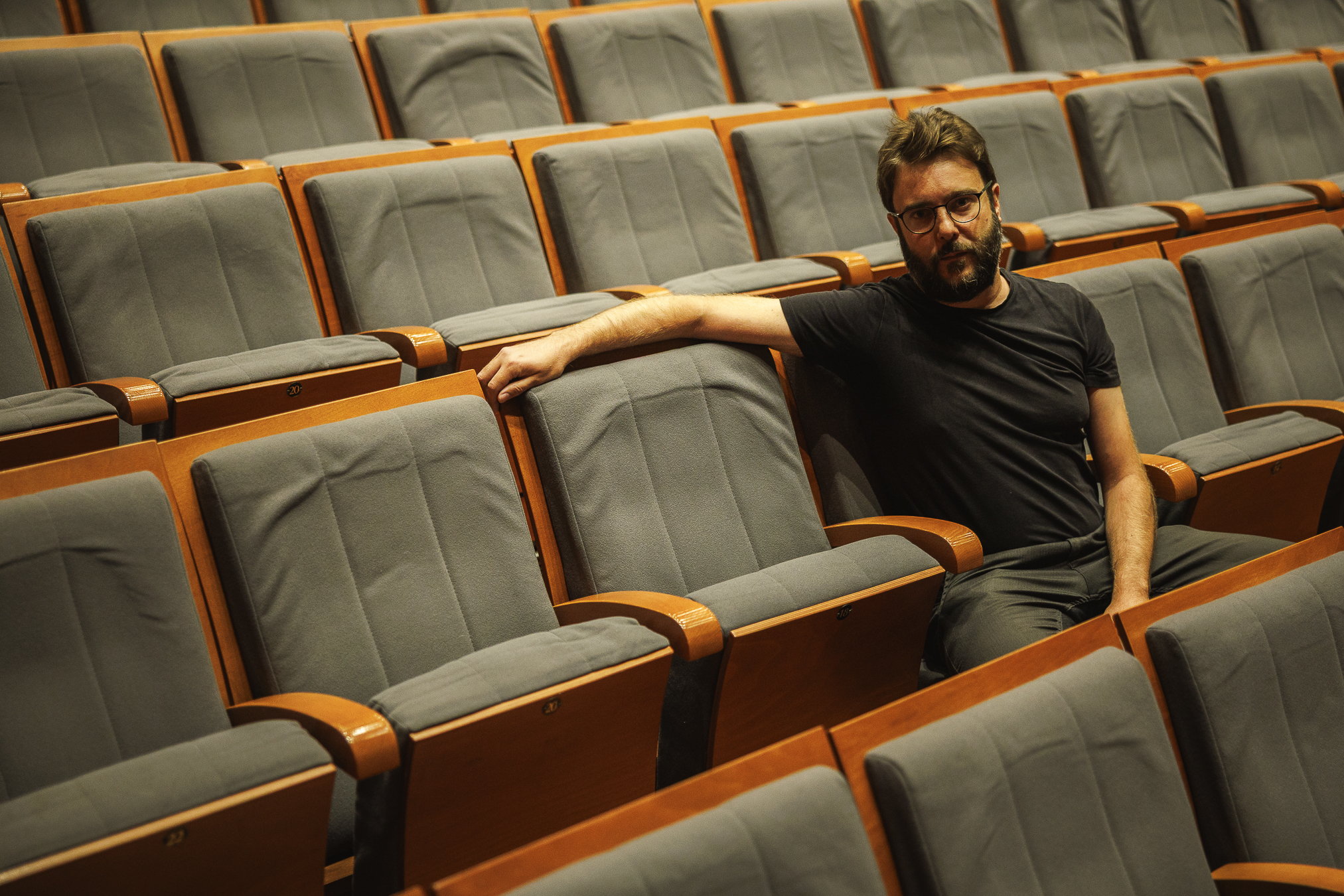
João Apolinário Mendes © Guilherme Costa Oliveira
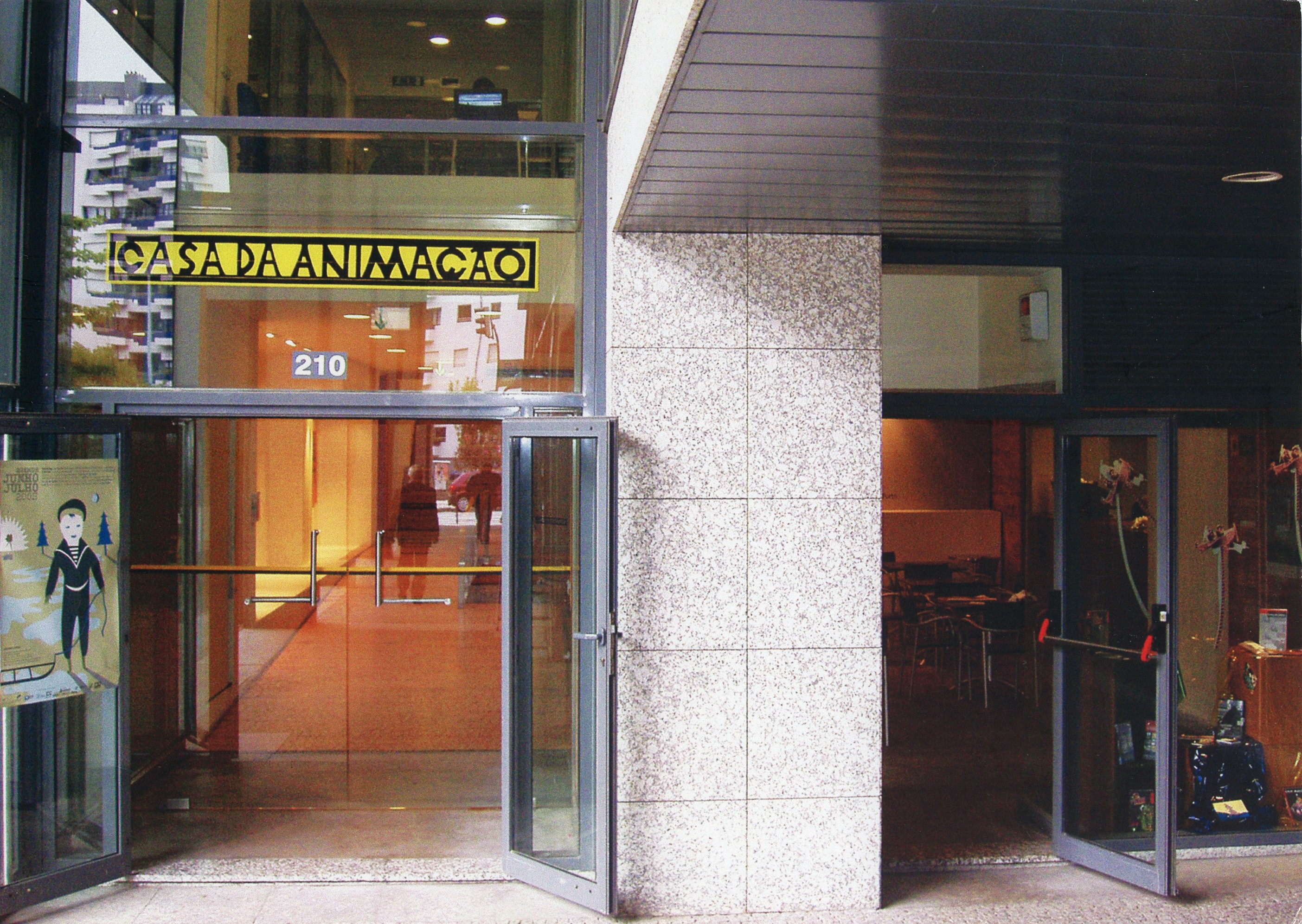
Entrance to the association, in the Porto Municipal Theatre building, Campo Alegre site © Guilherme Costa Oliveira
From Porto’s unique character to the world
For the past dozen years, the association has also been organising an offshoot of the World Animation Festival, an initiative that celebrates the international day of this art form, marked on 28 October. They began by organising the event on a travelling basis, but in recent years they have settled in Vila Velha do Ródão, in the district of Castelo Branco. The programme of celebrations includes film screenings and masterclasses and talks with “professionals and thinkers”, as well as the presentation of the National Animation Award, awarded annually “to the best Portuguese animated short film, the best Portuguese school short film and the best workshop”.
This year’s festival will be given extra prominence, as it falls to the collective, and its president, to “lead these celebrations on a global scale”, an event that is being organised “in collaboration with other associations”. This responsibility suits someone from a city with “a very close relationship” with this type of cinema. According to João Apolinário Mendes, “there is indeed a high-quality output of auteur animation in Porto”, with particular mention of “studios such as AIM, Animais, BAP, Os Filmes do Pinguim — or Cola, which has an office in the city, and Ciclope Filmes, which is based in Lousada, in the district of Porto”, with “work that has been recognised and won awards at the biggest international festivals”.
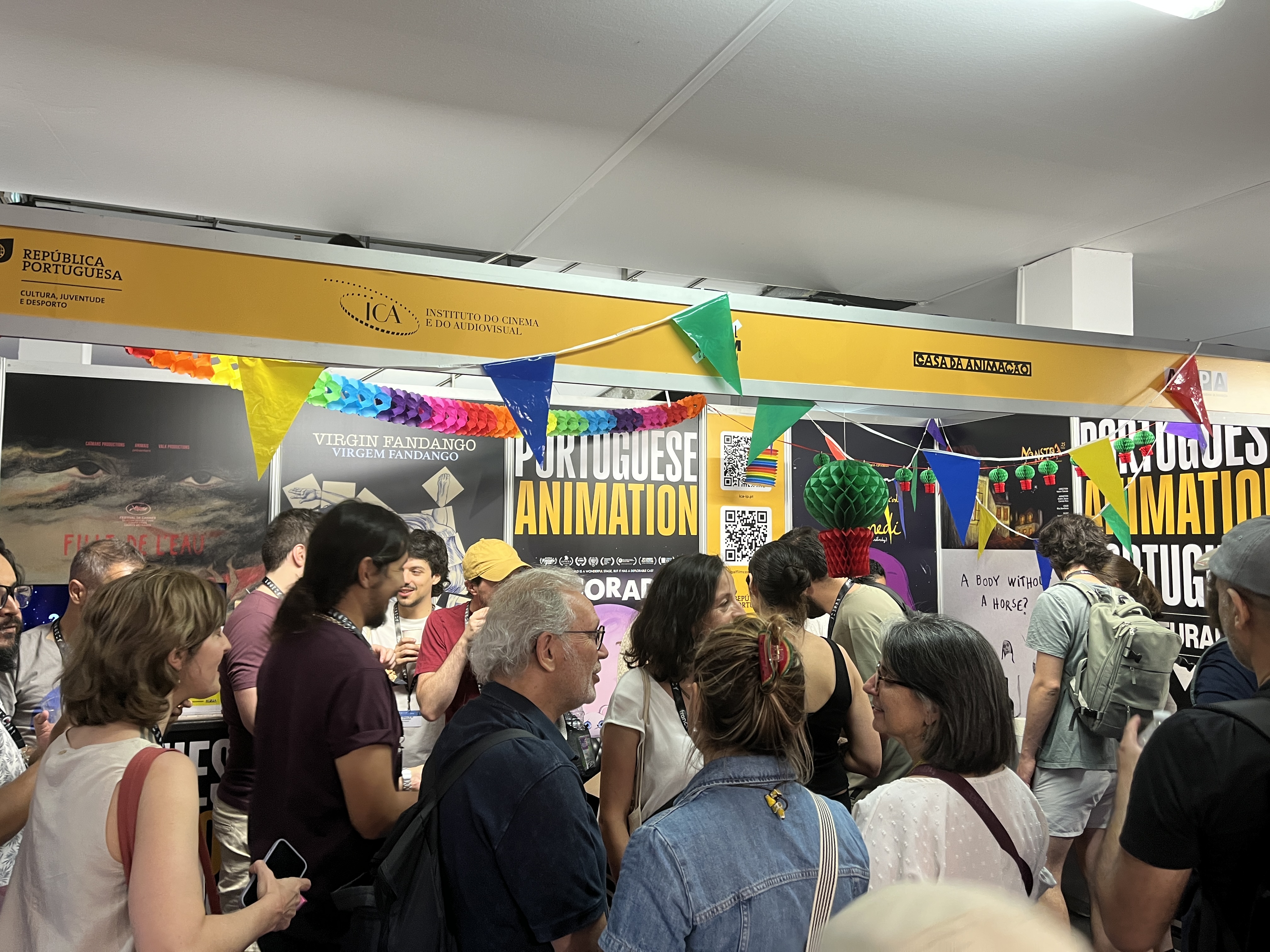
Casa da Animação © DR
In addition to the aforementioned Abi Feijó and Regina Pessoa, there are many prominent figures who were born, studied or worked in the city, such as Nuno Amorim, David Doutel and Vasco Sá, or, more recently, João Gonzalez, Alexandra Ramires, Marta Monteiro, Alice Guimarães, Mónica Santos and Leonor Faria Henriques. The president of Casa da Animação believes “that there is no single reason to explain such a vibrant scene”. As this is an art form “usually practised as a team”, it stems, first and foremost, from “the hard work and dedication of a community of animators who came together in Porto”. He then lists other “key events” such as “the emergence of Cinanima [the historic festival in Espinho], which introduced other ways of making films and trained some of the animators who would later go on to set up the first independent animation studios”.
The work of some of these production companies, “such as Filmógrafo and Animais”, would go on to contribute “to the training of professionals” and to create “an initial concept of Portuguese animated cinema”, which was complemented by the commitment of certain universities, from which “a younger generation” emerged. Finally, Apolinário Mendes highlights the role of the organisation he heads, which was the result of this “community enthusiasm” and ultimately helped to “foster its development”. He explains that it is “an environment” made up of “a huge number of people”, “which differs greatly from those in other parts of the country, which are sometimes more geared, for example, towards a market”. And he speaks proudly of this heritage: “It is a great joy for Porto to have such a strong auteur animation scene.”
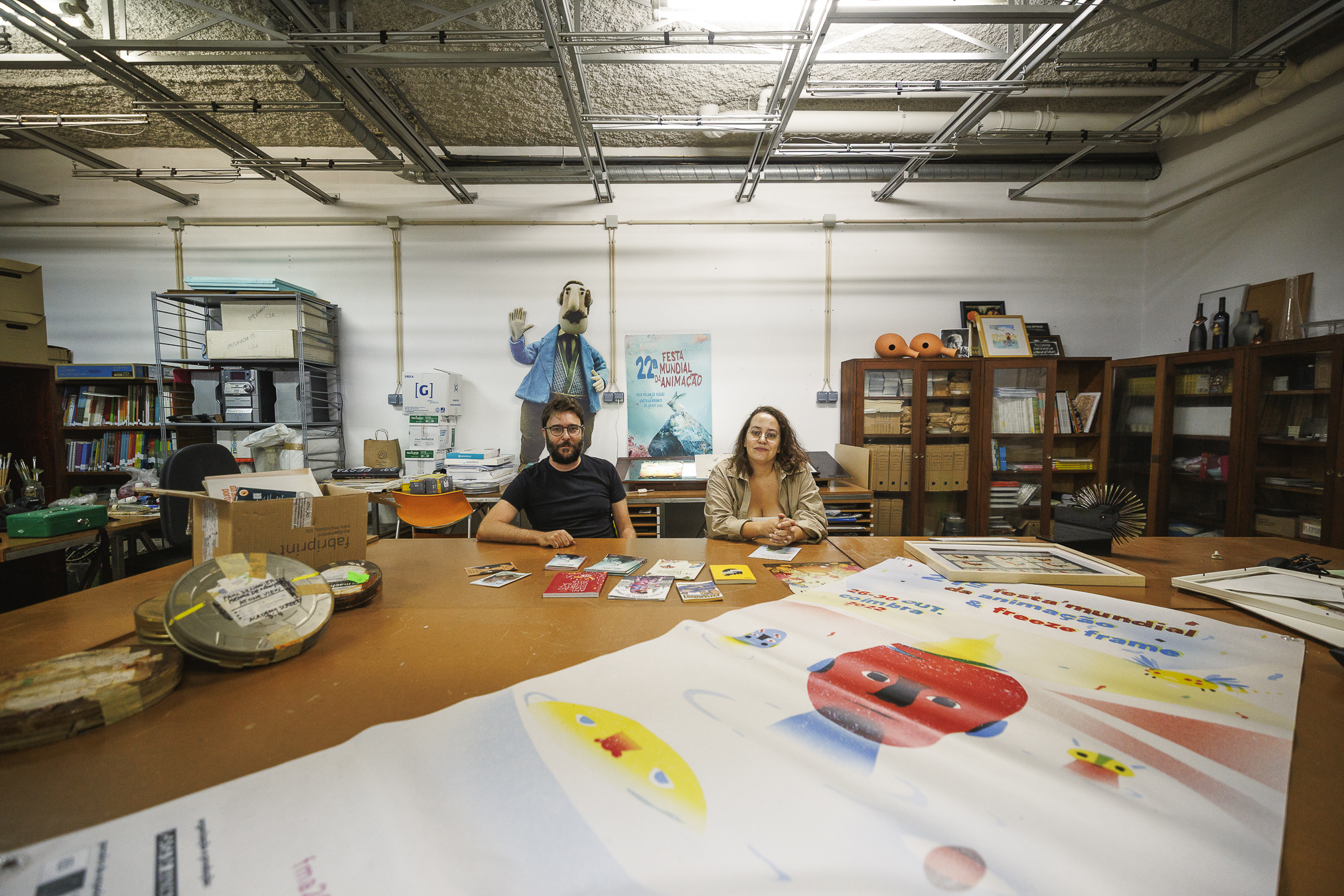
João Apolinário Mendes and Regina Machado, president and vice-president of the association © Guilherme Costa Oliveira
“It’s only a matter of time before a festival emerges in Porto”
João Apolinário Mendes, who was also involved with the Puppet Museum and the Puppet Theatre in the city, co-founded the Red Cloud theatre company and also created ‘Olho’, an animated film festival which he was no longer able to organise when he took on his current management role. He continues, however, to believe that the city “has everything it needs for an animation festival”, thanks to its “very distinctive ecosystem”, which combines this community with “various studios, schools offering animation courses and high-quality venues such as Batalha and Trindade”. He points out, moreover, that, in recent times, “a large number of festivals have been focusing on animation programmes, such as Beast, Indie Junior and Porto Femme, and a number of events entirely dedicated to animation have emerged, such as Porto Anim and TinyMan”. Bearing in mind, too, that “the city has a strong capacity to host events and is very welcoming to international audiences”, he believes that a major festival will eventually emerge, and promises that, “when that happens, it will certainly have the support of Casa da Animação”.
To safeguard the sector’s legacy and future, the association – based at the Porto Municipal Theatre complex in Campo Alegre – is expanding its work across every possible front. Incidentally, to mark its 25th anniversary, it has also just launched the Portuguese version of the book Touch the Cinema, by Pierre Hébert (described as “one of the most distinctive and influential figures in contemporary experimental animated cinema”), edited by João Apolinário Mendes himself.
Share
Relacionados
